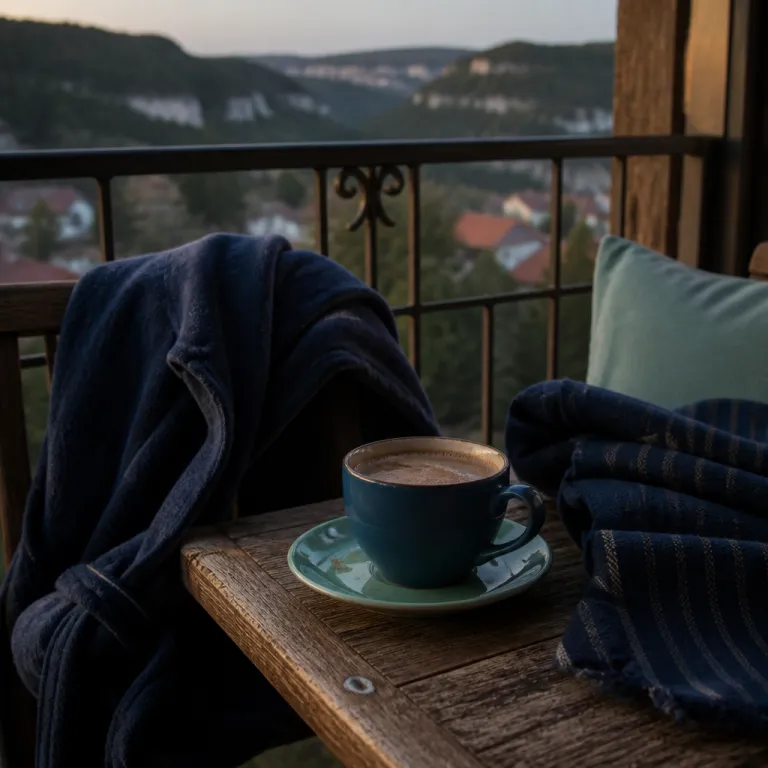
A Roman Frontier Town at the Foot of the Swabian Jura
Aalen occupies a peculiar position in the geography of southern Germany. The city rests along the Kocher River, pressed against the northern escarpment of the Schwäbische Alb, that great limestone plateau stretching across Baden-Württemberg like a geological afterthought. Travellers arriving from Stuttgart cross an hour of unremarkable motorway before the terrain suddenly shifts. Forested ridgelines replace flat farmland. The air sharpens. And Aalen appears, compact and self-assured, a garrison town still wearing echoes of the Roman Empire on its streets.
Few visitors set out with Aalen as their primary destination. That fact works entirely in its favour. The city delivers a particular kind of German experience. No queues. No performative tourism. Just a well-preserved old town, a world-class archaeological museum, and access to hiking territory that rivals anything in Bavaria without the crowds.
Where the Roman Empire Drew Its Line
The Limes Germanicus once ran through what is now the northeastern edge of Aalen. This fortified frontier marked the boundary between the Roman Empire and the Germanic tribes beyond, and the section passing through the Swabian Alb holds UNESCO World Heritage status. The fort at Aalen was the largest Roman cavalry fort north of the Alps, housing up to a thousand soldiers of the Ala II Flavia Milliaria around 150 AD.
The Limes Museum sits directly on those ancient fort grounds. Its ground-floor exhibition reconstructs daily life in the Roman garrison with remarkable specificity. Restored cavalry equipment, fragments of military correspondence, tools recovered from the surrounding vicus. The museum avoids the trap of making Roman history feel remote. Everything here feels tangible, grounded in the soil beneath the building itself.
Walking the Limes trail outside Aalen offers something the museum cannot. The landscape has a way of making the frontier feel present. Sections of the original palisade line remain visible as subtle earthworks cutting through meadows and beech forest. On quiet mornings, with mist pooling in the valleys below, the strategic logic of the Roman placement becomes self-evident. These ridgelines commanded vast sightlines across the Germanic lowlands to the north.
The Swabian Jura as a Walking Landscape
The Schwäbische Alb is not a mountain range in the conventional sense. It is a high karst plateau, its limestone sculpted over millennia into a terrain of sinkholes, caves, dry valleys, and cliff-edged escarpments. The northern face drops sharply into the Kocher and Brenz valleys, and Aalen sits precisely at this transition point. Walking south from the city means walking uphill into a different ecological zone.
Trail networks radiating from Aalen reach deep into the Swabian Jura within the first kilometre. The Albsteig, which runs along the escarpment edge for over 350 kilometres, passes within easy reach of the city. Day hikes to viewpoints along the Albtrauf reveal the full drama of the plateau edge. The limestone drops away in vertical cliffs, exposing geological strata hundreds of millions of years old. Juniper heaths spread across the plateau surface. Orchids appear in spring on the thin alkaline soils.
Several cave systems penetrate the limestone beneath the Alb. The Tiefer Stollen, a former iron ore mine on the outskirts of Aalen, has been converted into an exhibition mine and therapeutic cave. The consistent underground temperature and mineral-rich atmosphere have earned it recognition as a healing cave, particularly for respiratory conditions. Visitors descend by mine railway into a subterranean world that predates the Roman presence by geological epochs.
Thermal Waters from the Ice Age
Aalen possesses something unexpected for a city of its size. The Limes-Thermen draws mineral water from a source 650 metres below ground, water that has filtered through limestone strata since the last glacial period. The thermal complex feeds four indoor pools and one outdoor pool with water maintained at 34 degrees Celsius. The mineral content has earned the facility recognition as a state-certified healing spring, effective particularly for musculoskeletal conditions.
The thermal experience in Aalen differs from the grand spa traditions of Baden-Baden or the commercialised wellness centres proliferating across the Alps. This is a local institution. Regulars come for the therapeutic benefit rather than the spectacle. The sauna complex offers a rotation between Finnish-style dry heat and herbal steam rooms, with a cold plunge pool that will test even seasoned spa-goers. The outdoor pool, heated and open year-round, provides the particular pleasure of soaking in warm mineral water while frost settles on the surrounding trees.
The Old Town and Its Quiet Confidence
Aalens Altstadt reveals itself gradually. The pedestrian zone follows the medieval street plan, narrow lanes opening into small squares where half-timbered buildings lean against later Baroque additions. The Marktbrunnen, a fountain at the centre of the old town, serves as the unofficial meeting point for the city. On market days, vendors from surrounding farms sell Swabian specialties. Maultaschen, those filled pasta parcels that Swabian cooks consider their birthright. Laugenbrezel, the soft pretzels that accompany everything from beer to breakfast.
Fachsenfeld Castle, a short drive from the city centre, provides a counterpoint to the Roman narrative. This Renaissance castle with its surrounding English-style park was home to aristocratic families who shaped the region long after the legions departed. The interiors preserve period furnishings, and the grounds make for an afternoon walk that feels removed from any century in particular.
The explorhino Science Center, located near the university campus, draws a younger audience with interactive exhibitions focused on natural science and technology. It is a modern addition to a city that understands its identity need not rest solely on ancient history.
Where Aalen Fits in a Larger Journey
The city functions exceptionally well as a base for exploring a region that most international visitors overlook entirely. The Swabian Alb stretches east toward the Nördlinger Ries, that vast meteorite crater now disguised as gentle farmland. To the south, the Alb descends toward the Danube. West, the terrain rolls toward the Black Forest. Aalen sits at the hinge point of several distinct landscapes, each accessible within an hour.
Hotels in Aalen tend toward the practical rather than the extravagant. This is not a resort town, and the accommodation reflects a clientele of business travellers, spa visitors, and hikers rather than luxury tourists. Properties cluster around the old town and along the road toward the Limes-Thermen. What they lack in ostentation they compensate for in value and proximity to everything worth seeing.
For travellers building an itinerary through southern Germany, Aalen offers something increasingly rare. A city with genuine historical substance, a surrounding landscape of exceptional beauty, and an absence of the crowds that diminish so many comparable destinations. The Romans chose this location for strategic reasons. Modern visitors discover that the strategic thinking was sound in ways the legions never intended.
The Kocher Valley and Its Tributaries
The Kocher River passes through Aalen on its way northwest toward the Neckar, and the valley it has carved provides some of the most pleasant low-altitude walking in the region. A riverside path follows the Kocher through water meadows and past old mill buildings, connecting Aalen to the surrounding villages without requiring any significant ascent. Cyclists share this route, and on summer evenings the path fills with locals who treat it as both commute and recreation. The Kocher valley also serves as a natural corridor for wildlife, and patient walkers occasionally spot kingfishers working the shallows near the weirs.
The tributary valleys that feed the Kocher from the south cut into the Alb escarpment in narrow, wooded gorges. These side valleys reward exploration on foot, with trails climbing through mixed forest to reach the plateau rim. The transition from valley floor to plateau top can happen within a single hour of walking, and the change in vegetation, temperature, and horizon is striking enough to feel like crossing into a different region entirely. Aalen sits at the convergence of these valleys, which is why it has served as a natural gathering point since the Romans recognised the same geographic logic two millennia ago.
Practical Considerations for Visitors
Aalen lies approximately one hour east of Stuttgart by car or regional train. The Remsbahn railway line connects Stuttgart Hauptbahnhof directly to Aalen station, with departures running throughout the day. From Munich, the journey takes roughly two hours via Ulm. The city is compact enough to explore on foot once established at a hotel, though a car opens up the hiking trailheads and cave systems scattered across the surrounding Alb.
The climate follows continental patterns tempered by the Alb. Winters bring reliable cold and occasional snow on the plateau, making the thermal baths particularly appealing. Summer days on the escarpment top are warm but rarely oppressive, with temperatures moderated by altitude and the prevailing westerly winds. Spring and autumn produce the most dramatic hiking conditions, when visibility extends across the Kocher valley and the plateau edge stands in sharp relief against the lowlands below.
Dining in Aalen means eating Swabian. The regional cuisine is hearty, flour-based, and unapologetic about butter. Beyond the Maultaschen, look for Spätzle in its various forms, Zwiebelrostbraten served with the dark gravy that Swabians consider a food group, and Flädlesuppe, a clear broth with shredded pancake strips that warms hikers returning from the Alb. Local wines from the nearby Württemberg region provide a lighter counterpart to the substantial cooking.