What makes hotels in the French Alps a different kind of alpine experience The French Alps stretch from Lake Geneva to the Mediterranean, covering a territory so varied that a hotel near Mont Blanc and one above the lavender fields...
What makes hotels in the French Alps a different kind of alpine experience
The French Alps stretch from Lake Geneva to the Mediterranean, covering a territory so varied that a hotel near Mont Blanc and one above the lavender fields of Provence barely seem to belong to the same mountain range. This is the largest ski domain in the world, home to resorts that invented the very concept of luxury winter sports hospitality, and a summer destination that most visitors have barely begun to discover.
For guests searching for the right alpine hotel in France, the decision comes down to what kind of stay you want. A grand resort in Courchevel with ski-in access and a Michelin-starred restaurant. A family-friendly chalet hotel in Megeve with breathtaking views of Mont Blanc. A summer base near Annecy where the lake is warm enough to swim and the mountains are close enough to hike before lunch. The French Alps offer all of this, and the hotel infrastructure to match.
Megeve: where the French Alps hotel tradition began
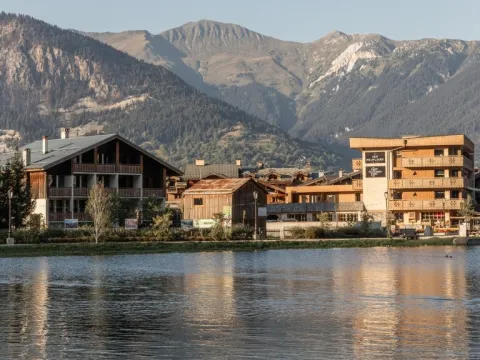
Megeve was created as a ski resort in the 1920s by Baroness de Rothschild, who wanted a French alternative to St. Moritz. A century later, the village has preserved its cobblestone charm while building one of the strongest hotel scenes in the Alps. Ten four and five-star properties operate here, including addresses that have held Michelin guide recognition for decades.
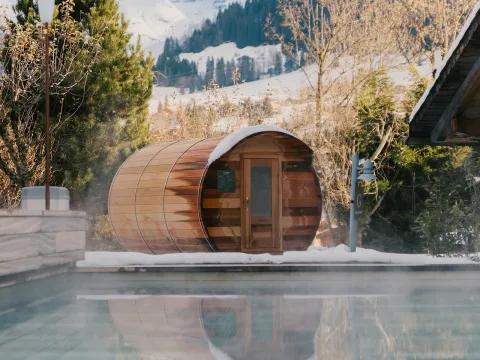
The appeal of Megeve for hotel guests goes beyond skiing. The village itself is the experience: horse-drawn carriages on snowy streets in winter, outdoor terraces with views of Mont Blanc in summer, and a concentration of restaurants that treats food as seriously as sport. Hotels in Megeve tend toward a warm alpine register: wood-clad rooms, generous spa facilities, and a level of service that feels personal rather than corporate.
In summer, Megeve transforms into a hiking and golf destination with a quieter energy that many guests prefer to the winter bustle. The alpine meadows around the resort offer walking trails for family and friends, with breathtaking views at every turn. Hotels adjust their programming accordingly: mountain biking packages, wellness retreats, and culinary workshops replace ski passes and apres ski.
Courchevel and the Trois Vallees: the grand resort experience
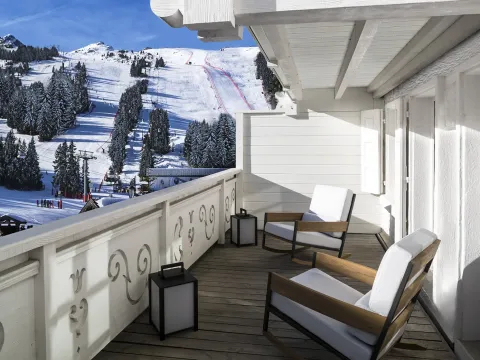
Courchevel 1850 remains the most prestigious ski resort address in the French Alps, and possibly in the world. The hotel landscape here operates at a level that has no real equivalent elsewhere: palatial spa resorts with indoor pools overlooking the piste, private chalets with dedicated staff, restaurants where the wine list runs to thousands of references.
The Trois Vallees system connects Courchevel with Meribel, Val Thorens, and Les Menuires across 600 kilometres of interconnected ski terrain. For a hotel guest, this means unprecedented variety: ski a different valley each day without ever removing your pass. Val Thorens, at 2,300 metres, guarantees snow from November through May. Meribel offers a more relaxed village atmosphere with excellent family-friendly hotels.
The hotel experience in Courchevel is defined by scale and ambition. Properties here compete on spa size, restaurant quality, and the seamlessness of the ski-in, ski-out access. Spend an unforgettable winter week here and you will understand why the resort attracts a global clientele. But the prices reflect that positioning: expect to pay a premium for the grand resort experience, particularly during the February school holidays.
Chamonix and Mont Blanc: where alpinism meets hotel comfort
Chamonix sits at the foot of Mont Blanc, the highest peak in Western Europe at 4,808 metres. The town has hosted mountaineers since the eighteenth century, and the hotel tradition here carries that heritage: less polished glamour, more genuine mountain culture.
Five-star hotels in Chamonix combine alpine architecture with contemporary wellness facilities. Properties with views of the Mont Blanc massif offer a spectacle that shifts with every change in light and weather. The Aiguille du Midi cable car, departing from the centre of town, takes guests to 3,842 metres in twenty minutes; the view from the top redefines what breathtaking means.
Summer in Chamonix is arguably better than winter for hotel guests who value hiking over skiing. The Tour du Mont Blanc, one of Europe's iconic long-distance trails, passes through town. Hotels offer luggage transfer, packed lunches, and contact with local mountain guides. The alpine experience here feels authentic in a way that purpose-built resorts cannot replicate.
For winter sports, the skiing is excellent but fragmented across several separate areas. Grands Montets delivers expert terrain; Les Houches is better for families and friends. The apres ski scene in Chamonix is livelier and less formal than Courchevel, with bars and restaurants that cater to climbers, skiers, and trail runners in equal measure.
Val d'Isere and Tignes: high-altitude alpine hotels
Val d'Isere sits at 1,850 metres in the Tarentaise Valley, connected to Tignes across the Espace Killy ski area. The resort has a dual identity: a traditional Savoie village at its core, with a modern hotel and resort infrastructure built around it.
Hotels in Val d'Isere offer some of the most reliable snow conditions in the French Alps, with skiing from late November through early May. The resort has invested heavily in its hotel stock over the past decade, and guests now have a genuine choice between grand addresses and smaller, character-driven properties. The face de Bellevarde run, which hosted Olympic downhill events, drops directly into the village centre.
Val d'Isere in summer is one of the French Alps' best-kept secrets. The hiking is superb, the hotel rates drop significantly, and the village atmosphere is unhurried. Mountain biking, via ferrata, and glacier walks offer variety for guests who want more than just a place to stay. The alpine meadows above the resort are extraordinary from June through September.
The Grand Massif and Samoens: alpine hotels off the beaten path
Not every French Alps hotel stay needs to involve a grand resort. The Grand Massif ski area, connecting Samoens, Flaine, Morillon, Les Carroz, and Sixt, offers 265 kilometres of terrain with a fraction of the Trois Vallees crowds and prices.
Samoens is a classified heritage village in the Haute Savoie with a genuine year-round community. Hotels here feel like they belong to the village rather than existing alongside it. The Cirque du Fer a Cheval, a natural limestone amphitheatre thirty minutes from Samoens, is one of the most spectacular sites in the French Alps and remains surprisingly under-visited.
Valmorel, further south in the Savoie, offers a purpose-built but tastefully designed resort with excellent family-friendly hotel options. The architecture avoids the brutalist concrete of some 1960s French ski stations, and the skiing is varied enough to keep intermediate guests entertained for a week. The summer offer includes mountain biking, paragliding, and hiking with breathtaking views across the Vanoise massif.
Getting to French Alps hotels: airports and access
Geneva airport is the most convenient gateway for the northern French Alps, serving Chamonix (one hour), Megeve (ninety minutes), and Morzine (seventy-five minutes). Lyon airport covers the southern resorts: Val d'Isere (three hours), Courchevel (two and a half hours), and Valmorel (two hours). Chambery and Grenoble airports offer seasonal winter flights with shorter transfers to the Trois Vallees and the Grand Massif.
Most luxury hotel properties in the French Alps offer transfer arrangements from Geneva airport or Lyon airport. Ask when booking; some include the transfer in their winter sports packages. Summer access by car is straightforward on well-maintained autoroutes, and the drive from Geneva or Lyon into the mountains is itself part of the experience.
Frequently asked questions about French Alps hotels
Which French Alps resort offers the best hotel and ski combination?
Courchevel 1850 leads for pure luxury with the widest choice of five-star hotel properties and direct access to the Trois Vallees, the largest interconnected ski area in the world. Val d'Isere offers excellent skiing with a more authentic village atmosphere. Megeve is the strongest choice for guests who value the hotel and restaurant experience as much as the ski terrain. For families and friends on a more considered budget, Valmorel and Samoens in the Grand Massif deliver genuine alpine quality at gentler prices.
Are French Alps hotels worth visiting in summer?
Summer in the French Alps is an unforgettable alpine experience that most visitors overlook. Hotel rates drop by 30 to 50 percent compared to winter peaks. The hiking is world-class, from the Tour du Mont Blanc to the trails above Samoens. Lake Annecy, close to the northern resorts, offers swimming, cycling, and lakeside dining. Many resort hotels stay open from June through September and adjust their offer for summer guests: spa programmes, mountain biking, and guided excursions replace winter sports. Megeve and Chamonix are particularly rewarding in the warmer months.
How far are French Alps hotels from the nearest airport?
Transfer times vary significantly by resort. Chamonix is roughly one hour from Geneva airport. Megeve is ninety minutes. The Trois Vallees resorts (Courchevel, Meribel, Val Thorens) are two to three hours from either Geneva or Lyon airport. Morzine and the Portes du Soleil are seventy-five minutes from Geneva. Most hotel properties in the French Alps can arrange transfers, and winter shuttle services operate from Geneva and Lyon airports to the main resort areas throughout the ski season.