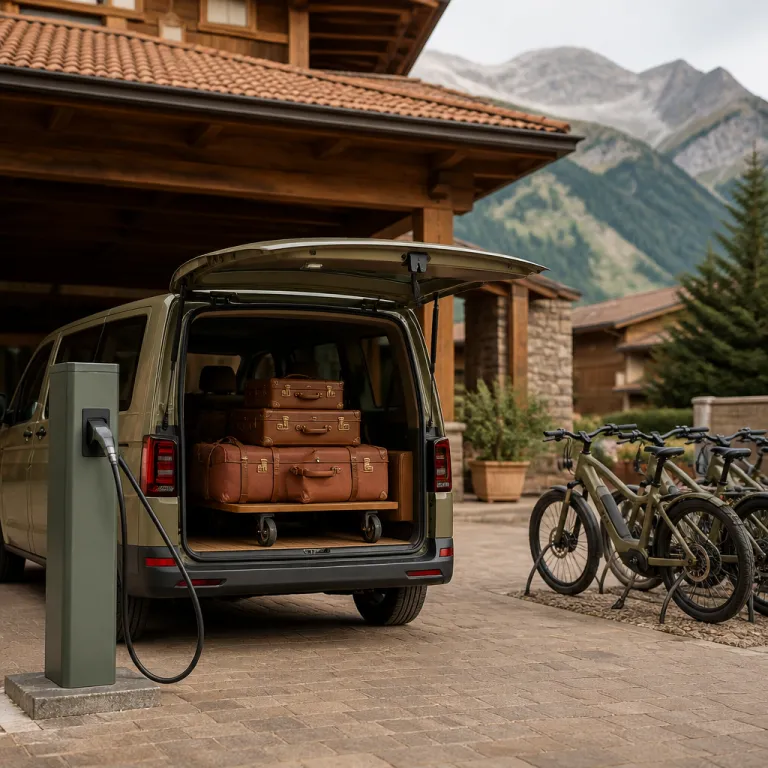
The carbon heavy last 50 kilometres in the Alps
Most guests still underestimate how much a short train or car segment in the Alps shapes both carbon impact and mood. When you look closely at alpine hotels rail transfer patterns, more than 70 percent of a luxury guest’s trip emissions often come from the airport to hotel leg when it is handled by a private vehicle. The stay itself in a carefully run alpine hotel can be relatively light, while the last 50 kilometres from the rail hub into the swiss Alps or Austrian Alps quietly carry the real weight.
Alpine hotels and their transportation partners now treat this last stretch as a strategic service, not an afterthought. Industry data shows that around 75 percent of higher end alpine hotels already offer some form of shuttle service, and those that integrate rail and electric shuttles report guest travel time reductions of about 20 percent on the same route. This is where the main keyword alpine hotels rail transfer stops being a marketing phrase and becomes a design question about how you actually travel, at what time of day, and with which mix of train, rail hub, and electric vehicle.
The most forward thinking properties in the swiss Alps, the Austrian Alps, and the Italian Dolomites now map every train ride into a curated arrival sequence. They work with local transportation partners that provide electric shuttles, real time tracking apps, and luggage handling that feels closer to business class than to a shared bus tour. For a business traveller turning a Geneva or Milan meeting into a three day alpine trip, the difference between a chaotic taxi scramble and a seamless rail based arrival can decide whether they extend their stay or head straight home.
Rail spines and hotels that treat the journey as part of the stay
Across the Alps, a handful of routes now act as a low carbon spine for serious travellers who want rail first, car second. The Glacier Express between Zermatt and St. Moritz and the Bernina Express between Tirano and St. Moritz are no longer just scenic train rides with panoramic views ; they are the backbone of a new alpine hotels rail transfer culture where the hotel takes responsibility from the moment you board. On these lines, the best alpine hotels coordinate seat reservations, luggage tags, and onward electric shuttles so that your trip feels like one continuous guided tour rather than a chain of separate tickets.
In Andermatt, The Chedi has gone furthest in turning the train into the default arrival mode rather than an optional extra. Guests are encouraged to travel by rail into the village, then step directly into a quiet electric vehicle that completes the last minutes of the route with almost no friction, while staff track arrival time through discreet apps. This is alpine hotels rail transfer as a fully designed experience, where breakfast, lunch, or even an early dinner can be timed around the train schedule instead of forcing you into a late night car dash from the airport.
On the lakeside, Bürgenstock Resort and Park Hotel Vitznau have elevated the lake crossing into something close to theatre. You arrive by train to Lucerne, glide across the lake by boat with jaw dropping views, then ascend by funicular or car to the hotel, turning what used to be a stressful transfer into a calm prelude to your stay. For travellers who care about dark sky experiences and quiet nights, this kind of carefully orchestrated arrival, similar in spirit to the properties highlighted in Alpine dark sky retreats, sets the tone long before you see your room.
Geneva, Milan and the business leisure corridor
For executives landing in Geneva, Milan, or Munich, the last mile question is rarely about romance ; it is about whether the alpine hotels rail transfer will let them close a meeting at four and still reach the mountains in time for a late dinner. The most capable alpine hotels now build their rail and electric shuttle schedules around these business heavy arrival waves, offering short train hops from the airport to a rail hub, then guaranteed electric vehicles for the final ascent. This is where the promise of free time in the mountains depends on someone else quietly solving the logistics.
On the Geneva corridor, properties around Verbier and Megève have started to professionalise their EV shuttle networks rather than outsourcing everything to traditional black car services. Some hotels publish clear rate per person structures for shared electric transfers, while still offering private options for double occupancy or larger groups based on double room bookings. When you see pricing described as person based rather than per vehicle, it usually signals that the hotel has thought seriously about filling seats on each train ride or shuttle run instead of sending half empty cars up the valley.
For travellers extending a work trip, the most elegant solutions feel almost invisible. You step off a TGV or regional train, hand over your luggage once, and then move through a chain of rail segments, cable cars, and quiet shuttles without ever queuing for a taxi, much like the seamless medical and wellness transfers curated by the clinics featured in serious Alpine longevity retreats. Hotels that reach this level of coordination rarely shout about it in their marketing, yet their repeat business leisure guests quietly reward them with longer stays and higher spend.
From Zermatt to the Dolomites: where rail works beautifully, and where it does not
Some alpine destinations are almost purpose built for rail centred arrivals, while others still force compromises. Zermatt is car free and linked by a cog railway, which means the last segment of any alpine hotels rail transfer is technically elegant but can be fragile in shoulder seasons when schedules thin out. In practice, the most experienced hotels in Zermatt pad the timetable, build in free time in the village, and keep electric carts on standby to move guests quickly from the station to the hotel when a train arrives late.
Across the border, the Italian Dolomites show both the promise and the current limits of rail based access. The Venice to Cortina corridor is slowly evolving into a more coherent route, with regional trains feeding into EV shuttles that climb to the resorts, yet the last kilometres still rely heavily on road based transfers. Here, alpine hotels rail transfer strategies focus on making the rail portion of the trip as long and comfortable as possible, then compressing the road segment into a single, well timed ascent rather than a patchwork of taxis.
There are also valleys where rail only simply does not work yet, such as parts of Val d’Isère or smaller pockets of the Austrian Alps where cable cars and buses do the heavy lifting. In these places, the most honest hotels are transparent about the need for a private or shared vehicle while still offering electric options and clear rate per person or based on double occupancy pricing. They may not be able to offer free travel in the literal sense, but they can still reduce the carbon cost of each day by consolidating transfers and aligning them with the main train arrivals.
Designing the invisible: luggage, timing and the rhythm of the stay
The most sophisticated alpine hotels rail transfer systems are defined less by shiny vehicles and more by what guests never have to think about. Luggage moves from airport to rail car to hotel room without you touching it twice, while staff quietly adjust dinner day reservations if a train runs late. This is where the line between transport partner and hotel concierge blurs, and where the best alpine properties now invest as much thought as they do in spa menus or wine lists.
For many guests, the real luxury is not a faster route but a calmer one. A well planned day might start with breakfast on a high speed train, continue with a jaw dropping section of the Glacier Express or Bernina Express, then shift to a short train hop and finally an electric shuttle that reaches the hotel just in time for a late lunch on the terrace. When the timing works, you arrive with enough free time before dinner to explore the village, ride a cable car, or simply sit by the lake and watch the light change.
Hotels that master this choreography often treat transfers almost like a curated tour, with optional guided tour elements for guests who want commentary on the swiss Alps or Austrian Alps landscapes during the journey. They also tend to publish clear information about rate per person, person based supplements, and based on double occupancy pricing so that guests can compare rail centred packages with traditional car only options. As one internal training document for alpine properties puts it without embellishment, “What is last mile transportation ? The final leg of a journey from a transport hub to the destination. Why are hotels focusing on last mile solutions ? To enhance guest convenience and reduce environmental impact. How can guests access these services ? Through hotel booking systems or dedicated apps.”
Top alpine destinations where the journey truly matches the stay
Certain valleys now stand out not just for their hotels but for how intelligently they connect to the rail grid. Around St. Moritz, the combination of the Glacier Express, the Bernina Express, and a dense web of short train links means that alpine hotels rail transfer options can be almost entirely rail based until the final kilometres. Many hotels here package breakfast and dinner into half board offers that align with train arrival times, so you step off the carriage and sit down to a hot meal without watching the clock.
On the shores of Lake Lucerne, properties such as Bürgenstock Resort and Park Hotel Vitznau have turned the lake itself into a central character in the arrival story. Guests often travel by rail to Lucerne, cross the lake by boat with panoramic views, then ascend by funicular or road to the hotel, echoing the timeless arrivals described in historic Alpine grand hotels. Here, the combination of rail, lake boat, and cable cars allows travellers to structure their day around the journey, with free time built in for a lakeside lunch or a quiet walk before check in.
In the Austrian Alps, resorts near Innsbruck and Kitzbühel are quietly catching up, using regional rail lines as feeders and then deploying electric shuttles for the last ascent. Hotels publish clear person based pricing for shared transfers, sometimes including them in premium room categories based on double occupancy to nudge guests away from private cars. Across these destinations, the pattern is consistent ; when the arrival is designed with the same care as the spa or the restaurant, guests are far more willing to choose rail first and treat the transfer as part of the trip rather than a chore between breakfast and dinner.
FAQ
How much of my trip’s carbon footprint comes from the last mile ?
For many luxury travellers heading into the Alps, more than half of the total trip emissions can come from the airport to hotel segment when it is handled by a private vehicle. The stay itself, especially in energy efficient alpine properties, often represents a smaller share. Shifting to rail plus electric shuttles for this last stretch can significantly reduce the overall impact without changing where you sleep or eat.
What is the most efficient way to reach alpine hotels by train ?
The most efficient approach is usually to take a high speed or intercity train to a major hub such as Geneva, Zurich, Milan, or Munich, then connect to regional rail lines that run deep into the valleys. From there, many hotels arrange electric shuttles or coordinate with local cable cars and buses for the final kilometres. Booking these segments together through the hotel often results in smoother timing and fewer transfers.
How can I tell if a hotel has a serious rail transfer programme ?
Look for clear information on the hotel website about rail connections, shuttle schedules, and pricing that is described as rate per person or person based rather than only per vehicle. Properties that have invested in alpine hotels rail transfer usually mention electric shuttles, luggage handling from the station, and coordination with specific train numbers. If in doubt, ask whether they can time check in, breakfast, or dinner around your train arrival.
Do rail focused transfers work in every Alpine valley ?
No, some valleys still lack convenient rail access for the final kilometres, especially smaller resorts or high altitude hamlets. In these areas, hotels may rely on road transfers but can still reduce impact by using electric vehicles, consolidating guest arrivals, and aligning with the main train services. It is worth asking the hotel which part of your route can realistically be done by rail and where a vehicle remains necessary.
How should business travellers plan an extended stay using rail ?
Business travellers should start by aligning meeting times with major train departures from cities such as Geneva or Milan, then choose alpine hotels that explicitly coordinate with those services. Many properties now offer late check in, flexible dinner hours, and luggage handling that allow you to move directly from a boardroom to a train without returning to the airport. This approach often turns a rushed overnight into a calm two or three day extension in the mountains.