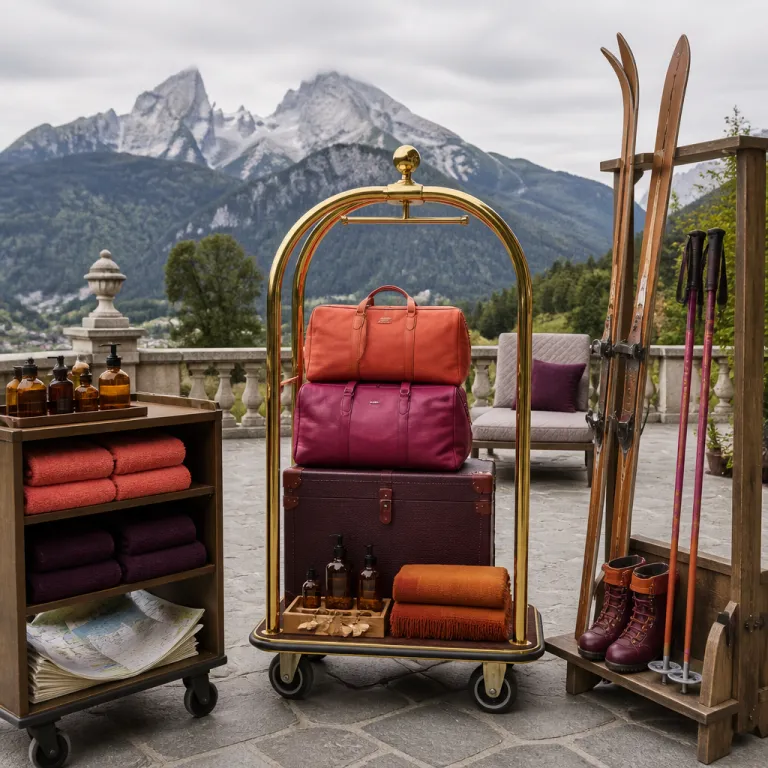
Where limestone meets lake water: the Berchtesgadener Land hotel landscape
Bavaria ends here, at a finger of German territory pushed deep into Austria, surrounded on three sides by mountains that rise without apology. The Berchtesgadener Land sits at the southeastern extreme of the German Alps, a compact region where vertical rock faces, silent lakes, and a national park that has never seen a chainsaw combine to produce scenery that belongs in a geology textbook. Salzburg lies just across the border. Munich is a comfortable drive northwest. Yet the Berchtesgadener Land feels removed from both, sealed inside its own amphitheatre of limestone and forest.
Hotels here serve a particular kind of Alpine traveller. Not the ski-resort crowd chasing lifts and apres-ski bars, but guests who want to stand at the edge of a lake so still it doubles the mountains, who want to hike into terrain where golden eagles are more common than other walkers, who want the weight of Bavarian hospitality at breakfast and the weight of genuine wilderness by afternoon. The accommodation ranges from polished wellness properties with pools and treatment rooms to family-run guesthouses where painted wooden furniture and farm-fresh eggs define the experience. Both deliver. The Berchtesgadener Land has been hosting visitors long enough to know exactly what mountain guests need.
Berchtesgaden town: five centuries of salt and stone
Berchtesgaden grew wealthy from the salt deposits buried in its mountains. The mineral funded churches, a royal palace, and a town centre that carries architectural ambition well beyond what its population would suggest. The salt mine itself, operating since the early sixteenth century, takes visitors underground by miniature railway, across a subterranean lake by boat, and down wooden chutes polished smooth by generations of use. It remains, against all expectations for a tourist attraction of that vintage, genuinely thrilling.
The town functions as the region's transport and cultural hub. Bus routes radiate outward to every valley. Restaurants serve the Bavarian mountain repertoire with confidence: pork knuckle with crackling skin, bread dumplings in dark gravy, lake trout pulled from waters cold enough to keep the flesh firm. Hotels in the town centre suit guests travelling without a car, as connections reach every trailhead and attraction. Those with vehicles find parking straightforward at nearly every property.
Accommodation in town ranges from larger properties with full spa facilities and mountain-view balconies to smaller addresses tucked into residential streets where rates drop but breakfast quality holds steady. The Watzmann massif fills the southern horizon from upper-floor rooms, a wall of grey rock that shifts from pale silver at dawn to deep amber as the sun drops behind the ridgeline.
The Konigssee: Germany's quietest spectacle
The Konigssee does not behave like a lake. It behaves like a fjord. Nearly eight kilometres long, squeezed between rock walls that plunge straight into water nearly two hundred metres deep, the lake sits inside Berchtesgaden National Park with a stillness that feels almost aggressive. No motorboats. No jet skis. Electric vessels, silent since they replaced steam over a century ago, glide passengers toward St. Bartholoma, a Baroque pilgrimage church perched on a peninsula that has graced every postcard this region has ever produced.
The boatmen pause mid-lake to play a horn against the cliff face. The echo returns three times, each repetition softer, folding into the silence between. It is corny. It is also, in the stillness of that water between those walls, unexpectedly moving.
Beyond St. Bartholoma, the boat continues to Salet, where a short walk reaches the Obersee. This smaller lake, backed by the longest waterfall cascade in the country, feels wilder and less visited. The water runs a shade of green that photographs struggle to reproduce honestly. Hotels at Schonau am Konigssee, the village at the lake's northern end, provide the most direct access to this entire experience. Properties here range from lakeside addresses to family-oriented hotels with pools and children's programmes.
The national park: rewilded and vertical
Berchtesgaden National Park covers two hundred and ten square kilometres of protected mountain wilderness. It is the only alpine national park in the country, and it takes its mandate seriously. No forestry. No hunting. No development beyond maintained trails and a handful of mountain huts. The result is terrain where nature operates on its own schedule: golden eagles nesting on ledges that human feet will never reach, chamois picking across scree slopes at altitudes where the air thins noticeably, marmots whistling warnings across boulder fields that have not shifted since the last ice age.
The Watzmann dominates everything. At over twenty-seven hundred metres, it stands as the region's defining landmark, its east face dropping nearly two thousand metres to the Konigssee in a single terrifying sweep. The multi-day traverse of its ridge remains one of the most respected mountaineering challenges in the Eastern Alps. But the park also offers gentler trails: lakeside walks, forest paths through old-growth beech and spruce, and ranger-led excursions that add interpretation to what might otherwise be simply beautiful scenery.
Hotels throughout the Berchtesgadener Land function as base camps for park exploration. Properties that cater to hikers provide packed lunches, trail maps, drying rooms for wet gear, and the early breakfast that a serious summit attempt demands. The park visitor centre in Berchtesgaden offers orientation for those who prefer structure to improvisation.
The Kehlsteinhaus: beauty with a shadow
The Kehlsteinhaus sits at over eighteen hundred metres on the Obersalzberg, reached by a dedicated mountain road that threads through five tunnels and a brass-lined elevator that climbs through solid rock to the summit. The panorama from the terrace is extraordinary: the Berchtesgadener Land spread below, the Austrian Alps rolling southward, Salzburg visible on clear days as a cluster of spires in the distance.
The building carries a complicated history. Constructed as a diplomatic reception house during the Nazi era, it now operates as a restaurant and viewpoint. The Documentation Centre on the Obersalzberg addresses that period with the thoroughness and moral seriousness the subject requires. Visiting both in a single day produces an experience that moves between scenic grandeur and historical gravity in a way few places attempt. The Berchtesgadener Land does not hide from its past. It contextualises it.
Ramsau: where the painters came
Ramsau bei Berchtesgaden occupies a valley west of the main town, quieter and greener, with a parish church that nineteenth-century landscape painters turned into the most reproduced image in Bavaria. The viewpoint they favoured, known as the painters' corner, frames St. Sebastian's church against the Reiteralpe with the Ramsauer Ache flowing below. It looks staged. It is not.
The Hintersee, a small lake surrounded by the Zauberwald, offers walking among moss-covered boulders deposited by a rockfall thousands of years ago. The forest here feels ancient and slightly uncanny, the kind of place that generated fairy tales before it generated tourism. Hotels in Ramsau lean toward the traditional alpine guesthouse model: family-run, warmly decorated, with rates that sit below Berchtesgaden town and an atmosphere that rewards guests seeking tranquility over convenience. The Watzmann remains visible from the village, a reminder that drama is never far away even in the calmest corners of this region.
Winter: modest slopes, serious scenery
The Berchtesgadener Land is not a ski destination in the way that the Arlberg or the Dolomites are ski destinations. The Jenner cable car from Schonau reaches nearly nineteen hundred metres and serves intermediate terrain, a sledging run, snowshoe trails, and freeride possibilities with views across the national park that make the modest vertical feel secondary. The Rossfeld Panorama Road, climbing to sixteen hundred metres on the highest paved road in the country, provides cross-country skiing and winter panoramas that extend across the border into Austria.
Winter here suits travellers who want snow without circus. Hotels provide ski storage and equipment drying, and the region's spa and wellness culture comes into its own when temperatures drop and the mountains disappear into cloud. A pool with a view of snow-covered peaks, a sauna followed by cold mountain air on the terrace: the Berchtesgadener Land does winter recovery exceptionally well.
Reaching the region
Salzburg airport sits roughly thirty kilometres away, a short transfer across the Austrian border. Munich is approximately a hundred and sixty kilometres northwest, around two hours by motorway. Most hotels provide a guest card that covers the regional bus network, connecting every valley and trailhead without requiring a car. For those who drive, parking is available at virtually every property.
Berchtesgadener Land in numbers
- National park area: 210 sq km, Germany's only alpine national park
- Watzmann summit: 2,713 m, with an east face dropping 1,800 m to the lake
- Konigssee length: 7.7 km, depth up to 190 m, electric boats since 1909
- Kehlsteinhaus elevation: 1,834 m, accessed by road, tunnel, and rock elevator
- Distance from Salzburg: 24 km (roughly 25 minutes)
- Distance from Munich: 159 km (roughly 2 hours)
- Rothbach waterfall: 470 m, the longest cascade in the country
Should guests base themselves in Berchtesgaden town or in the surrounding villages?
Berchtesgaden town works best for guests who want cultural attractions, restaurant variety, and the bus network at their doorstep. Schonau am Konigssee suits those whose priority is the lake and the national park. Ramsau appeals to guests who value quiet village atmosphere and direct hiking access above all else. The distances between them are short, the bus connections reliable, and the guest card that most hotels provide makes the entire region accessible from any base. The choice comes down to temperament: convenience, lake proximity, or mountain solitude.
Is this region suitable for families?
Few Alpine regions match the Berchtesgadener Land for family travel. The Konigssee boat trip captivates children as reliably as it does adults. The salt mine tour, with its underground railway, boat crossing, and wooden slides, was practically designed to thrill younger visitors. The Kehlsteinhaus bus ride and elevator ascent add adventure. The Hintersee forest walk engages imaginations. Hotels with pools and family rooms are well represented, particularly around Schonau. The Bavarian hospitality tradition, generous at table and warm in manner, tends to make children feel genuinely welcome rather than merely tolerated.
What is the best season to visit?
Summer and early autumn deliver the fullest experience. Hiking trails open fully from June, the Konigssee boats run their complete schedule, and the Kehlsteinhaus is accessible from mid-May through October. Wildflower meadows peak in June and July. Autumn brings quieter trails, golden larch forests, and crystal visibility across the peaks. Winter offers a different character entirely: snow-covered stillness, modest skiing, and the spa culture that Bavarian hotels execute with particular skill. Spring is the quietest season, with snowmelt limiting high-altitude access but valley walks and cultural attractions fully available.