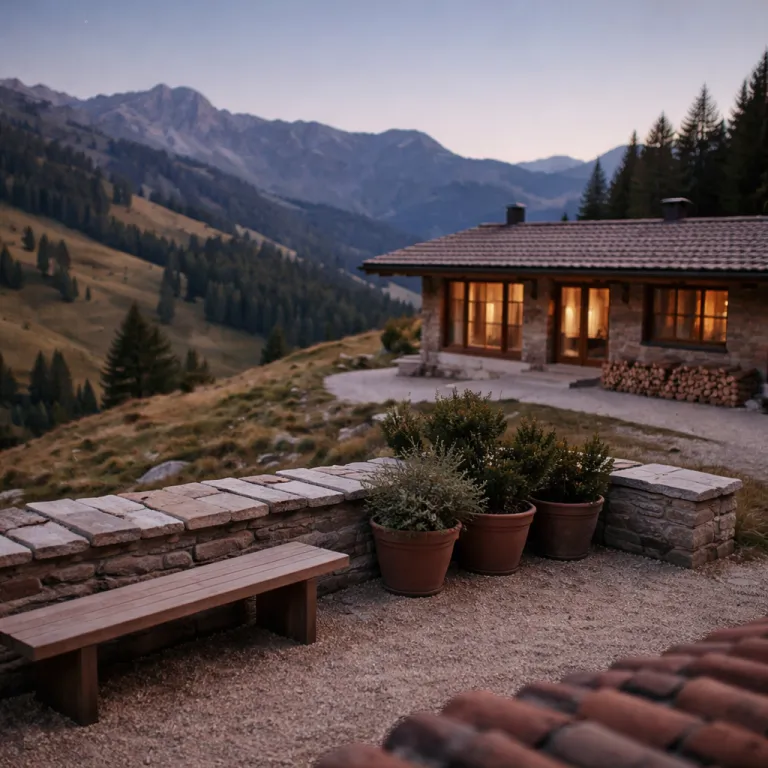
Where alps dark sky hotels truly earn their name
Late spring in the Alps is when the night finally belongs to the mountains again. The long astronomical twilight pulls the Milky Way slowly over the sky, giving you a richer stargazing experience than the hazier, crowded weeks of August. For solo travelers, this is when alps dark sky hotels feel most intimate and most precise.
Two addresses anchor the serious end of this trend in the Alps, far from any generic ski resort marketing. At 3 100 meters above Zermatt, 3100 Kulmhotel Gornergrat sits above most artificial light, pairing telescopes with a horizon of peaks that frame some of Europe’s darkest skies. Its location in a Bortle class 2 zone means the Milky Way is visible as a bright, structured band on clear nights. In South Tyrol, Vigilius Mountain Resort rises at 1 500 meters above the valley haze, a cable car ride that quietly separates your night sky from the commuter glow below and brings you into a Bortle 3 environment.
Both properties understand that a dark sky is not a mood board, but a measurable asset. They work with astronomical societies and local tourism boards to keep light pollution low, proving that alps dark sky hotels can be both luxurious and scientifically credible. 3100 Kulmhotel Gornergrat collaborates with the Gornergrat Observatory and regional researchers, while Vigilius has adopted shielded, downward facing fixtures and warm colour temperatures under 2 700 K. When you book, ask directly how they shield outdoor hot pools and terrace lighting, because the best places will have a clear, technical answer.
Astrotourism here is not a sideshow to ski weekends, it is the main event. In practice, it means traveling specifically to locations with clear night skies for stargazing, timing your stay around moon phases, and choosing properties that treat darkness as a protected resource rather than a backdrop for marketing photos. That is the promise these hotels must live up to every single clear night.
From a traveler’s perspective, the experience starts long before you reach your room. Check weather forecasts obsessively, because a single cloud band can erase the stars for an entire area. Use satellite cloud maps and local mountain forecasts, then book your hotel nights around the new moon window, treating any extra clear night as a quiet Alpine bonus.
High altitude matters more than many guests expect when choosing between alps dark sky hotels. The thinner air above 2 000 meters reduces atmospheric scattering and humidity, while distance from valley towns cuts stray light dramatically. That is why a night at 3100 Kulmhotel Gornergrat feels closer to the sky than a valley lodge, even if both call themselves luxury.
From ski palaces to stargazing lodges: where this works now
The most convincing alps dark sky hotels are not always the ones with the loudest press coverage. Look instead to the fringes of established destinations, where the ski crowd thins and the night sky quietly takes over. Around Laax, for example, the Rocksresort fringe properties sit just far enough from the core lifts to give you a darker sky than the main après ski strip, with local light pollution maps showing a drop of one to two Bortle classes between the base area and the outer slopes.
In Saanenland, the upper slopes above Gstaad hide small lodges that treat the night as carefully as the wine list. They dim terrace lighting after dinner, letting guests step from fondue to full stargazing experience without crossing a car park of artificial light. These are the places where a resident astronomer might not be on staff, but the lodge offers curated guided night walks with binoculars and blankets, often capping groups at a dozen people to keep the experience quiet and focused.
Across the border in the Engadin, a handful of design forward chalet conversions have quietly become some of the top alps dark sky hotels. They sit above the valley floor, away from the main ski resort roads, with skies that feel closer to a national park than a glamour village. Here, the luxury is not marble, but the way the Milky Way arches over the roofline while you soak in an outdoor hot tub, with only low level red path lights to guide you back inside.
France’s Vercors plateau is another serious area for anyone chasing a pristine night sky. The pre Alpine ridges act as a shield against lowland light pollution, giving you some of the darkest skies within easy reach of Lyon and Grenoble. A couple of family run hotels here now offer guests simple telescopes and red light torches, proving that alps dark sky hotels do not need a spa wing to feel premium, only thoughtful lighting design and a commitment to keeping façades unlit after a set evening curfew.
Food still matters, but in a different rhythm than winter’s heavy après ski rituals. The smartest properties have shifted from chasing guidebook stars to quietly earning them, a story unpacked in depth in this piece on how Alpine hotels started winning Michelin stars again. When the last plate leaves the pass, the terrace becomes your observatory, and the chef’s final course is often a thermos of something warm for the deckchairs.
Do not expect every luxury hotel in Megève or Zermatt to deliver this level of night focus yet. Many still flood their façades with artificial light, turning the sky into a backdrop instead of the main act. The alps dark sky hotels worth your time are the ones that can show you exactly how they have redesigned lighting, from parking to pool, ideally with measurable targets such as lumen caps, motion sensors, and warm spectrum LEDs.
How a three night dark sky stay actually unfolds
Arrive on a late May afternoon and you will feel the difference before the first star appears. The light lingers over the alps, giving you time to settle into your chalet style room, walk the area, and understand where the sky will open after dark. Serious alps dark sky hotels use this first evening to calibrate expectations, not to oversell the spectacle, often sharing cloud forecasts and moonrise times so guests know what is realistically possible.
A resident astronomer, when present, usually starts with a short indoor briefing before the night sky session. They explain how the Milky Way will rise during this season, what constellations you will see from this latitude, and why late spring skies often beat August for clarity. On clear nights, they lead a guided night walk to a nearby ridge, carrying binoculars and sometimes a portable observatory grade telescope mounted on a tracking head.
On the second night, the focus often shifts from orientation to deeper stargazing experiences. You might spend more time at the main terrace observatory, learning to track planets, double stars, and faint nebulae through the scope. Some alps dark sky hotels deliberately keep the lodge offers simple here, with no screens and minimal digital interpretation, so that guests stay outside and present, listening to live explanations rather than watching slides.
By the third night, the experience becomes more personal and less structured. You already know where the darkest corner of the property lies, which deckchair catches the least stray light, and how the sky changes hour by hour. This is when a solo traveler can sit alone under the night sky, letting the alps feel both vast and strangely close, with only the sound of distant streams and the occasional snowmelt crack.
Cloudy evenings are inevitable, and the best places plan for them with the same care as clear nights. Some hotels run indoor sessions on the physics of light pollution, or screen films about national park dark sky initiatives in the southern hemisphere deserts around San Pedro de Atacama. Others lean into wellness, sending you to the spa or an outdoor hot pool, a shift in focus explored further in this guide to Alpine longevity retreats that genuinely work.
What you will not find at the serious end of alps dark sky hotels is a forced entertainment schedule. The rhythm is gentle; a short talk here, a stargazing experience there, long stretches of silence in between. The goal is not to fill every minute, but to give you enough structure that each night feels distinct and intentional.
Hut to hut star nights and why late May is the new ritual
Beyond the main hotels, a quieter revolution is happening in Alpine refuges. In regions like Valle Maira, the Hochkönig massif, and the wilder edges of the Engadin, hut keepers now open their terraces after dinner for informal stargazing experiences. These are not branded as alps dark sky hotels, yet they often deliver some of the purest skies in the range, with almost no direct light sources for several kilometres.
The format is simple and deeply effective for solo travelers. You hike up in late afternoon, eat with the small group of guests, then step outside once the last plates are cleared and the generator is dimmed. With almost no artificial light in the area, the night sky feels closer to a desert observatory than a European ski valley, and your eyes adapt fully after twenty to thirty minutes in the dark.
Some hut to hut itineraries now weave two or three of these refuges together over a long weekend. One night might be spent with a basic telescope and a hut warden who knows the constellations by memory, another with nothing more than blankets and a thermos under the stars. The luxury here is not marble bathrooms, but the way the alps fall silent while the skies turn slowly overhead, giving you a sense of scale that no spa brochure can match.
Late May and early June are particularly strong for this style of trip. The snow has retreated from most access paths, yet the big summer crowds and dust haze have not arrived, leaving the night sky cleaner and the air crisper. If you want a valley by valley sense of which regions open when, this seasonal calendar on where to stay in the Alps in May is a useful planning tool.
For many travelers, these hut nights become the emotional core of an alps dark sky journey. You might still book a luxury hotel in Megève or Zermatt for the start and end of the trip, enjoying a final ski run or an unhurried après ski drink. Yet it is the guided night on a quiet ridge, far from any resort, that tends to stay with you.
Think of this as the Alps’ answer to the famous desert lodges of San Pedro de Atacama, rather than a copy of them. You are not in the Atacama Desert, and you will not find Awasi Atacama style adobe suites here, but you are tapping into the same instinct to protect darkness as a luxury. In that sense, the most thoughtful alps dark sky hotels now belong to a global constellation of places that treat the night as their finest amenity.
FAQ
What is astrotourism in the Alps ?
Astrotourism in the Alps means traveling specifically to high altitude areas with low light pollution to enjoy the night sky. In this context, it covers everything from staying at dedicated alps dark sky hotels with observatory grade telescopes to spending a guided night in a remote mountain hut where the Milky Way is visible to the naked eye.
Why choose high altitude hotels for stargazing ?
High altitude hotels sit above much of the atmospheric haze and many sources of artificial light. This combination makes stars appear sharper and the Milky Way more visible compared with valley floors. Less air between you and space means reduced scattering, while distance from towns cuts skyglow, so a mountain lodge can offer dramatically better conditions than a brightly lit resort base.
Are alps dark sky hotels suitable for families ?
Many alps dark sky hotels are designed to welcome families as well as solo travelers. Properties that work with astronomical societies often run early evening stargazing sessions tailored to children, using binoculars rather than complex telescopes and keeping talks under thirty minutes. This broad accessibility means younger guests can enjoy the night without staying up until the small hours.
How should I plan around weather and cloudy nights ?
Weather is the single biggest variable for any stargazing experience in the Alps. Check forecasts closely, aim for a multi night stay to increase your chances, and ask hotels how they handle cloudy evenings before you book. The best alps dark sky hotels offer alternative programming such as talks on light pollution, wellness sessions, or flexible rebooking when several nights are fully overcast.
Which regions of the Alps have the darkest skies ?
Several Alpine regions stand out for low light pollution and strong night sky quality. Valle Maira in Piedmont, the Engadin in Switzerland, the Vercors plateau in France, the fringes of Saanenland, and the Hochkönig area in Austria all offer excellent conditions. When choosing between them, consider access, altitude, and whether you prefer a full service hotel or a more remote hut to hut format.