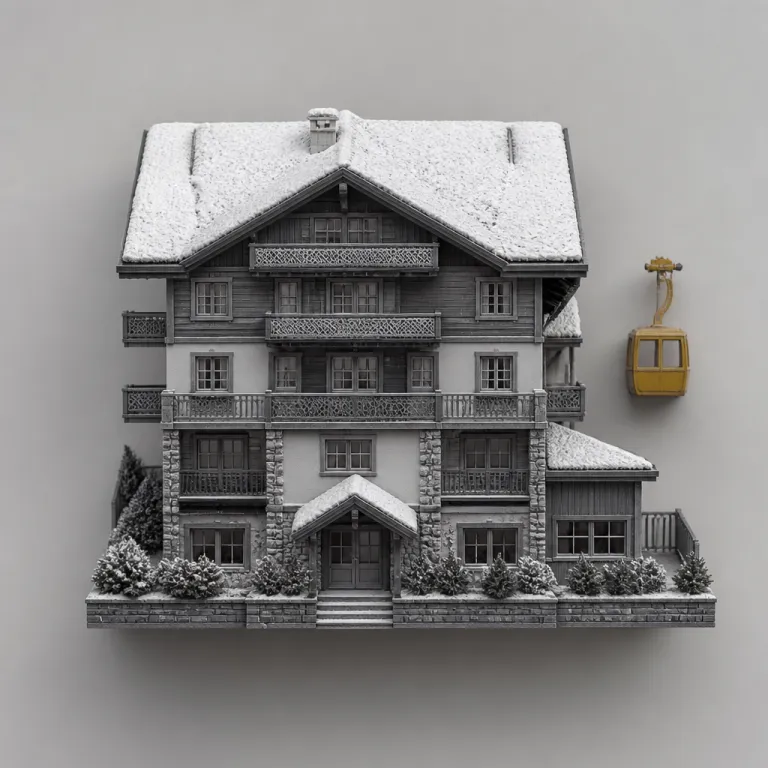
Livigno occupies a high valley at 1,816 metres, closer to the Swiss border than to any major Italian city, and it has turned that geographical isolation into a distinctive identity. The valley is long, flat-bottomed, and surrounded by mountains that hold snow from November through May. It is one of the highest permanently inhabited valleys in Europe, and its altitude guarantees the kind of reliable snow conditions that lower resorts increasingly struggle to deliver. A hotel in Livigno puts you inside a town that combines serious winter sport with duty-free shopping, Italian mountain hospitality, and a particular atmosphere that results from being, in the best sense, slightly cut off from the rest of the world.
The Setting: High Valley in Lombardy
Livigno sits in a flat-bottomed valley roughly 12 kilometres long, running northeast to southwest between peaks that rise to over 3,000 metres. The valley belongs to Lombardy but feels more like an autonomous mountain republic: historically connected to the Engadin in Switzerland, it retains a duty-free status granted by Napoleon in recognition of its isolation and limited agricultural viability. This duty-free zone remains active today, making Livigno unique among Alpine destinations. Livigno, Italy hidden high-altitude secret, for its tax-exempt shopping on fuel, alcohol, perfume, and electronics.
Access to the valley requires commitment. The Foscagno Pass from the Italian side climbs to 2,291 metres before descending into Livigno. The Munt La Schera tunnel from Switzerland provides an alternative route through the mountain. In winter, the approaches can be challenging, and this difficulty of access has preserved Livigno from the over-development that has transformed more accessible valleys. The town that greets you on arrival is spread along the valley floor, its hotels, shops, and restaurants lining a main road that runs the length of the settlement.
Hotels in Livigno
The hotel landscape in Livigno reflects a community that has transitioned from subsistence farming to tourism hospitality within living memory. Many of the best properties are family-run, with the same family that once worked the mountain pastures now operating a hotel where guests enjoy spa facilities, mountain views, and half-board dining built on local recipes. Any hotel Livigno visitors choose reflects this heritage. Hotels Livigno has developed range from traditional garni properties offering bed and breakfast to full-service spa hotels with swimming pool, sauna, and wellness programmes.
A Livigno hotel at the star level typically features rooms finished in local timber, with balconies facing the valley and the mountains beyond. The design aesthetic is Alpine without being overwrought: warm, functional, and oriented toward the practical needs of guests who spend their days on the slopes or the trails. Spa facilities have developed rapidly, with newer properties investing in pool, sauna, and treatment areas that compete with the better-established wellness destinations in South Tyrol.
The Hotel Amerikan and similar established properties represent the upper tier of Livigno hospitality, where personal service, mountain knowledge, and dining quality define the experience. Hotel garni options provide a more independent format, with generous breakfast and the freedom to explore Livigno restaurants and pizzerias for lunch and dinner. The rooms across both formats tend toward generous Alpine proportions, with space that reflects the valley tradition of building for comfort rather than urban density.
For guests seeking privacy, apartment-style accommodations and residence options are available throughout the valley. These suit families and groups who prefer self-catering flexibility alongside hotel-style wellness access. The free ski bus connects all parts of the valley with the main lift stations, making the choice of location within Livigno less critical than in more compact resort towns.
Properties like the Lac Salin Spa and Mountain Resort and the Albergo Caravasc represent the full range of what a stay in Livigno can deliver. The Lac Salin offers contemporary spa luxury at altitude, while the Albergo Caravasc maintains the traditional mountain inn spirit with updated comfort. Between these two poles, hotels Livigno has cultivated over decades provide every format: full-board resort, garni bed and breakfast, apartment residence, and intimate chalet-style properties where the host family makes each guest feel like a returning friend.
Skiing at Altitude
The Livigno ski area divides into two main sectors: Mottolino on the eastern side and Carosello 3000 on the western side. Together they offer over 115 kilometres of prepared runs, with terrain that ranges from gentle nursery slopes to expert pitches and a snow park that has established Livigno as a freestyle destination of international reputation. The altitude, with most skiing above 2,000 metres and the highest lifts reaching nearly 3,000, ensures snow quality that remains consistent throughout the long season.
The Mottolino sector attracts snowboarders and freestyle skiers with its terrain park, which regularly hosts international competitions. The Carosello cable car system provides access to the western sector, which delivers more traditional Alpine skiing with long, sweeping runs and panoramic views that extend to the Swiss Alps. Cross country skiing on the valley floor, with 30 kilometres of groomed tracks at 1,800 metres, offers an alternative that the altitude makes particularly rewarding: the air is dry, the snow is reliable, and the flat valley geometry provides a natural course that requires no artificial modification.
Livigno has been selected as a venue for the Milano-Cortina Winter Olympics, hosting freestyle skiing and snowboard events. This recognition confirms what regular visitors have known for decades: the snow conditions, the terrain variety, and the infrastructure quality place Livigno among the most serious winter sport destinations in the Alps.
Summer in the High Valley
Summer in Livigno reveals a valley of surprising beauty. The high altitude keeps temperatures comfortable even in August, and the hiking trails that climb from the valley floor into the surrounding peaks offer mountain experiences that combine physical challenge with visual spectacle. Mountain biking has become a signature summer activity, with Mottolino operating its lift system for bike access and a network of trails ranging from flowing singletrack to demanding descents.
The Livigno lake, the artificial reservoir at the head of the valley, provides a striking landscape feature and a destination for walks and cycling circuits. Road cycling over the surrounding passes, including the Foscagno and the Bernina toward Switzerland, attracts serious riders seeking altitude training and dramatic scenery. The duty-free shopping remains available year-round, adding a practical dimension to the summer holiday that few mountain destinations can match.
Dining: Valtellina Tradition
Livigno cuisine draws on the Valtellina tradition, one of the most distinctive mountain food cultures in the Italian Alps. Pizzoccheri, buckwheat pasta served with potatoes, cabbage, and generous quantities of local Valtellina Casera cheese and butter, is the signature dish: hearty, complex, and impossible to replicate authentically outside the region. Bresaola, air-dried beef that originated in the Valtellina valleys, appears at every antipasto course. Sciatt, fried cheese fritters made with buckwheat batter and filled with melting Casera, provide the kind of substantial appetiser that altitude and exercise demand.
The wines of the Valtellina, produced on steep terraced vineyards from the Nebbiolo grape (locally called Chiavennasca), include some of the most distinctive reds in northern Italy. Sforzato, made from partially dried grapes, delivers concentration and warmth. Inferno, Sassella, and Grumello designate specific vineyard areas and carry individual character. These wines pair naturally with the rich, cheese-based cuisine of the valley, and hotel dining rooms in Livigno increasingly showcase them alongside the broader Lombardy wine selection.
A night at a hotel in Livigno during peak winter season combines the satisfaction of high-altitude skiing with the comfort of Italian mountain hospitality. The best sites for accommodation line the main valley road, with many properties offering hot tub facilities on their terraces, where guests can soak in warm water under a canopy of stars at nearly 2,000 metres. The combination of altitude, clean air, and the particular silence of a snow-covered valley at night creates conditions for rest that lower destinations cannot replicate.
Practical Information
Livigno is accessible from Milan (approximately four hours by car via the Stelvio road or the Foscagno Pass), from Innsbruck (approximately three hours via the Arlberg and Engadin), and from Zurich (approximately three hours via the Julier Pass). The Munt La Schera tunnel from Switzerland is closed to vehicles carrying certain goods due to the duty-free regulations. Within Livigno, the free ski bus provides comprehensive winter connectivity, and the town centre is walkable.
The duty-free zone makes Livigno attractive for purchasing fuel, alcohol, perfume, and certain electronics at prices significantly below Italian retail. Limits apply to quantities that can be exported, but for guests staying in the valley, the savings on daily purchases, particularly fuel, are notable. This commercial advantage, combined with the skiing, the altitude, and the mountain hospitality, creates a destination proposition that is genuinely unique among Alpine resorts.
Frequently Asked Questions
Where to Stay in Livigno
The accommodation options in this Italian ski town span the full range from family-run pensions to spa mountain resorts. The Hotel Lac Salin Spa Mountain Resort combines wellness facilities with a location near the Mottolino Fun Mountain lifts. Another option provides rooms in a quieter register, with personal attention. Another central property provides a base within walking distance of the pedestrian zone and the ski bus stops. Most properties include spa access, ski storage, and the activity connections that define the summer season.
The best time to visit depends on the season sought. Winter delivers snow-sure skiing from late November through April. Summer opens the Stelvio National Park to hikers and cyclists, with the Gavia and Stelvio passes providing some of the most celebrated road cycling in the Alps. The town stands out for its duty-free shopping, its consistent snow record, and its position at the heart of a landscape that rewards visitors in every season.
What makes Livigno different from other Italian ski resorts?
Livigno combines high-altitude reliable snow (1,816 metres base), duty-free shopping, Olympic-calibre freestyle terrain, and a geographic isolation that has preserved the valley from over-development. The altitude guarantees snow conditions that lower resorts cannot match, and the duty-free status provides a practical incentive that is unique in the Italian Alps. The best hotels and places to stay Livigno offers reflect a family-run tradition where personal service and mountain knowledge define the guest experience.
Is Livigno suitable for summer holidays?
Very much so. The high altitude keeps summer temperatures comfortable, and mountain biking, hiking, and cycling provide a full programme of activities. The Mottolino bike park has established Livigno as one of Europe premier mountain biking destinations. The duty-free shopping, the lake, and the Alpine walking trails complement the more athletic pursuits, and hotel spa facilities operate year-round.
How difficult is the journey to Livigno?
Access requires driving over the Foscagno Pass (2,291 metres) from the Italian side or through the Munt La Schera tunnel from Switzerland. In winter, snow chains or winter tyres are essential, and conditions can close the pass temporarily during heavy snowfall. The journey is part of the experience: as the road climbs and the valley opens below, the sense of arriving somewhere genuinely remote and genuinely special builds with every switchback. Most guests find the effort of access well rewarded by the quality of the skiing, the hospitality, and the atmosphere.