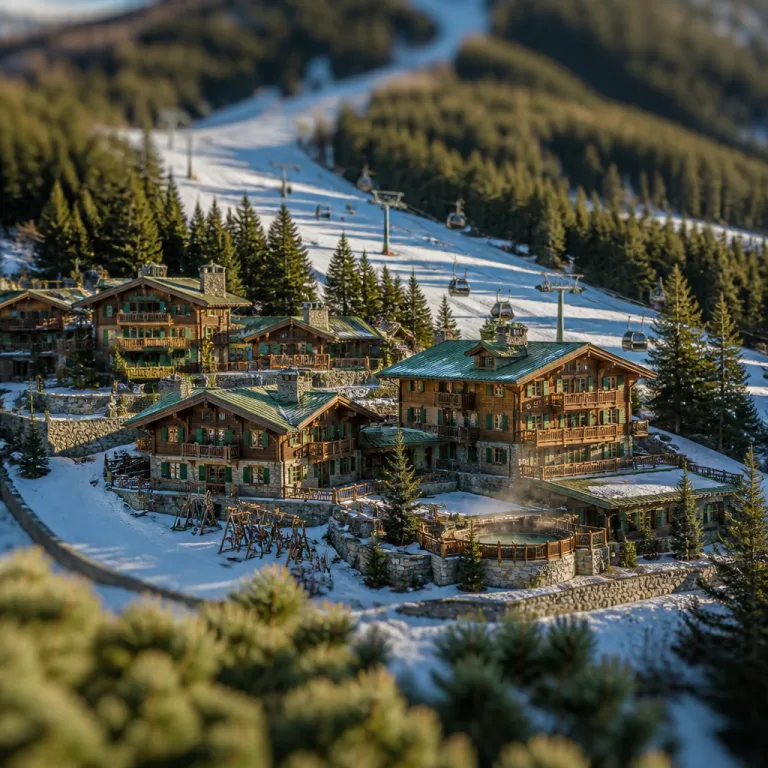
Glacier skiing on the Adamello: where Trentino meets Lombardy
Most Italian ski areas rely on altitude and snowmaking to stretch the season. The Adamello group takes a different approach. Sitting on the border between Trentino and Lombardy, it holds the largest glacier in the Italian Alps, a vast sheet of ice covering roughly 18 square kilometres that feeds ski terrain reaching 3,000 metres on the Presena. That glacier changes everything. It means skiing from October through late spring. It means reliable snow when the lower Dolomite resorts are already turning brown. And it means a particular quality of light at altitude, sharp and crystalline, that the valley floors never quite replicate.
The ski area connects Passo del Tonale with Ponte di Legno across 100 kilometres of groomed piste. It belongs to the Skirama Dolomiti Adamello Brenta consortium, which links this glacier terrain to Madonna di Campiglio and the western Trentino network on a single pass. The skiing itself ranges from wide glacier boulevards on the Presena to steeper pitches dropping toward Ponte di Legno, with enough intermediate terrain to satisfy a week without repetition.
What makes this destination unusual is the border position. Trentino and Lombardy share the mountain, and that cultural seam runs through the food, the atmosphere, and the character of the valley towns. Canederli from the Trentino tradition appear on the same menus as casoncelli from Brescia. Polenta made with Storo maize sits alongside risotto cooked in the Lombard style. The result is a culinary range that single-region ski areas cannot match.
Passo del Tonale: skiing from the doorstep
Passo del Tonale sits at 1,890 metres, a functional settlement built around the lifts and the road. The skiing starts here, quite literally. Lifts depart from the roadside, and the morning routine involves stepping outside and clicking into bindings. No shuttles, no queues for transfer gondolas, no wasted first hour of the morning.
The Presena glacier rises directly above the pass, accessible by cable car. On a clear morning, the view from the top takes in the entire Adamello group, the Ortles range to the northwest, and the Brenta Dolomites to the east. The glacier surface is wide, forgiving, and remarkably quiet compared to the crowded runs below. Intermediates find confidence on the gentle gradients. Stronger skiers push toward the edges where the pitch steepens and the snow holds its morning firmness longer.
The pass itself lacks the village charm of the towns below. It is honest about what it offers: altitude, snow, proximity to the lifts, and half-board dining that draws on both regional traditions. The accommodation runs solidly in the three and four-star range. Rooms face either the glacier to the north or the Adamello massif to the south. After a day at altitude, the simplicity works in its favour. Hot food, a warm room, the sound of nothing at all outside the window.
Ponte di Legno: the valley with a pulse
Drop 600 metres from the pass and the atmosphere changes completely. Ponte di Legno is a proper Lombardy mountain town at 1,258 metres, with a pedestrian centre, restaurants that take their cooking seriously, and the kind of evening street life that Italian mountain communities maintain even in deep winter. A gondola connects the town directly to the Tonale ski area, so the extra altitude is just a scenic ride away.
Ponte di Legno suits the skier who wants terrain during the day and texture in the evening. The restaurants here cook with intention. The shops sell local cheese and cured meats rather than resort merchandise. The atmosphere after dark has a lived-in quality that the pass, focused entirely on function, does not attempt. Families gravitate here for the village rhythm. Couples find the pedestrian streets more rewarding than the altitude settlement above.
The White War: history written in ice
No other ski destination in the Alps carries the same weight of military history. During the First World War, Italian and Austro-Hungarian forces fought across the Adamello range at altitudes above 3,000 metres, in conditions that tested the limits of human endurance. Trenches were carved into glaciers. Supply lines ran across crevassed icefalls. Soldiers lived for months in tunnels bored through rock and ice, fighting an enemy that was often less dangerous than the mountain itself.
The traces remain visible. Fortifications and trench systems cross the high ridges. The White War Museum at Temu houses artifacts recovered from the ice as the glacier retreats, objects preserved in extraordinary condition by the cold. An open-air trail network on the Presena follows the original military positions, with information panels that place the visitor directly into the geography of the conflict. It is a genuinely affecting experience. The scale of the mountains makes the human struggle feel both heroic and futile, which is perhaps the truest thing that can be said about that war.
Summer on the Adamello: trails, parks, and prehistoric rock
When the snow retreats, the Adamello reveals a different character. The range is protected on both sides of the border, as the Adamello-Brenta Nature Park in Trentino and Adamello Park in Lombardy. The trail network runs from gentle valley walks through wildflower meadows to serious high-altitude routes across moraine and glacier margin. The Presena cable car operates year-round, delivering hikers to panoramic terrain that would otherwise require hours of ascent.
South of Ponte di Legno, the Val Camonica stretches toward Lake Iseo through a landscape that carries UNESCO recognition for an extraordinary reason. The valley holds over 300,000 individual prehistoric rock carvings spread across its hillsides, the largest concentration of rock art in Europe. These engravings span eight thousand years of human habitation. Visiting the rock art parks and then ascending to the glacier in the same day creates a temporal vertigo: from the Neolithic to the Anthropocene in a single afternoon.
Adamello ski area at a glance
- Passo del Tonale altitude: 1,890 m, with Presena Glacier reaching 3,000 m
- Connected piste: 100 km across Tonale and Ponte di Legno
- Adamello glacier surface: approximately 18 sq km, the largest in the Italian Alps
- Consortium: Skirama Dolomiti Adamello Brenta, connecting to Madonna di Campiglio
- Distance from Trento: 100 km. Distance from Brescia: 120 km
- Season: October through May on the glacier, December through April on the lower runs
- Val Camonica rock art: UNESCO World Heritage, 300,000+ engravings
Why choose Adamello over the Dolomites?
Snow reliability. The Presena glacier guarantees conditions that no Dolomite resort below 2,500 metres can match, and the season runs a full two months longer. The Skirama pass connects to Madonna di Campiglio, so the terrain variety is comparable to the eastern valleys. The accommodation sits at a lower cost bracket for equivalent or better snow. And the White War history adds a cultural layer that purely recreational destinations lack. Skiers who discover the Adamello tend to return for that combination of glacier confidence, border cuisine, and the quiet satisfaction of skiing terrain that most visitors to Italy overlook entirely.
Is Adamello suitable for families?
The glacier terrain above Tonale is wide and gentle, which gives intermediate and learning skiers room to build confidence without the pressure of steep pitches or narrow passages. Ponte di Legno adds the village atmosphere that families appreciate after the lifts close. The half-board tradition at most properties simplifies the logistics of feeding children well. And the Skirama consortium pass means that a family can explore different terrain each day without additional cost, which keeps the variety high across a full week.
What makes the summer season worth visiting?
The combination is genuinely unusual. The Adamello offers protected parkland on both sides of a regional border, glacier access by cable car, First World War trail networks at altitude, and UNESCO rock art in the valley below. Few destinations in the Alps compress that range of experience into a single area. The hiking varies from meadow strolls to serious mountaineering. The cable car makes the high terrain accessible to walkers who would not attempt the ascent on foot. And the Val Camonica rock art is one of those places that quietly reshapes how you think about the passage of time.