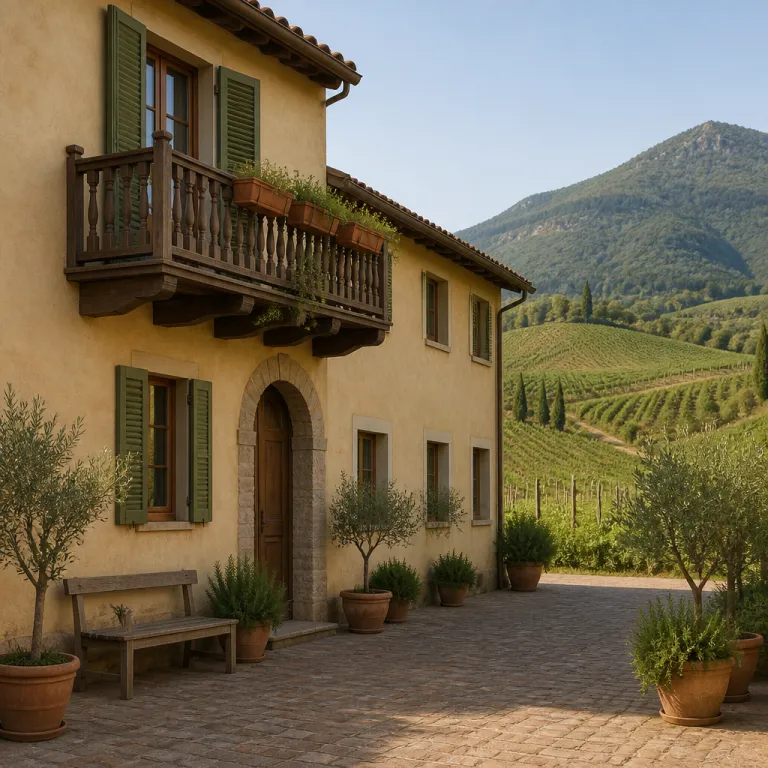
Hotels in Oltradige and Bassa Atesina: the wine road between Bolzano and Lake Caldaro
Oltradige and Bassa Atesina form the southern stretch of the South Tyrolean wine road, a landscape of terraced vineyards, apple orchards, and hilltop villages that runs from the outskirts of Bolzano to the shores of Lake Caldaro and beyond to the Salorno gorge where the German-speaking world meets the Italian. The hotel scene here serves a guest who wants the South Tyrolean mountain culture without the altitude: warm summers, outdoor swimming pools, vineyards within walking distance, and a culinary tradition that blends Austrian structure with Mediterranean lightness.
The area stretches across a series of wine villages; Appiano sulla Strada del Vino, Caldaro, Termeno, Cortaccia, Magrè; each with its own character but all sharing the same formula: Gewürztraminer vineyards on the slopes, a historic town centre with a church and a piazza, and hotels that range from family-run guesthouses to design-led spa properties. The location is perfect for guests who do not seek dramatic peaks and glacier views. It is a destination for the guest who finds beauty in a vineyard row catching the afternoon light, a Lagrein in a courtyard, and a swimming pool terrace looking across the Adige valley to the mountains on the far side.
Appiano: the capital of the wine road
Appiano sulla Strada del Vino is the largest and most diverse hotel base in the Oltradige area. The town sits at around 400 metres on the western slope of the Adige valley, surrounded by vineyards that produce some of the most acclaimed wines in Alto Adige: Pinot Bianco from the sandy soils of Schulthaus, Sauvignon from the higher terraces, and Blauburgunder (Pinot Nero) from the cooler northern exposures. Hotels in Appiano reflect this wine identity: many include their own cellar or partner with local producers for tastings and vineyard tours.
The village of San Paolo, a fraction of Appiano perched on a hill above the main road, contains a concentration of small design hotels and wine estates that has earned it a reputation as one of the most refined hotel addresses in South Tyrol. The views from San Paolo extend across the entire Oltradige basin; vineyards in the foreground, Lake Caldaro to the south, the Dolomites to the east. Several properties combine a spa area with a wine-focused restaurant that holds serious ambitions: local sommelier teams, multi-course menus paired by vineyard, and kitchen gardens that supply the herbs and vegetables.
Lake Caldaro: the warmest bathing lake in the Alps
Lake Caldaro reaches 28°C in summer; warm enough for extended swimming, and warm enough to have created a hotel culture around the lake that feels closer to the Italian Riviera than to the Alpine tradition. Hotels on the lake combine the South Tyrolean wellness infrastructure (sauna, indoor pool, spa treatments) with an outdoor swimming experience that the mountain lakes to the north cannot match. The public lido and the private hotel beaches provide sun loungers, restaurants, and paddleboard rental.
The town of Caldaro sits above the lake on a gentle hill, with a town square anchored by a Gothic church and a handful of wine bars that pour the local Kalterersee DOC; a light red made from Schiava grapes grown on the slopes between the town and the water. Hotels in Caldaro serve two guest profiles: the lake swimmer who wants beach proximity, and the wine enthusiast who wants the town ambiance and the vineyard walks that radiate from the village in every direction.
Termeno and the Gewürztraminer homeland
Termeno (Tramin in German) claims the historical origin of the Gewürztraminer grape; the name itself derives from the village. The vineyards around Termeno produce a Gewürztraminer with an aromatic intensity that the Alsatian versions rarely match: lychee, rose, white pepper, and a richness that the warm Oltradige climate and the porphyry soils deliver with consistency. Hotels in Termeno tend toward the quieter end of the spectrum: family-run properties with 15 to 30 rooms, half-board dining that features the local wines at every meal, and a pace that suits the guest who wants to walk the vineyards rather than tick off tourist attractions.
The village itself is a compact cluster of historic buildings around a church whose bell tower is a landmark visible from across the valley. The Strada del Vino runs through Termeno, and the wine trail that connects the village to Caldaro and Cortaccia provides a walking route through the vineyards that takes three to four hours and passes through landscapes that look exactly like the photographs on the wine labels; because they are the same vineyards.
Hotel facilities in the Oltradige area
Swimming pools and spa
The warm climate of the Bassa Atesina; significantly warmer than the mountain valleys to the north; makes the outdoor swimming pool a central hotel amenity from May to October. Hotels with a pool terrace facing the vineyards offer the signature Oltradige experience: morning swim, vineyard walk, afternoon pool, evening wine. The leading properties add an indoor pool for the cooler months and a spa area that typically includes Finnish sauna, bio sauna with local herbs, and relaxation rooms with views across the valley.
Several hotels have invested in a more ambitious wellness concept: outdoor infinity pools that merge visually with the vineyard landscape, rooftop spa areas with panoramic terraces, and treatment programmes that incorporate local products; grape seed oil, Alto Adige herbs, and alpine hay. The spa tradition in the Oltradige area is less clinical than in the mountain resorts and more sensory, shaped by the wine culture and the Mediterranean influence that the southern position allows.
Rooms and accommodation types
Room categories range from classic double rooms in traditional guesthouses to design suites in renovated wine estates. The most distinctive accommodation in the area is the wine hotel; a property built around or adjacent to a working vineyard, where the rooms overlook the vines, the restaurant sources from the estate, and the cellar is accessible for tastings. Several of these wine hotels in Appiano and surroundings have won architectural awards for the integration of contemporary design into historic agricultural buildings.
For families, the Oltradige hotel scene offers a combination that the mountain resorts match with difficulty: swimming pool, flat cycling paths along the Adige, Lake Caldaro for beach days, and a climate that does not require packing winter jackets in August. Hotels with family rooms and children's programmes exist throughout the area, with Caldaro and Appiano providing the widest choice.
Getting around the Oltradige
The wine road (Südtiroler Weinstraße) runs from Nalles, north of Bolzano, to Salorno at the language border, and connects all the hotel villages in a 40-kilometre north-south corridor. The Adige cycle path, one of the longest in Italy, runs parallel through the valley floor; flat, paved, and perfect for e-bikes and families. Hotels provide e-bike rental or partner with local operators, and the South Tyrol Guest Card (included free with hotel stays) covers the regional bus and train network.
Bolzano is 15 minutes from Appiano by car or bus. The city provides the cultural complement to the rural Oltradige: the Ötzi museum (the 5,300-year-old glacier mummy), the medieval arcades of Via dei Portici, and a restaurant scene that ranges from traditional Stuben to contemporary interpretations of the South Tyrolean kitchen. The Dolomites are accessible for day trips; the Rosengarten and Catinaccio massifs are 45 minutes east; but the Oltradige hotel guest typically prefers the vineyard to the summit.
Seasons in the Oltradige
Summer (June to September) is the primary hotel season, driven by the lake, the pools, and the outdoor dining tradition. Autumn (September to November) brings the grape harvest; the Törggelen season, when farmhouses open their doors for new wine and roasted chestnuts, is the Oltradige at its most characteristic. Spring (March to May) delivers the apple blossom and the first vineyard growth, with hotel rates below summer peaks and a landscape that changes colour weekly. Winter is the quietest season in the Bassa Atesina, but the Christmas markets in Bolzano and the mild valley climate keep a steady stream of guests in the hotels that remain open.
What guests ask about Oltradige hotels
Oltradige or the Dolomites?
The Oltradige and the Dolomites serve fundamentally different hotel guests. The Dolomites provide altitude, hiking, skiing, and dramatic rock formations. The Oltradige provides wine, warmth, swimming, and a landscape measured in vineyard rows rather than summit metres. Hotels in the Oltradige suit the guest who wants to read by the pool rather than climb to a refuge, who prefers a Gewürztraminer tasting to a via ferrata, and who values the culinary experience as much as the view. The Dolomites are 45 minutes away for the guest who wants both; and many do.
Best time to visit?
September and October combine the grape harvest, warm temperatures (20-25°C), and the Törggelen season. It is the Oltradige at its best: the light is golden, the vineyards are full, and the hotel terraces serve the new wine with a confidence that only the harvest season allows. May and June offer lower rates, apple blossom, and the swimming pool season just beginning. The Oltradige Bassa Atesina surroundings combine Alto Adige wine tradition with a location that feels Mediterranean; the perfect area hotel base for exploring South Tyrol's warmest corner.
For guests who want the Alto Adige wine experience without the mountain chill, the Oltradige Bassa Atesina delivers a hotel proposition that no other area in South Tyrol assembles in quite the same way: the vineyards, the lake, the warmth, and the proximity to Bolzano; all within a landscape that the wine road connects from north to south in a single afternoon drive.