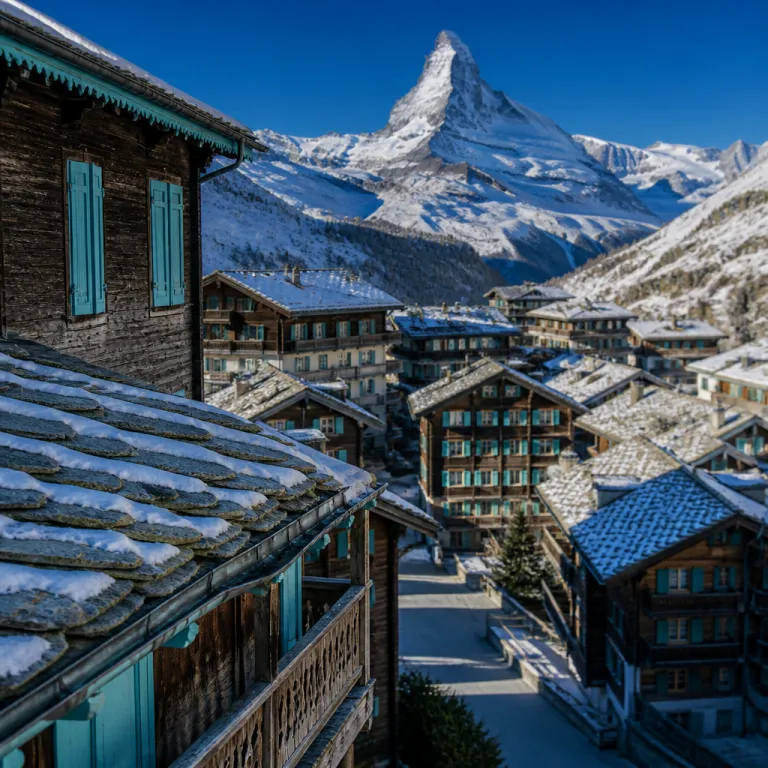
Zermatt exists because of a single mountain. The Matterhorn, 4,478 metres of pyramidal rock rising above the village with a geometric perfection that no other Alpine peak can match, defines everything about this place: its economy, its atmosphere, its visual identity, and the reason that visitors have been coming here since the first ascent in 1865. A hotel in Zermatt puts you at the foot of the most recognizable mountain on earth, in a car-free village that has preserved its Alpine character while building one of the most sophisticated ski resort infrastructures in Europe.
The Car-Free Village
Zermatt has been car-free since the 1930s, a decision that seemed eccentric at the time and now reads as visionary. Electric taxis and horse-drawn carriages handle transport within the village. The result is a main street, the Bahnhofstrasse, that carries the sounds of conversation, cowbells, and occasionally the clatter of hooves rather than engine noise. The air is clean. The atmosphere is calm. And the Matterhorn, visible from seemingly every angle, presides over the scene with a permanence that makes human activity feel temporary and slightly beside the point.
The village sits at 1,620 metres at the head of the Matter valley, surrounded by peaks that include the Monte Rosa massif (the highest point in Switzerland at 4,634 metres), the Breithorn, and the Dom. The concentration of four-thousanders, peaks exceeding 4,000 metres, is unmatched anywhere in the Alps: 29 summits within the Zermatt region cross this threshold. For mountaineers, this is hallowed ground. For hotel guests seeking the best ski resort experience in the Alps, it is the reference standard.
Hotels in Zermatt
The hotel landscape in Zermatt spans the full spectrum of Swiss mountain hospitality. Grand hotels dating to the golden age of alpinism, when British climbers and their guides made Zermatt the capital of high-altitude ambition, stand alongside contemporary design properties where the architecture engages with the mountain setting through floor-to-ceiling glass and minimalist interiors. A spa hotel in Zermatt typically features wellness facilities that justify the premium Swiss pricing: heated outdoor pools with Matterhorn views, extensive sauna landscapes, and treatment programmes that draw on Alpine botanical traditions.
The Hotel Cervo Mountain Resort represents one approach to Zermatt hospitality: rustic-luxury, timber-heavy interiors, a rooftop terrace that captures the Matterhorn panorama, and a social atmosphere that makes the bar and restaurant areas destinations in their own right. The Cervo aesthetic, warm, textured, unapologetically mountain, has influenced the broader Zermatt hotel scene. Other properties take a more refined approach: Swiss precision in service, contemporary design, and the kind of attention to detail that Swiss luxury hospitality has perfected over generations.
Budget-conscious visitors will find that Zermatt, while expensive by most standards, offers a range of accommodation from simple garni hotels and apartments to the grand five-star properties. The village density means that location is less critical than in more spread-out resorts: everything is walkable, and the ski lifts are accessible from multiple points.
Skiing: The Highest in the Alps
The Zermatt ski area is the highest in the Alps, with skiing reaching 3,883 metres on the Klein Matterhorn glacier. This altitude guarantees snow coverage that extends well beyond the typical Alpine season: summer skiing on the glacier operates from June through October, making Zermatt one of the few genuine year-round ski destinations. The total ski area, including the connection to Cervinia on the Italian side, encompasses over 360 kilometres of prepared runs across terrain that ranges from gentle nursery slopes to expert descents through glacial terrain.
The Gornergrat railway, a rack-and-pinion train that climbs to 3,089 metres, provides one of the great mountain journeys in Switzerland. The panorama from the top encompasses the Matterhorn, the Monte Rosa, and an expanse of glaciated peaks that extends to the horizon. In winter, skiers descend from the Gornergrat through varied terrain. In summer, hikers use the railway to access high-altitude trails that traverse moraines, cross glacial streams, and pass through landscapes that feel more arctic than Alpine.
The Matterhorn Glacier Paradise, reached by cable car to the Klein Matterhorn, provides the highest viewing platform in Europe: a glass-walled observation deck at 3,883 metres where the entire Zermatt panorama unfolds. The Glacier Palace, carved into the ice beneath the summit station, adds a surreal dimension: tunnels of blue ice containing frozen sculptures, located inside an actual glacier.
Summer in Zermatt
Summer hiking from Zermatt follows trails that were first mapped by nineteenth-century mountaineers and have been refined into one of the most comprehensive trail networks in the Alps. The Five Lakes Walk, accessible from the Rothorn cable car, visits five alpine lakes that reflect the Matterhorn from different angles, creating the kind of photographs that define Alpine tourism. The Haute Route walking trail from Chamonix to Zermatt provides the ultimate multi-day experience: a week-long traverse through glacial terrain that ends with the Matterhorn growing larger with each passing day.
Mountain biking, paragliding, and glacier hiking complement the trail walking. The village itself provides a base that rewards exploration: traditional Valais architecture in the old quarter, excellent restaurants, shops ranging from luxury watchmakers to mountain equipment specialists, and a social atmosphere that the car-free policy makes unusually pleasant.
Dining in the Valais
Zermatt dining reflects both Swiss tradition and international sophistication. Raclette and fondue anchor the cheese-based mountain cuisine. Viande sechee, air-dried beef from the Valais, serves as the regional charcuterie. The wines of the Valais, particularly the Fendant (Chasselas) and the Cornalin and Humagne Rouge reds, accompany meals with a specificity that reflects the steep, sun-drenched vineyards of the Rhone valley below.
The restaurant scene ranges from traditional Walliser stuben where the menu has not changed in generations to contemporary fine-dining establishments. Several mountain restaurants, accessible only by ski or cable car, provide altitude dining that combines spectacular views with food that exceeds mountain-hut expectations. The best of these destinations treat their elevation as a culinary asset rather than a logistical challenge.
Why Visit Zermatt: The Complete Mountain Experience
Those who visit Zermatt discover what may be the perfect place for a mountain holiday in the Alps. The village of Zermatt, Switzerland most celebrated ski destination, delivers a combination that no competitor quite matches: the view of the Matterhorn from every angle, the snow conditions that altitude guarantees, the apres ski atmosphere that the car-free streets create, and the restaurants and bars that line the centre of town with a concentration that satisfies every taste from traditional raclette to contemporary cuisine.
The Zermatt village layout places everything within walking distance. The centre of town clusters around the Bahnhofstrasse and the church square, where horse-drawn carriages pass traditional wooden chalets and the Matterhorn fills the gap between rooflines at the end of every street. Skiing in Zermatt begins with a short walk to the nearest lift station, and the ski area that opens above is vast enough to occupy a week of skiing without repeating a single run.
Zermatt is best experienced as a total immersion. The rooms and suites at the better hotels frame the Matterhorn through carefully positioned windows. The spa treatments and rituals draw on Swiss Alpine traditions that treat wellness as a precise discipline rather than a vague concept. The restaurants and bars that fill the evening hours create a social atmosphere where the shared experience of the mountain brings strangers into conversation. Even a climbing wall at the sport centre provides rainy-day alternatives for guests who need to burn energy indoors.
The snow conditions in Zermatt are among the most reliable in the Alps. The altitude of the ski area, reaching nearly 4,000 metres, ensures that natural snow coverage persists well into spring and that artificial snowmaking is required less frequently than at lower resorts. This reliability, combined with the glacier skiing that extends the season through summer, makes Zermatt the best year-round ski destination in Europe for those who measure quality by consistency rather than by marketing.
Practical Information
Zermatt is accessible by train from Geneva (approximately 3.5 hours), Zurich (approximately 3.5 hours), and Milan (approximately 4 hours, via Brig and the Simplon). The Glacier Express from St. Moritz provides the most scenic approach. Cars must be left at Tasch, 5 kilometres down the valley, where a shuttle train runs to Zermatt every 20 minutes. Within the village, electric taxis and horse-drawn carriages provide transport, and the compact layout makes walking the default mode.
Accommodation in Zermatt extends beyond traditional hotels. Serviced apartments and chalets cater to families and groups seeking independence with hotel-level cleaning and concierge services. Whether in a grand mountain resort hotel, a contemporary spa property, or a serviced apartment with a balcony view of the Matterhorn, the Zermatt experience centers on the same fundamentals: extraordinary skiing, a car-free village atmosphere, Swiss hospitality, and the constant, humbling presence of the most famous mountain silhouette in the world. To visit Zermatt is to understand why mountains became destinations in the first place.
Frequently Asked Questions
What makes Zermatt the best ski resort in the Alps?
The combination of altitude (skiing to 3,883 metres), snow reliability, the Matterhorn setting, car-free atmosphere, and the connection to Cervinia creating over 360 kilometres of runs makes Zermatt arguably the most complete ski resort in the Alps. The infrastructure is modern and efficient, the village retains genuine character, and the year-round glacier skiing extends the season beyond what any competitor can offer.
Is Zermatt suitable for summer holidays?
Zermatt is as compelling in summer as in winter. The hiking trail network is extensive, the Gornergrat railway and Matterhorn Glacier Paradise provide high-altitude sightseeing, and summer glacier skiing is available for those who want both hiking and skiing in the same trip. The car-free village, mountain restaurants, and spa hotel facilities ensure comfort alongside the athletic activities.
How does the car-free policy work in practice?
Cars are parked at Tasch (5 km from Zermatt), where a shuttle train runs every 20 minutes. Within Zermatt, electric taxis handle luggage transfer from the station to hotels. The village is compact enough that walking is practical for most journeys. The absence of cars transforms the atmosphere: cleaner air, quieter streets, and a pace of life that feels deliberately slower than the outside world. Most visitors adapt within hours and leave reluctant to return to traffic.