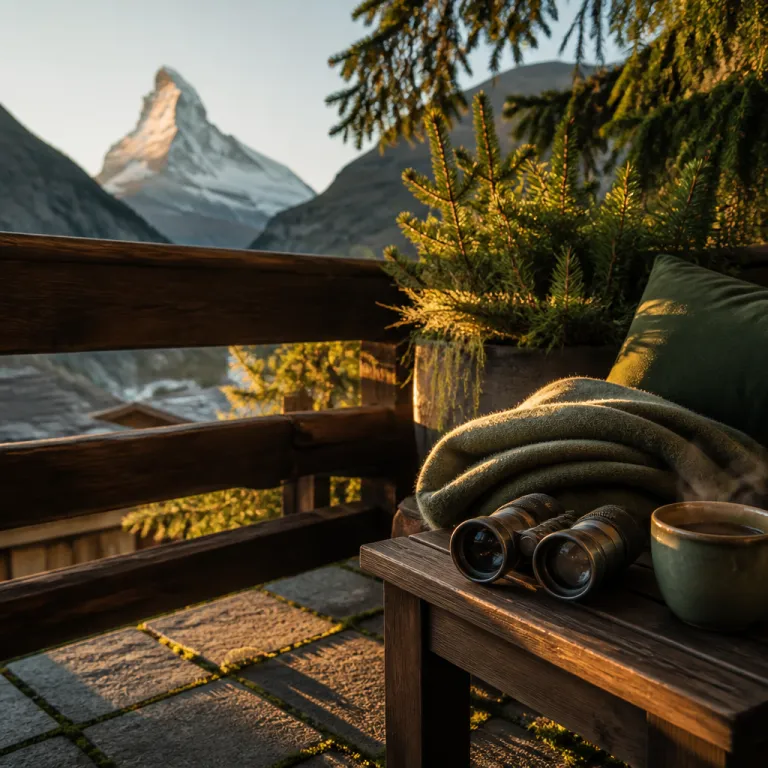
Zermatt: A Car-Free Village at the Foot of the Matterhorn
Zermatt sits at 1,620 metres in the Swiss Alps, at the dead end of the Matter Valley where the only thing higher than your hotel is the Matterhorn itself. The village has been car-free since the late 1940s; you park in Tasch, 5 kilometres down the valley, and take the shuttle train for the final 12 minutes. What greets you is a village of wooden Valais chalets, electric taxis, horse-drawn carriages, and the kind of mountain silence that combustion engines have stolen from almost every other Alpine resort. Hotels in Zermatt put you within a minute walk of the Bahnhofstrasse, the ski lifts, the restaurants, and the views of the Matterhorn that justify the journey and the prices.
The Matterhorn, at 4,478 metres, is the most recognisable peak in the world and the reason Zermatt exists as a resort. But the village has substance beyond the view. The Matterhorn ski paradise covers 360 kilometres of pistes stretching into Italy. Four Michelin-starred restaurants operate in a village of fewer than 6,000 permanent residents. The Gornergrat railway, running since 1898, climbs to 3,089 metres for a panorama of 38 four-thousanders and 14 glaciers. Zermatt is not just a place to look at a mountain; it is one of the most complete mountain destinations in Switzerland, and the best hotels reflect that ambition.
Hotels in Zermatt City Centre: What to Expect
Accommodation in Zermatt city centre ranges from five-star spa hotels with heated pools and Michelin-starred restaurants to smaller family-run chalets on the quieter streets behind the Bahnhofstrasse. The best hotels in Zermatt share one thing: a view of the Matterhorn. South-facing rooms with balconies command a premium, and the premium is worth paying. Watching the alpenglow turn the Matterhorn from grey to gold to pink at sunrise, from your bed, with coffee in hand, is one of the great hotel experiences in Switzerland.
A spa hotel in Zermatt typically includes an indoor swimming pool, sauna, steam room, and a wellness programme drawn from Alpine tradition. The resort spa facilities at the top properties rival anything in Verbier or St. Moritz. Rooms are finished in wood and stone, often with balconies, and the service reflects Swiss standards: precise, warm, and attentive. Many hotels in Zermatt city centre offer ski storage, boot warmers, and direct access to the shuttle buses that connect the village to the three lift stations. The best spa hotels in Zermatt combine resort-level service with the intimacy of a mountain village; a spa experience here, with the Matterhorn visible through the window of the treatment room, is unlike anything the larger Swiss resorts can offer. Check the hotel spa facilities before booking; the range from a simple sauna to a full resort spa with pools, treatments, and wellness programmes is significant.
For guests seeking a more intimate stay, several boutique hotels in Zermatt offer beautifully designed rooms with Matterhorn views, personal service, and a character that the grand hotels cannot always match. These smaller properties, often family-run across generations, are where Zermatt's village atmosphere is most tangible. Room rates at boutique properties in Zermatt, Switzerland start from around 200 CHF per night in shoulder season and climb to 500 CHF or more during the peak weeks of Christmas, New Year, and February school holidays.
Matterhorn Views from Your Hotel
The Matterhorn stands to the south and southwest of the village, which means south-facing hotel rooms are what you want. The Kirchbrucke, a bridge over the Matter Vispa river in the heart of the village, offers the classic postcard view: the peak framed by pine trees and flower-adorned chalets. Hotels near this bridge are among the best located in Zermatt for views. Every evening, a herd of Blackneck goats walks down the Bahnhofstrasse past the hotel terraces on their way to the stables; it is the kind of detail that no resort can manufacture.
Skiing the Matterhorn Paradise
The Matterhorn ski paradise is the highest ski area in the Alps, with 360 kilometres of groomed pistes across three sectors on the Swiss side plus the connection to Cervinia in Italy. The Klein Matterhorn cable car climbs to 3,883 metres, the highest transportation point in Europe, where a viewing platform offers a panorama across three countries. The Matterhorn Glacier Ride, the world's highest 3S cableway, includes crystal cabins with glass floors for those who want the full experience.
The three Swiss sectors each have a different character. Rothorn-Sunnegga is sunny and family-friendly. Gornergrat offers the best panoramic views. The Matterhorn glacier paradise sector, accessed via Schwarzsee, provides the most altitude and the connection to Italy. Year-round skiing is available on the glacier, making Zermatt one of the few resorts in Switzerland where you can ski in every month of the year. For hotel guests nearby, the lift stations are reachable by shuttle bus or a short walk.
Summer in Zermatt
Zermatt operates year-round, and the summer hiking is as compelling as the winter skiing. The 5-Seenweg, the Five Lakes Trail, visits five mountain lakes in a 9.8-kilometre loop from Blauherd at 2,571 metres to Sunnegga at 2,288 metres. The Matterhorn is reflected in three of the lakes, and swimming is possible in the warmer months at Grunsee and Leisee. The walk takes 2.5 to 3 hours and is one of the most popular day hikes in the Alps.
The Hornli Hut, at 3,260 metres, is the base camp for Matterhorn ascents and reachable by a two-hour hike from the Schwarzsee cable car station. You do not need to be a mountaineer to visit; the hut serves meals and the close-up views of the Matterhorn's north face are dramatic. The Gornergrat panorama railway, a cog railway that has been climbing to 3,089 metres since 1898, operates year-round and offers what may be the single most spectacular train journey in the Alps.
The Matterhorn Museum and Village Culture
Zermatlantis, the underground museum, sits underground in the village in the form of a reconstructed mountain village. The museum tells the story of the first ascent of the Matterhorn in 1865, when four of the seven climbers died on the descent; the original rope that broke is on display, along with artefacts from the protagonists. For hotel guests in Zermatt, Zermatlantis provides the context that transforms the Matterhorn from a view into a story. The 500-year-old wooden houses preserved throughout the village, many visible from the Bahnhofstrasse and the surrounding streets, are a living museum of traditional architecture.
Eating in Zermatt
Zermatt has 150 registered restaurants, 21 of which hold Gault and Millau ratings, and four carry Michelin stars. For a village of this size, the concentration of serious dining is extraordinary. The Valais specialities are the foundation: raclette served with dried meat and boiled potatoes, fondue made with local cheeses and white wine, and viande sechee, the air-dried beef that is a PDO-protected Valais tradition.
The Michelin-starred restaurants range from haute cuisine in architecturally designed spaces to a restaurant with a Michelin Green Star for its commitment to organic, seasonal, and plant-based cooking. Italian fine dining reflects the proximity to the border. And the mountain restaurants, accessible by cable car and reachable on skis, serve the kind of Alpine food that tastes better at altitude: rosti, Kase-Schnitte, and gluhwein on a sun terrace at 2,500 metres with the Matterhorn filling the horizon.
Choosing Your Hotel in Zermatt: Luxury, Chalet, or Inn?
The choice of accommodation in Zermatt city centre is remarkably varied for a village of this size. At the luxury end, five-star spa hotels including the Grand Hotel Zermatterhof, the Mont Cervin Palace, and the Backstage Boutique Spa Hotel offer the kind of Alpine elegance — heated pools, sommelier-led wine bars, and rooms finished in aged larch — that justifies the premium prices. Guest reviews on booking platforms rate these luxury properties above 9 out of 10; the service is flawless and the spa experience is ideal for guests who want to be pampered after a day on the mountain.
For a cosier, more authentic Zermatt experience, the traditional charme inn and chalet hotels offer wood-panelled rooms, mountain views, and a warmth that the grand hotels cannot always replicate. The Hotel Chesa Valese, a cosy inn with centuries of history, is a perfect example — guests praise the chalet atmosphere, the excellent bar with local wines, and rooms where the original timber beams remain. The Schweizerhof Zermatt, another inn-style property with excellent reviews, provides a spa, a popular bar, and some of the best Matterhorn views in the city centre.
Guests who enjoy more independence can choose from a growing number of apartments in the village. A Zermatt apartment is an ideal choice for families or groups: a kitchen allows self-catering at Swiss prices, the living space gives room to spread out, and many apartments include a balcony with a Matterhorn view. Apartment rentals in Zermatt city centre start from around 180 CHF per night in shoulder season. The availability of luxury self-catering options has increased in recent years, with new-build properties offering hotel-level finishes — underfloor heating, rain showers, designer kitchens — combined with the freedom of your own space. Check availability early for the peak weeks of Christmas, February, and Easter, when both hotels and apartments in Zermatt sell out months in advance.
Après-Ski and Nightlife in Zermatt
The bar scene in Zermatt is lively without being rowdy. The Papperla Pub, a wood-panelled bar near the Bahnhofstrasse, is the most popular après-ski spot in the village: live music, strong drinks, and a dance floor that fills by five in the afternoon during ski season. The Vernissage bar, inside the Backstage Hotel, is the choice for a more refined evening — cocktails, art exhibitions, and a cinema. The Hexenbar at the Schweizerhof is a cosy, candlelit bar ideal for a nightcap. The hotel bars at the luxury properties serve wine lists that draw on the local vineyards, including rare Heida and Petite Arvine varieties that are perfect with local cheese.
For hotel guests who enjoy a quieter evening, the restaurants along the Bahnhofstrasse offer terrace dining with Matterhorn views, and many hotels have cosy lounges where guests can enjoy fondue or raclette by the fire. Zermatt manages to be both a serious resort and a genuinely pleasant village; even at its busiest, the car-free streets and the mountain air keep the atmosphere relaxed.
Why Zermatt Is a Great Choice for Your Alpine Stay
Among the great Alpine resort destinations in Switzerland, Zermatt holds a unique position. The village is located at the foot of the most famous mountain on earth, yet it remains genuinely friendly — not in the manufactured way of purpose-built resorts, but in the organic way of a community that has welcomed visitors for over 150 years. Hotel staff know their guests by name. Restaurant owners recommend trails rather than tourist sites. The pool and sauna at a great Zermatt spa hotel are not afterthoughts but central to the Alpine wellness tradition that defines a stay here.
The rates in Zermatt are not cheap — this is Switzerland, and you are staying in one of the most desirable mountain locations in Europe. But compared to the rates at St. Moritz or Gstaad, Zermatt delivers better value, including superior skiing, a more authentic village atmosphere, and a restaurant scene that operates at a level these other resorts struggle to match. A quality hotel stay, including pool, sauna, and Matterhorn views, can be found at rates starting from 250 CHF per night in shoulder season — a figure that would buy significantly less in competing Swiss resorts.
For those who visit in summer, the natural sites around Zermatt are extraordinary — the Gorner Gorge, the Glacier Garden at Dossen, and the network of mountain lakes all reward the curious walker. The friendly atmosphere of the village, including the goat parade and the informal restaurant terraces, makes Zermatt a great place for families. Whether you choose a luxury hotel with a heated pool and sauna, a cosy chalet, or a well-appointed apartment, your stay will be shaped by the mountain and the rare Alpine quality of light.
Getting to Zermatt
Zermatt is accessed exclusively by train. The Matterhorn Gotthard Bahn runs from Visp and Brig, both on the mainline rail network, to Zermatt station in the village centre. RegioExpress trains run half-hourly. From Geneva Airport, the total journey via train takes roughly 3 hours 50 minutes. From Zurich Airport, allow about 3 hours 30 minutes. The Glacier Express scenic route also passes through Zermatt, connecting to St. Moritz.
Drivers must park in Tasch, where the Matterhorn Terminal offers 2,100 covered parking spaces. The shuttle train from Tasch to Zermatt runs every 20 minutes and takes 12 minutes. Within Zermatt, electric taxis cost 15 to 30 CHF for short rides, but the village is small enough that most hotel guests get around on foot. The car-free atmosphere is one of Zermatt's greatest assets; the silence, broken only by the river and the occasional horse-drawn carriage, is part of what makes the resort feel different from any other in the Alps.
Zermatt in Numbers
- Zermatt altitude: 1,620 metres
- Matterhorn: 4,478 metres, the most recognisable peak in the Alps
- Klein Matterhorn cable car: 3,883 metres, highest in Europe
- Gornergrat railway: 3,089 metres, operating since 1898
- Matterhorn ski paradise: 360 kilometres of pistes
- Four-thousanders visible: 38
- Michelin-starred restaurants: 4
- Total restaurants: 150
- Resident population: approximately 5,820
- Annual overnight stays: approximately 2.2 million
- Geneva Airport to Zermatt: approximately 3 hours 50 minutes by train
- Tasch to Zermatt shuttle: 12 minutes, every 20 minutes
Questions About Hotels in Zermatt City Centre
Is a Matterhorn view worth the extra cost?
Yes. A south-facing room with a Matterhorn view transforms the hotel experience in Zermatt from pleasant to memorable. The sunrise alpenglow on the peak is visible from bed, and the mountain changes character throughout the day as the light shifts. The price difference between a standard room and a Matterhorn-view room is typically 50 to 150 CHF per night; for the defining view of your trip to Switzerland, that is good value.
Do you need a car in Zermatt?
No. Zermatt is car-free by design. Everything in the village is walkable, the ski lifts are reachable by shuttle bus, and the train connects you to the national rail network via Visp. If you drive to the region, park in Tasch and take the shuttle. The absence of cars is one of the best things about Zermatt; the village is quieter, safer, and more pleasant to walk through than any comparable resort in the Alps.
When is the best time to visit Zermatt?
For skiing, December through April offers the best conditions, with February and March typically providing the most sunshine and the best snow. For hiking, late June through September opens the mountain trails, melts the lakes, and brings warm temperatures to the village. Zermatt is one of the few Alpine resorts that genuinely operates year-round; glacier skiing is available even in summer, and the Gornergrat railway runs in every season. The quietest and most affordable periods are May and November, when the village transitions between seasons.