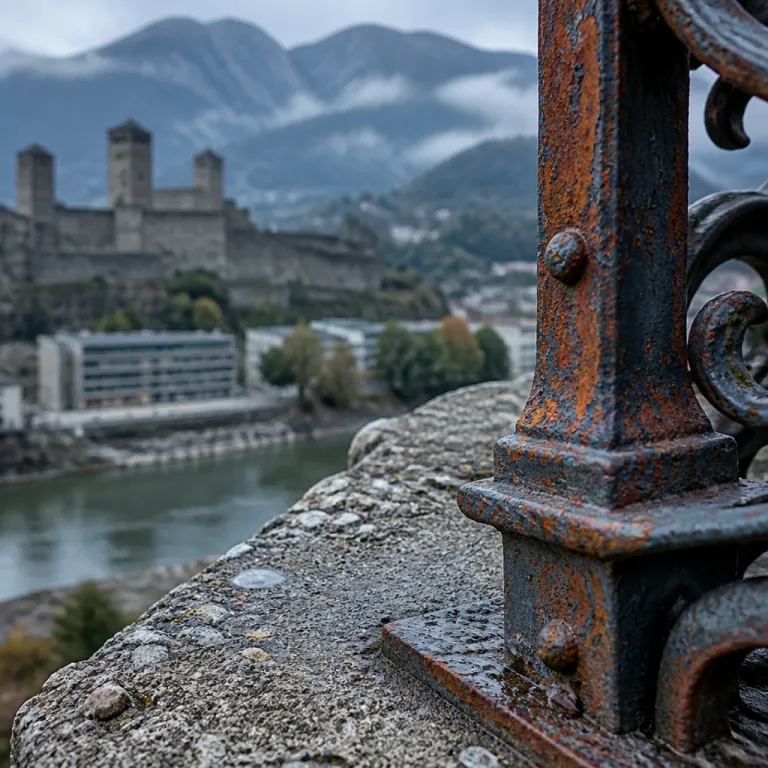
Where three castles guard the pass and the polenta is not negotiable
Bellinzona controls the approaches to three Alpine passes, and the people who built its castles understood geography the way military commanders do: as leverage. Castelgrande, Montebello, and Sasso Corbaro stretch across the valley in a defensive wall of rock and tower that blocked armies from the fifteenth century onward and now blocks only the indifference of travellers who rush past on the motorway toward Locarno and the lake. These three castles, inscribed together as a UNESCO World Heritage Site, give the cantonal capital of Ticino a monumental gravity that no lakeside resort can replicate.
The town itself operates year-round for its 44,000 residents, which means it has the texture of a real place rather than a seasonal performance. The Saturday market fills Piazza Nosetto with valley cheeses, cured meats, bread still warm from ovens that predate the motorway, and vegetables that the Ticino microclimate pushes into ripeness weeks before the northern cantons manage it. The restaurants serve Ticinese cooking with a directness that permits no apology: risotto, polenta, brasato, and local Merlot poured from the ceramic boccalino jug that the grotto tradition demands.
Castelgrande and the valley wall
Castelgrande occupies a rocky hill in the centre of town that archaeology confirms has been fortified since at least the fourth century. The current stonework, built and expanded under the Dukes of Milan, includes a curtain wall that runs across the valley floor to link with Montebello on the hillside above and Sasso Corbaro on the cliff behind. Standing on the ramparts of Castelgrande, with the valley spread below and the mountain slopes pressing in from both sides, the strategic logic is so obvious it barely needs explaining. Armies wanted through. The castles said no.
The light inside the courtyards shifts through the day. Morning turns the stone golden and the shadows sharp. Afternoon softens everything into a warmth that makes sitting on a bench against the wall, doing nothing at all, feel like the most productive use of an afternoon available anywhere in the Swiss Alps.
The grottoes: granite tables and honest wine
A grotto is a restaurant housed in stone, typically with a garden of granite tables set under pergola vines or chestnut trees, serving cold cuts, cheese, polenta, and Merlot in quantities that suggest the cook believes hunger is a structural problem requiring a structural solution. The food is simple. The setting provides the seasoning. Dappled light through vine leaves, the sound of a stream nearby, a plate of mixed salumi arriving without ceremony on a board that has seen ten thousand such arrivals.
The grottoes of the Bellinzona valleys offer an experience that no urban restaurant replicates, regardless of its star count. The ingredients travel short distances. The wine comes from slopes visible from the table. The bill, when it arrives, produces the kind of surprise that Swiss dining rarely provides: lower than expected. Guest reviews describe the grotto meal as a highlight that outlasts the memory of the castles, which is saying something given that the castles have been memorable for six hundred years.
The Leventina: climbing toward the Gotthard
North of Bellinzona, the Leventina valley climbs toward the Gotthard Pass along a route that has carried traffic, trade, and ambition across the Alps for two millennia. The motorway and railway barrel through, but between the transit infrastructure the valley preserves a rural character that the lakeside Ticino surrendered generations ago. Giornico, with two Romanesque churches and a medieval bridge that photographers treat with the reverence usually reserved for cathedrals, provides the most atmospheric stop.
The Gotthard Pass itself, at 2,106 metres, delivers one of the great mountain drives. The cobbled road that stagecoaches used, now restored for summer traffic, climbs through hairpin bends past the Tremola gorge in a sequence of switchbacks so rhythmic they feel almost musical. At the summit, a hospice and a restaurant provide lunch and perspective. Looking south, the Ticino unfolds into warmth and Italian vowels. Looking north, the landscape shifts toward German consonants and cooler light. The pass is a hinge, and standing on it feels like standing between two ideas of Switzerland.
Blenio valley and the Lukmanier crossing
The Blenio valley branches from Biasca toward the Lukmanier Pass, which at 1,916 metres is the lowest Alpine crossing between Switzerland and Italy. It is also the quietest of the Upper Ticino valleys: stone villages where the afternoon silence is broken only by a church bell or a goat expressing an opinion, chestnut forests that turn copper in autumn, and a valley floor where the river provides the only consistent soundtrack.
The cheese production here, particularly the Formaggio d'Alpe from summer high pastures, gives the breakfast table an authenticity that flatter, more accessible regions have diluted. Eating cheese made on an alp visible from the dining room window creates a connection between landscape and plate that the supply chains of larger resorts have permanently severed.
Getting to Bellinzona and Upper Ticino
The Gotthard Base Tunnel, at 57 kilometres the longest railway tunnel in the world, delivers passengers from Zurich to Bellinzona in under two hours. Lugano is fifteen minutes south. Milan is roughly two hours by train. The A2 motorway threads through the centre of Upper Ticino, connecting every valley to both the Swiss and Italian highway networks. The compact geography means the castles, the grottoes, the Leventina, and the Blenio are all within easy reach of a single base.
Bellinzona and Upper Ticino in numbers
- Bellinzona: cantonal capital, population 44,000, three UNESCO castles inscribed in 2000
- Gotthard Pass: 2,106 m, historic cobbled road, Tremola gorge
- Gotthard Base Tunnel: 57 km, Zurich to Bellinzona under 2 hours by rail
- Lukmanier Pass: 1,916 m, lowest Alpine crossing between Switzerland and Italy
- Locarno and Lake Maggiore: 20 minutes south by road
- Lugano: 30 minutes south. Milan: approximately 2 hours by train
Is Bellinzona worth a stay instead of heading straight to the lakeside?
The lakeside towns sell views and promenades. Bellinzona sells six centuries of military architecture, a Saturday market that smells like bread and aged cheese, and a grotto culture that makes eating outdoors under chestnut trees feel like the purpose of the trip rather than a pleasant addition to it. Room rates sit well below Locarno and Ascona, which means the saved money goes directly into a second bottle of Merlot and a third plate of polenta. The castles justify the cultural visit. The grottoes justify the gastronomic one. The quiet of the Blenio valley, with its stone villages and alp cheese, justifies staying longer than planned.
What makes Upper Ticino different from the lakeside?
Altitude, silence, and the absence of the tourism machinery that the lakeside towns run at full speed from spring through autumn. Upper Ticino valleys have the Italian-speaking warmth without the lakeside premium. The Leventina connects to the deep history of Alpine crossing. The Blenio delivers a rural quiet that Locarno, with its film festival energy and waterfront bustle, does not attempt. It is the Switzerland that existed before the brochure, and it remains available to anyone willing to drive twenty minutes past the lake.
Can the Gotthard Pass drive work as a day trip from Bellinzona?
Comfortably. The drive from Bellinzona to the summit takes about ninety minutes via the cobbled historic road, and the combination of hairpin bends, gorge scenery, and summit lunch provides a day that connects a hotel stay in the castle city to two thousand years of Alpine transit. The pass is open from roughly June through October, weather permitting, and the descent back to Bellinzona through the Leventina offers a different valley perspective on the return.