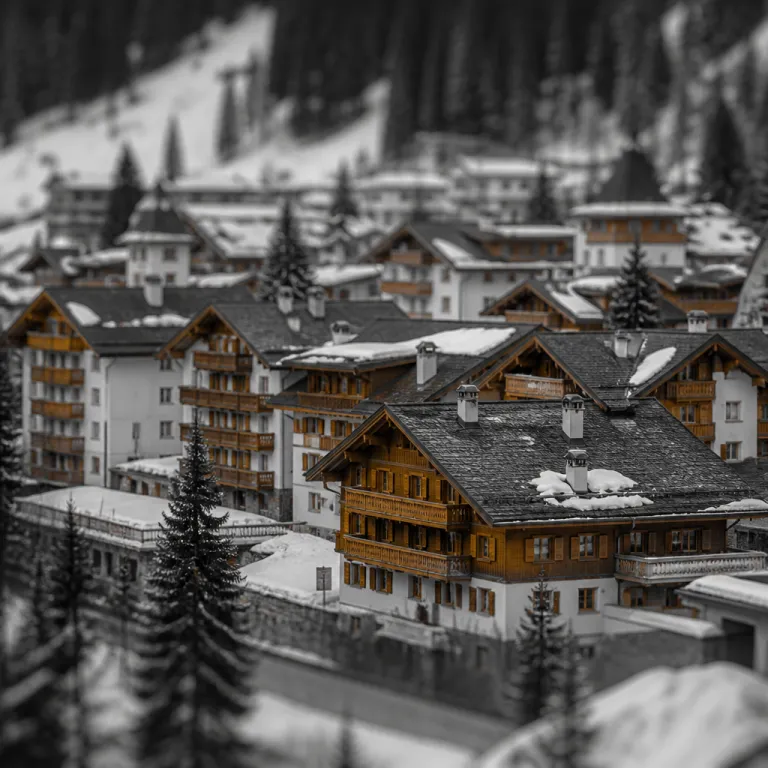
Hotels in Davos: where altitude shapes the stay
At 1,560 metres in the Landwasser valley of Graubunden, Davos holds a rare position among Alpine destinations. It is the highest town of its size in the European Alps, a fact that registers the moment you step outside and feel the air thin and dry against your skin, carrying a sharpness that lower valleys never deliver. The light here has a particular quality too, a high-altitude clarity that turns the surrounding peaks into something almost graphic, especially in winter when fresh snow catches the late afternoon sun and the whole valley glows pink before dropping into blue shadow.
The hotel tradition runs deep. It began in the 1860s, when physicians prescribed Davos air to tuberculosis patients and the sanatoriums that followed laid the foundations for what became a sophisticated hospitality culture. That medical heritage left architectural traces throughout the town, buildings with generous proportions and south-facing balconies designed to capture every hour of sun. The modern hotel scene has inherited both the infrastructure and the ethos: precision, professional calm, an obsession with clean air and wellbeing that feels less like marketing and more like local instinct.
Two villages, two atmospheres
Davos splits into two distinct halves, and understanding the difference matters when choosing where to stay. Davos Platz occupies the lower section, where the commercial centre, congress facilities, and most restaurants concentrate. The atmosphere here leans urban by Alpine standards. Shops line the Promenade, the Jakobshorn cable car launches from the edge of town, and the congress centre that hosts the World Economic Forum every January gives the neighbourhood a professional, international character that persists year-round.
Davos Dorf sits higher in the valley and feels quieter, more traditionally Alpine. The Parsennbahn funicular departs from here, carrying skiers up to the Parsenn in minutes. The pace slows. The buildings sit closer to the treeline. Mornings are silent except for the mechanical hum of the funicular starting its first run. If you want direct mountain access and the sound of nothing at breakfast, Dorf is the right choice. If you prefer restaurants within walking distance and a livelier evening scene, Platz delivers.
The Parsenn and surrounding terrain
The Parsenn defines the Davos ski experience. From the Weissfluhgipfel at 2,844 metres, runs cascade down through open bowls and into tree-lined valleys with a vertical drop of up to 1,650 metres reaching all the way to Klosters below. The scale is genuine. You can ski for forty minutes without repeating a section, the terrain shifting from exposed ridgeline to sheltered forest as altitude falls. The snow record benefits from the elevation, with the upper slopes holding well into April when lower resorts have turned to slush.
Beyond the Parsenn, five additional areas spread across the valley. The Jakobshorn draws a younger crowd with its freestyle terrain and the only night-skiing operation in the region. Pischa provides backcountry access without the need for touring equipment. Rinerhorn and Madrisa cater to families and intermediates. Together the Davos Klosters domain covers over 300 kilometres of marked runs, connected by a single regional pass. Cross-country skiers find 75 kilometres of groomed trails along the valley floor, flat enough for classical technique but varied enough to hold interest across a full morning.
Klosters: ten kilometres and a world apart
Down the valley at 1,190 metres, Klosters offers the counterpoint that Davos does not attempt. Where Davos spreads along its valley with congress buildings and commercial infrastructure, Klosters compresses into a village of timber chalets, church spires, and an atmosphere that feels rooted in a much older version of Swiss mountain life. The British royal family has been returning since the 1970s, and the guest profile reflects that tradition of understated quality over visible luxury.
The Gotschna cable car from Klosters reaches the same Parsenn terrain accessible from Davos, which means the skiing is identical regardless of which base you choose. What changes is the village waiting at the end of the day. Klosters offers the wood-panelled restaurant where fondue arrives in cast iron and the wine list favours local Bundner Herrschaft labels over international names. The Vereina tunnel connects Klosters to the Lower Engadin via car-loading train, placing the Engadin within an hour and giving the valley a gateway function its compact size does not advertise.
Beyond the snow
Summer rewrites the destination. The ski slopes become hiking terrain marked with trails that climb from the valley floor to ridgelines above 2,500 metres, passing through wildflower meadows that peak in late June. The Davosersee, the small lake at the southern edge of town, provides swimming in water cold enough to shock but warm enough to stay in once you commit. Mountain biking routes thread through the forests above both Platz and Dorf, with singletrack descents that draw riders from across Switzerland.
The altitude delivers what the lower valleys cannot in July and August: cool mornings, dry heat in the afternoon, and evenings where a light jacket feels right. Hotels operate at lower rates than winter, and the congress calendar keeps infrastructure sharp year-round. Davos in summer feels like a destination only locals know about, which is part of its appeal.
The Kirchner Museum
Ernst Ludwig Kirchner moved to Davos in 1917, fleeing the war and seeking the same curative air that had drawn tuberculosis patients half a century earlier. He spent two decades painting the peaks, forests, and village life around the Landwasser valley, producing Expressionist works that capture the Alpine landscape in colours more emotional than literal. The Kirchner Museum in Davos Platz houses the largest collection of his work anywhere in the world, and visiting it adds a dimension to the stay that the ski terrain and congress reputation do not advertise. The colours he painted on those canvases return every evening in the sunset above the valley, and once you have seen both, the connection between the art and the altitude becomes impossible to unsee.
Davos in numbers
- Altitude: 1,560 m, highest town of its size in the European Alps
- Ski terrain: 300+ km across 6 areas, summit at 2,844 m
- Maximum vertical descent: 1,650 m (Parsenn to Klosters)
- Cross-country trails: 75 km groomed
- Kirchner Museum: world largest collection of Expressionist Alpine art
- Zurich: 2.5 hours by direct train
- Klosters: 10 km down the valley, same ski pass
Is Davos only worth visiting during the World Economic Forum?
The WEF occupies a single week in January. The remaining fifty-one weeks, Davos operates as one of the largest ski destinations in Switzerland with terrain, altitude, and snow reliability that most resorts in the country cannot match. The congress infrastructure actually benefits the regular visitor: hotels maintain a professional standard year-round because they serve both leisure and business guests, and the facilities that support international conferences translate into restaurants, transport links, and service quality that a pure ski village of similar size would struggle to sustain.
Should I stay in Davos Platz, Davos Dorf, or Klosters?
Platz suits visitors who want restaurants, shops, and the Jakobshorn within walking distance. Dorf suits skiers who prioritise direct Parsenn access and a quieter evening. Klosters suits travellers who want a traditional Swiss village atmosphere with the same ski terrain accessible via the Gotschna cable car. The skiing is identical across all three bases. The difference is entirely about what you want at the end of the day.
Is Davos a good summer destination?
The altitude makes Davos one of the strongest summer destinations in the Swiss Alps. Cool mornings, hiking trails that reach above 2,500 metres, a lake for swimming, and mountain biking terrain that draws serious riders. Hotels run at lower rates than winter, crowds thin dramatically, and the air quality at 1,560 metres delivers the sharp freshness that brought the first visitors here over 150 years ago. Summer in Davos remains genuinely underrated.
How does Davos compare to other Graubunden resorts?
St. Moritz offers glamour and the Engadin sun. Arosa offers a compact, family-oriented experience. Laax offers the freestyle terrain. Davos offers scale, altitude, and cultural depth that none of the others combine in quite the same way. The Parsenn alone would justify the destination. Add the Kirchner Museum, the congress infrastructure, and the proximity to Klosters, and the overall proposition is difficult for any single competitor in the canton to match.