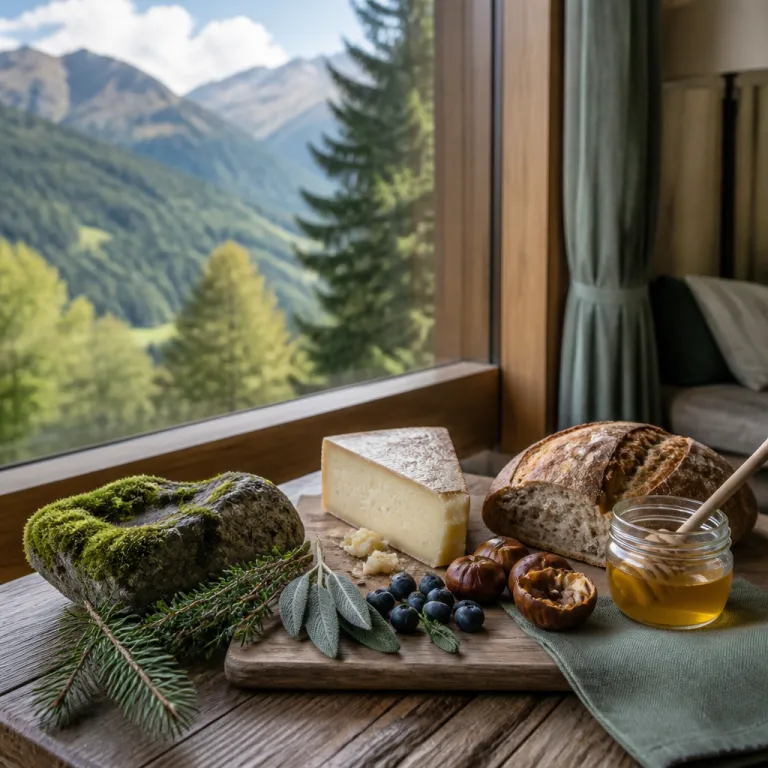
Best hotels in the Valle d’Aosta Alps
Why the Valle d’Aosta Alps are a strong choice for a hotel stay
Snow peaks crowd the horizon before the town of Aosta even appears on the road from Turin. The valley narrows, stone villages cling to the slopes, and you start to understand why travelers who know the Alps quietly choose the Aosta Valley over louder, glossier resorts elsewhere. It feels more intimate, yet the hotel offering is surprisingly sophisticated and varied, from boutique guesthouses to discreet luxury spa retreats.
For a guest focused on comfort, the region balances serious alpine infrastructure with a slower rhythm. You can spend the night in a discreet four- or five-star hotel with a spa, wake to mountain views of Monte Bianco or Mont Blanc, then be on a ski lift or hiking trail within minutes. The best hotels in Valle d’Aosta tend to be family run, with rooms and suites that feel personal rather than standardized, and service that remembers your preferred pillow rather than your booking number. Typical nightly rates range roughly from €130–€220 for well-located three- and four-star hotels in Aosta, and from about €220–€450 for higher-end spa and ski properties in Cervinia and Pré-Saint-Didier, depending on season.
Expect a clear split between properties in the valley floor around Aosta and those in high-altitude resorts such as Cervinia or the villages near the Skyway Monte Bianco cable car. The first group suits travelers who want culture, Roman ruins and easier driving; the second is for those who want to step out of the hotel almost directly onto the snow. Both can be excellent, but they deliver very different nights, so it is worth matching your base to how you actually plan to spend your days.
Quick pick: top 5 Valle d’Aosta hotels for different travelers
1. Hotel Hermitage Relais & Châteaux, Cervinia – classic luxury chalet with refined dining, spa and private shuttle to the Cretaz lifts (about 600–700 m away).
2. Saint Hubertus Resort, Cervinia – apartment-style suites with kitchens, panoramic views and hotel transport to the slopes in under 10 minutes.
3. QC Terme MonteBianco, Palleusieux–Pré-Saint-Didier – wellness hotel directly connected to extensive thermal spa facilities and Monte Bianco views.
4. Locanda Bellevue, Pré-Saint-Didier – intimate mountain hotel a short walk (around 300 m) from the famous thermal baths, ideal for couples and small families.
5. HB Aosta Hotel, Aosta – modern, central base near the historic core and about 800 m from the railway station, convenient for exploring the whole valley.
Key areas to stay in Valle d’Aosta
Roman walls and Renaissance façades frame many of the hotels in central Aosta. Around Via Sant’Anselmo and Piazza Émile Chanoux, you find smaller properties tucked behind wooden doors, often with just a handful of rooms. Hotels such as HB Aosta Hotel (Via Malherbes 18, Aosta; typically around €140–€220 per night in season) or Hotel Cecchin (Via Ponte Romano 27, Aosta; often from about €120–€180) place you within a 10–15 minute walk of the Roman theatre and railway station. These are ideal if you want to walk to dinner, check the market on Saturday morning, or take the regional train up and down the valley without moving your car once.
Higher up, the resort of Cervinia offers a very different mood and some of the most convenient ski-in, ski-out hotels in the Italian Alps. Here, properties line the slopes with direct access to the Breuil-Cervinia and Zermatt ski area and long views towards the Matterhorn, while some addresses hide a private spa or a swimming pool behind fairly modest façades. At Hotel Hermitage Relais & Châteaux (Loc. La Palud 12, Cervinia; usually from about €350–€600 per night), a private shuttle runs guests to the Cretaz lifts in roughly five minutes, while Saint Hubertus Resort (Via Piolet 5, Cervinia; often from €400–€700) offers apartment-style suites and a spa, with hotel transport to the slopes in under 10 minutes. From most central Cervinia hotels, you can generally reach the main lifts on foot in 5–12 minutes, depending on snow conditions and exact location.
On the western side of Valle d’Aosta, the hamlets near Pré-Saint-Didier and the road to Courmayeur appeal to travelers who care as much about wellness as about skiing. Several hotels here focus on thermal-inspired spa circuits, quiet rooms, and terraces that face Monte Bianco. QC Terme MonteBianco (Route Mont Blanc 28, Palleusieux–Pré-Saint-Didier; typically from about €260–€420 per night) connects directly to extensive thermal spa facilities, while Hotel Locanda Bellevue (Avenue du Mont Blanc 52, Pré-Saint-Didier; often around €150–€230) sits within a short walk of the famous thermal baths. Courmayeur’s cable cars are usually a 10–15 minute drive away, and some hotels run scheduled shuttles to the ski lifts in winter. If you prefer to spend the night in silence and the day between a hotel spa and gentle walks, this is the area to check first when comparing Pré-Saint-Didier thermal spa hotels.
What to expect from rooms, suites and design
Wood dominates in most Valle d’Aosta hotel rooms. Not the shiny, generic kind, but knotty larch and old beams that still smell faintly of resin. Many properties mix this with stone, wool and thick duvets, creating rooms and suites that feel like contemporary chalets rather than urban hotel boxes. Even in more classic star hotels, you will often find carved headboards, local textiles and small balconies that open to the valley air, especially in mountain resorts such as Cervinia and Courmayeur.
Space varies widely. In Aosta itself, rooms can be compact but functional, with clever storage and good soundproofing for a quiet night in the city. In the higher resorts, suites often add a separate living area, sometimes a private sauna or a small pool-style whirlpool bath. At properties such as Saint Hubertus Resort or QC Terme MonteBianco, top-tier suites may include fireplaces, panoramic windows and dedicated spa-style bathrooms. When you check availability, look carefully at the room descriptions; the difference between a standard room and a junior suite can be dramatic in terms of both layout and mountain views, and it is common for only certain categories to guarantee a balcony or direct Matterhorn or Monte Bianco panorama.
Design-wise, the region leans more towards warm alpine comfort than cutting-edge minimalism. You will see some properties flirting with contemporary lines and darker palettes, but the most successful hotels keep a sense of place. A framed vintage ski poster from Cervinia, a handwoven blanket from a local artisan fair in Aosta, or a stone fireplace in the lobby often says more about the experience than any design label. If you prefer sleek, urban-style interiors, focus your search on newer four- and five-star hotels that describe themselves as design-led or boutique rather than on traditional mountain inns.
Spa, wellness and pools in the Aosta Valley
Steam rising from an outdoor pool while the ridgeline turns pink at sunset is one of the quiet luxuries of Valle d’Aosta. Many of the best hotels in the valley have invested in serious wellness areas: full hotel spa facilities with saunas, Turkish baths, emotional showers and relaxation rooms lined with loungers. In the resorts near Pré-Saint-Didier, wellness is almost the main attraction, with some properties offering multi-hour spa rituals built around local herbs and alpine essences, often inspired by the nearby thermal baths.
Not every hotel has a large swimming pool, so if laps matter to you, this is something to check early in your search. Some properties offer only a small indoor pool or a hydrotherapy basin, designed more for soaking than for exercise. Others surprise with a generous outdoor pool heated year-round, where you can float under the snowflakes at night. In Cervinia, higher-end ski hotels may combine a sizeable indoor pool with panoramic windows, while in Pré-Saint-Didier spa resorts the focus is often on multiple hot and cold pools and outdoor tubs. Private spa suites are also becoming more common, allowing couples to reserve a compact wellness area for exclusive use, usually by the hour and often bookable in advance.
Wellness in Valle d’Aosta is not just about facilities. It is also about rhythm. A late-afternoon massage after a day on the slopes above Cervinia, a herbal tea in a quiet lounge while you watch clouds wrap around Mont Blanc, or a simple hot-and-cold circuit before dinner can turn a good hotel stay into something quietly wonderful. If this matters to you, prioritize properties that describe themselves clearly as wellness focused rather than those that simply mention a spa in passing, and check whether spa access is unlimited or organized in timed slots that must be reserved.
Atmosphere, service and who these hotels suit best
Service in the region tends to be discreet rather than theatrical. Staff often live in the same villages as the hotels, which gives interactions a grounded, unforced warmth. You feel it at breakfast when someone remembers how you take your coffee, or when the front desk suggests a lesser-known trail above Petit Lac instead of the popular route everyone else is following. This is not about scripted excellence; it is about a quiet, confident hospitality that suits the scale of the valley.
Travelers who value authenticity over display will feel particularly at ease here. If you are looking for a hotel where the lobby is a stage and the bar a nightly performance, Valle d’Aosta may feel too restrained. But if you prefer a living room with a few well-chosen armchairs, a small library of mountain books, and a bar where the bartender has time to talk about the snow conditions, you are in the right valley. In Aosta, evenings tend to revolve around local wine bars and restaurants, while in Cervinia and Courmayeur the atmosphere shifts towards après-ski, though still on a smaller scale than in some larger Alpine resorts.
Families appreciate the flexibility of many properties, from interconnecting rooms to suites that can comfortably host three or four guests. Hotels such as HB Aosta or Locanda Bellevue often provide family rooms or extra beds on request, and some Cervinia ski hotels offer kids’ clubs in peak winter weeks. Couples tend to gravitate towards smaller hotels with fewer rooms, a strong spa offering and terraces facing Monte Bianco or the Matterhorn. Solo travelers, especially hikers and skiers, often choose Aosta itself or the villages near the Skyway Monte Bianco station, where public transport and cable cars make it easy to move without a car and to join guided excursions.
How to choose and what to verify before you book
Distance in the mountains is deceptive. A hotel that looks close to Aosta on the map can sit 600 metres higher, up a series of hairpin bends that feel long after a full day on the road. Before you book, check not only the distance but also the elevation and the access road, especially in winter. If you plan to arrive late at night, a property in the valley floor may be more practical than a remote hamlet, however charming. For Cervinia ski-in hotels, also note how far the building sits from the nearest lift or piste and whether you will rely on a shuttle or can genuinely clip into your skis at the door.
Seasonality changes everything. Some hotels in Valle d’Aosta are winter specialists, with ski rooms, shuttle services to the lifts and long après-ski evenings, but a quieter atmosphere in the shoulder seasons. Others come alive in summer, when hiking, cycling and high-mountain excursions towards Mont Blanc dominate the program. When you check availability, look at the opening dates and the seasonal focus; a hotel that feels perfect in January might be less compelling in June, and vice versa. Many mountain properties close for several weeks between winter and summer, so it is worth confirming that your chosen dates fall within their operating calendar.
A few final points to verify before confirming your stay: whether your room includes a balcony or terrace with mountain views, how the spa access works (included, limited to certain hours, or by paid time slot), and if the hotel offers parking on site or relies on nearby public garages. For those planning to explore the entire valley, from Aosta to the area around Saint-Didier and up towards Cervinia, a base near the central axis of the valley can save you long drives. Choose with your daily rhythm in mind, not just the most photogenic façade, and read recent guest reviews to confirm details such as shuttle timetables, breakfast times and quiet hours.
Pre-booking checklist for Valle d’Aosta hotels
- Confirm exact address, elevation and winter access (snow tyres, chains, hairpin roads).
- Check walking time or shuttle frequency to the nearest lift, piste or cable car.
- Verify spa access rules: included or extra, unlimited or timed slots, age limits for children.
- Ask about parking: on-site, covered garage, reservation needed, and any nightly fee.
- Look at room category details: balcony, guaranteed mountain view, bed type and sofa beds.
- Review seasonal opening dates and typical closure periods between winter and summer.
- Read recent guest reviews for noise levels, breakfast quality and shuttle reliability.
Is Valle d’Aosta a good choice for a luxury hotel stay in the Alps?
Valle d’Aosta is an excellent choice if you want serious alpine scenery, refined hotels and a quieter atmosphere than in many better-known Alpine resorts. The region offers a dense concentration of quality properties, from intimate hotels in Aosta’s historic centre to spa-focused retreats near Pré-Saint-Didier and high-altitude addresses in Cervinia. You trade some nightlife and shopping for authenticity, strong food culture and direct access to mountains that feel genuinely wild, with many four- and five-star hotels offering full wellness centres, gourmet restaurants and concierge services.
What types of hotels can I expect to find in Valle d’Aosta?
You will find a mix of small, characterful hotels in historic buildings, classic star-rated hotels with full services, and mountain properties in ski resorts with direct access to the slopes or short shuttle rides to the lifts. Many offer spa and wellness areas, some with indoor or outdoor pools, while others focus on simple comfort and good location in the valley. Large, anonymous complexes are rare; most places stay relatively human in scale, with 20–60 rooms rather than hundreds, which keeps the atmosphere relaxed even in peak season.
Which area of Valle d’Aosta should I choose for my stay?
Choose Aosta itself if you want culture, restaurants and easy transport up and down the valley, with regional trains and buses linking nearby villages. Opt for Cervinia if your priority is skiing and high-altitude terrain, and check whether your chosen hotel is directly on the slopes or connected by a private shuttle to the main lifts. Look towards Pré-Saint-Didier and the western side of the valley if you are drawn to thermal-inspired wellness and views towards Monte Bianco. For travelers planning to explore several areas by car, a central base along the main valley floor can be the most practical compromise, reducing daily driving times.
What should I check before booking a hotel in the Valle d’Aosta Alps?
Before booking, check the hotel’s exact location, elevation and access road, especially in winter, and confirm typical driving or walking times to the nearest ski lift or cable car. Verify whether your room includes a balcony or mountain view, how spa access is organized (free, limited to certain time slots, or at an extra charge), and if parking is available on site or must be reserved. It is also worth checking the hotel’s seasonal focus and opening dates, as some properties are oriented mainly towards winter sports while others shine in summer for hiking and high-mountain excursions.
Are Valle d’Aosta hotels suitable for families and non-skiers?
Many hotels in Valle d’Aosta work very well for families, offering interconnecting rooms, suites and flexible dining, plus children’s menus or early meal times in busier resorts. Non-skiers are also well served, particularly in areas with strong wellness offerings and easy access to walking paths, cultural sites and panoramic cable cars such as the Skyway Monte Bianco. The key is to choose a location where you can enjoy the landscape and local life without relying solely on the ski slopes, and to confirm that your chosen hotel offers the facilities you value most, whether that is a spa, a pool, or simply a quiet reading lounge.