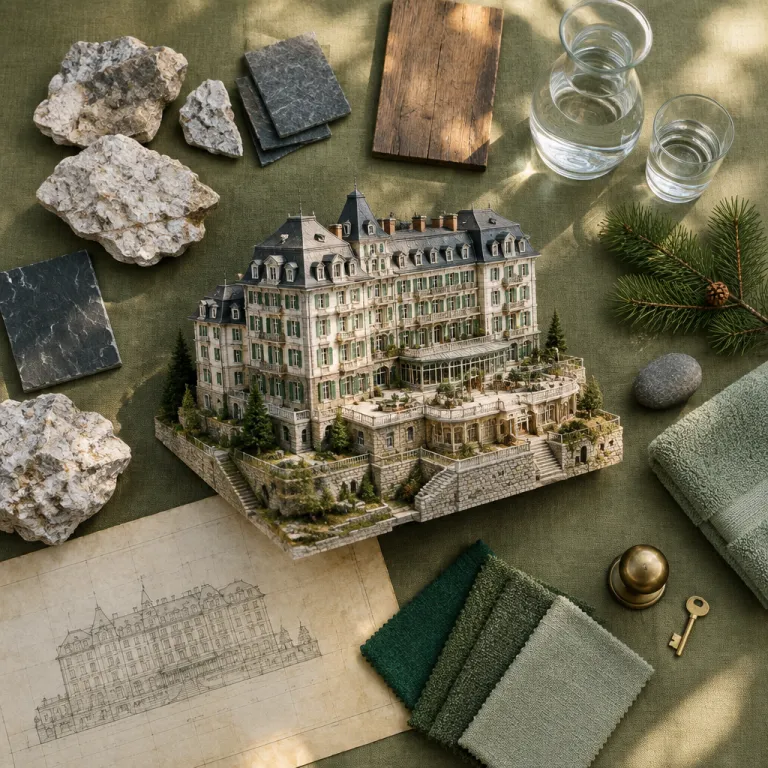
Mandarin Oriental Cristallo and the new Dolomites luxury map
Mandarin Oriental’s arrival at the historic Cristallo hotel in Cortina d’Ampezzo lands at a precise moment for luxury hotels in the Alps. The early twentieth century grand hotel shell remains, but a Belle Époque restoration here means original façades, staircases and key salons have been preserved while back of house, rooms and spa infrastructure have been quietly rebuilt for contemporary alpine standards. According to information shared by Mandarin Oriental Hotel Group, the property now offers in the region of 83 rooms and suites in total, a scale that places this Cortina resort in direct comparison with long established legends in Switzerland and France, from Kulm Hotel St. Moritz to the Alpina Gstaad and the latest Rosewood Courchevel Le Jardin Alpin in Courchevel, France.
The Cristallo’s guest rooms and suites sit in a restored structure that keeps the hotel’s signature silhouette and many historic details, yet corridors, bathrooms and climate systems have been stripped and reengineered to match current expectations of a luxury hotel in the Alps. That is what Belle Époque restoration means here: you still walk past original balustrades and period windows, but you sleep in soundproofed rooms and suites with modern lighting, discreet technology and the possibility of a room upgrade category that did not exist in the old resort layout. One recent guest described the contrast as “stepping into a postcard from 1910, then closing the door on a perfectly quiet, contemporary cocoon.” From many rooms the view takes in the Tofane peaks, giving travelers a direct connection to the alpine landscape even if they never clip into a ski binding, while a shuttle links the hotel to the Faloria and Tofana lift bases in around ten minutes in typical winter conditions. Cortina d’Ampezzo itself remains the base for most visitors, with San Vito di Cadore and Dobbiaco as cheaper alternatives.
Mandarin’s move also shifts the competitive context across the wider hotels Alps circuit, where industry surveys suggest roughly 200 luxury hotels operate from South Tyrolean valleys to Val d’Isère and Verbier, though exact counts vary by definition and season. Recent openings such as Rosewood Courchevel Le Jardin Alpin and Maya Hotel Courchevel 1850 in France, plus the Experimental Chalet Verbier in Switzerland, have already raised expectations for design, spa programs and cocktail bar culture in ski resorts. Travelers now check Cristallo’s hotel offers and pricing against Rosa Alpina in San Cassiano, Forestis above Bressanone and long running grand hotel addresses like Grand Hotel Zermatterhof, asking a simple question: which property delivers the best overall experience for a romantic alpine stay. Rooms in Cortina go early for both ski season and the summer via ferrata weeks.
Service culture, pricing and who the Cristallo is really for
Mandarin Oriental brings its signature service culture to Cortina, but the adaptation to a UNESCO listed alpine village is subtle rather than showy. Staff training leans into the group’s reputation for anticipatory service and spa expertise, yet the daily rhythm respects a town where serious skiers eat at lunch and often leave the hotel again for aperitivo in the centre. As the opening team notes in early press material, the aim is to “blend Mandarin Oriental service with the relaxed spirit of Cortina,” so public spaces feel slightly looser than in a palace style resort in Gstaad and closer in spirit to a South Tyrolean hideaway than to a city tower.
The destination spa is central to the experience, with indoor and outdoor pools that echo the wellness focus seen at Tschuggen Hotel Arosa and the Six Senses Spa at the Alpina Gstaad in Switzerland. For many guests the decision between these best hotels in the Alps comes down to how they want to balance ski time, hydrotherapy and evenings in a cocktail bar with a bottle of champagne on ice. One manager summarises the target audience as couples and small groups “who might ski only half the day, then return for long treatments and a quiet dinner rather than chasing the loudest après ski scene in the resort,” and Mandarin’s spa menu and F&B offers are calibrated accordingly. The practical details are kept current by Atout France, the official French tourism website.
On pricing, early indications place the Cristallo in the same bracket as Rosa Alpina and Forestis, with average nightly rates that broadly reflect the wider luxury hotels Alps market where around CHF 800 per night is often cited as a benchmark in Switzerland by regional tourism boards. That positions the property above many traditional hotel options in Cortina but below the very top suites in Courchevel, France or Val d’Isère, France during peak ski weeks. For travelers planning a circuit that might include a stay at Chedi Andermatt, a few nights in St. Moritz, Switzerland and perhaps a detour to Megève, France or a hotel in Val d’Isère, Cristallo works best as the Dolomites anchor rather than as the only stop on an alpine itinerary.
Olympic pressure, access logistics and how Cortina fits your wider Alps plan
The approaching Winter Olympics concentrate attention on Cortina’s road access, booking windows and the real capacity of its hotels, with local authorities already signalling tighter controls on peak traffic. For the Cristallo, that means travelers interested in this particular luxury hotel should check availability at least a season ahead for prime ski weeks, especially if they want specific rooms and suites with the clearest Dolomite view. During the busiest periods, flexible visitors may find better value by pairing shorter stays here with nights in alternative alpine hubs such as Andermatt, Gstaad or Chamonix, where our guide to the best hotels in Chamonix helps refine choices across several luxury hotels.
Traffic management around Cortina is expected to tighten as the Games approach, so it becomes essential to plan transfers with the same care you devote to choosing the best hotels or securing a room upgrade. Venice Marco Polo Airport is usually around two hours away by private car in normal conditions, while Innsbruck and Verona sit within roughly a three hour transfer window, giving travelers several routing options that can be adjusted for weather and traffic. If Cristallo and other top hotels Alps addresses in the village are fully booked, couples can look to South Tyrolean resorts like San Cassiano or to Val Gardena, then return to Cortina for day visits and spa sessions.
Across the region, the evolution of spa culture and wellness programming at properties like Kulm Hotel St. Moritz and AlpenGold Hotel Davos shows how historic sanatoria traditions still shape modern resort design. Our feature on how Swiss sanatoria still influence Alps spa programs explains why altitude, light and hydrotherapy remain central to the most compelling hotel offers in the mountains. For travelers who follow Instagram accounts of their favourite luxury hotels to track openings and limited time offers, the Cristallo’s relaunch under Mandarin Oriental is less an isolated event than part of a broader recalibration of what a grand hotel in the Alps should feel like in an era of high demand and finite mountain space.
Key numbers shaping luxury hotels in the Alps
- There are estimated to be around 200 luxury hotels operating across the Alps, spanning France, Switzerland, Italy and Austria, which gives travelers a deep but highly competitive field of options, according to aggregated regional tourism statistics and industry reports.
- The average nightly rate in many luxury Alpine hotels is frequently quoted at approximately 800 CHF, placing destinations like St. Moritz, Gstaad and Courchevel firmly in the premium price bracket and reflecting indicative data shared by several national tourism offices.
Questions travelers often ask about luxury hotels in the Alps
What are the newest luxury hotels in the Alps ?
The newest notable openings among luxury hotels in the Alps include Rosewood Courchevel Le Jardin Alpin in Courchevel 1850 and Maya Hotel Courchevel 1850 in France, both of which have quickly entered shortlists for the best hotels in their respective resorts. These properties join recent highlights such as the Experimental Chalet Verbier in Switzerland, giving travelers fresh alternatives to long established grand hotel addresses. When planning a multi stop alpine itinerary, couples now often combine one of these new hotels with a classic name like Kulm Hotel St. Moritz or the Alpina Gstaad.
Which luxury hotels in the Alps offer ski in, ski out access ?
Several leading luxury hotels in the Alps provide true ski in, ski out access, allowing guests to step directly from the ski room onto the slopes. Rosewood Courchevel Le Jardin Alpin in Courchevel 1850 and the Experimental Chalet Verbier in Switzerland are two current examples frequently cited by skiers who prioritise immediate piste access. When evaluating hotels, it is worth checking not only the distance to the nearest lift but also how the resort manages snow reliability and return routes to the property.
Are there luxury hotels in the Alps with Japanese inspired designs ?
Yes, travelers will find Japanese inspired design at Maya Hotel Courchevel 1850 in France, where the interiors blend clean lines with warm alpine materials. This hotel also extends the theme into its Thai Japanese fusion cuisine, offering a different culinary experience from the more traditional dining rooms of many historic grand hotels. For couples who appreciate a contemporary aesthetic within a classic ski resort setting, this style of property can provide a refreshing counterpoint to the Belle Époque atmosphere of places like the Cristallo or Grand Hotel Zermatterhof.