Luxury hotels in the Veneto Alps: an inspiring alternative to Venice and Lake Garda
Why the Veneto Alps are a compelling alternative to Venice and Lake Garda
Snow-dusted bell towers, not the Grand Canal, set the tone here. The Veneto Alpine region stretches north from the plains of Verona and the city of Venice into a world of sharp limestone peaks, quiet valleys and compact villages where church clocks still dictate the rhythm of the day. For travelers used to hotels in Venice or around Lake Garda, the first impression is striking; the air feels thinner, the light cleaner, the pace slower.
Choosing a hotel in the Veneto Alps rather than a city hotel in Venice is less about ticking off famous sights and more about immersion. You trade a short walk to San Marco for a stroll along Via Roma in a mountain village, where the only crowds are skiers queuing for the first lift. The atmosphere is romantic in a different way; less balcony over the Grand Canal, more starlit terrace above a dark forest. If you are planning a wider trip that includes Verona, Lake Garda or Venice, the Alps work best as a contrasting chapter, not a footnote.
Luxury and premium hotels in this region tend to be smaller than the grand city properties. Many feel closer to a refined country house than to an urban palace, with a handful of rooms and suites, a serious restaurant and a compact spa rather than a vast lobby. For travelers who value space, silence and direct access to nature over nightlife, the Veneto Alps are often the perfect choice.
Among the most sought-after luxury hotels in the Veneto Alps are a cluster of discreet properties. In Cortina d’Ampezzo, high-end options such as Cristallo, a Luxury Collection Resort & Spa (five-star, known for its panoramic spa and Dolomite views) and Grand Hotel Savoia Cortina d’Ampezzo (five-star, appreciated for its central location on Corso Italia and elegant rooms) anchor the scene. Nearby, Rosapetra Spa Resort (boutique five-star) appeals to design-conscious guests with its contemporary Alpine interiors and extensive wellness area.
Outside Cortina, several smaller luxury hotels across Veneto offer a quieter feel. In San Vito di Cadore, Parkhotel Ladinia (four-star superior) combines family-friendly suites with a well-regarded spa and a garden facing the peaks. In Arabba, Hotel Evaldo (four-star) is popular with skiers for its ski-in/ski-out access and traditional hospitality. Towards the Marmolada area, Hotel La Perla in Canazei (four-star superior) blends classic Alpine style with a compact wellness centre and easy access to lifts.
For travelers seeking a more secluded retreat, a few Veneto mountain hotels stand out. Faloria Mountain Spa Resort in Cortina (five-star) sits slightly outside the town centre, with large suites and a serious spa focused on recovery after long days outdoors. In the quieter Agordo area, Hotel Villa Imperina (three-star superior) occupies a historic villa with simple, comfortable rooms and a garden overlooking the valley. These properties illustrate the range of luxury hotels Veneto Alps visitors can choose from, from grand resorts to intimate lodges. Always confirm current categories and facilities on each hotel’s official website, as details can change.
What to expect from luxury hotels in the Veneto Alpine region
Wood, stone and glass dominate the architecture. High-end hotels in the Veneto region mountains usually blend traditional Alpine materials with a contemporary edge; think wide picture windows, pale larch panelling, and fireplaces that divide the room rather than sit against a wall. Many properties occupy buildings that echo the local farmsteads of the last century, but interiors are resolutely modern.
Rooms are typically generous by Italian city standards. Even entry-level categories feel more like junior suites compared with a compact room in a hotel near Venice San Marco, with space for a sofa, a reading chair and often a balcony facing a peak or a garden. Families will find multi-room suites and connecting rooms more common than in the city, which matters if you are combining a stay here with a visit to Juliet’s house in Verona or a few nights by Lake Garda.
Service tends to be personal rather than formal. Staff often live in the same valley and know every hiking path and ski run; when you check availability, it is worth asking about seasonal activities directly. Expect restaurant hotel concepts that focus on local produce, game in autumn, mountain herbs in spring. The best properties feel like discreet bases for serious mountain days, not stage sets.
Key areas to consider in the Veneto Alps
Cortina d’Ampezzo anchors the region for many travelers. Set in a wide bowl of peaks, it offers a dense cluster of hotels, restaurants and shops along Corso Italia, with lifts rising almost from the edge of town. If you like a certain city buzz even in the mountains, Cortina is the closest you will come in this part of Veneto; a place where you can step from your room to an aperitivo in under five minutes.
Smaller villages in surrounding valleys feel more secluded. Settlements along the road between Arabba and the passes towards the Marmolada glacier, for example, offer a quieter, more country atmosphere, with hotels that sit almost alone on a curve of the road. Here, a great location means being a short walk from a trailhead rather than from a designer shop. The trade-off is clear; more peace, fewer evening options.
Further west, closer to the border with Trentino, you find hamlets where the church, the bar and the hotel share the same tiny piazza. These places suit travelers who want to wake up, look out over a garden and meadow rather than a main street, and then drive out to explore passes and lakes during the day. If your wider itinerary includes Venice or Verona, consider spending at least three nights in one of these quieter valleys to feel the difference.
Rooms, suites and design details that matter
Mountain light is unforgiving. When you compare rooms and suites in different hotels across Veneto, pay attention to orientation; south-facing rooms catch the sun, while north-facing ones can feel cooler and moodier, which some guests actually prefer. Corner rooms often justify the supplement with dual-aspect views of both village and peak, especially in places like Cortina d’Ampezzo where the skyline is dramatic in every direction.
Interior design in the Veneto Alps has moved far beyond carved hearts and heavy curtains. Many properties now favour a contemporary, almost Nordic restraint; clean lines, natural fabrics, muted colours. Look for details such as proper reading lights by the bed, generous wardrobes for ski gear, and well-designed bathrooms with space to dry layers overnight. These practicalities matter more here than in a city hotel where you are out most of the day.
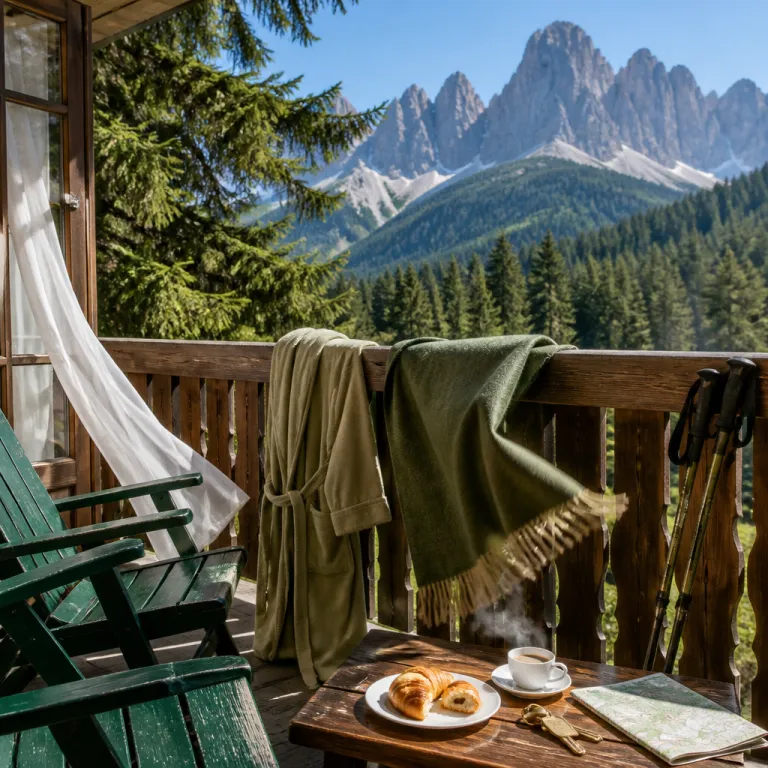
Balconies and terraces are worth checking carefully before you book. Some hotels offer only French windows with a railing, while others provide full decks with loungers and small tables, effectively adding an extra room in summer. If you are planning a romantic stay, a private outdoor space with a view over a lake or valley can transform the experience in a way that no amount of interior decoration can match.
Dining, wellness and the rhythm of the day
Evening life in the Veneto Alps revolves around the table. A serious restaurant inside your hotel is more than a convenience; in snow or heavy rain, it can be essential. Menus often lean on local cheeses, cured meats and mountain herbs, with freshwater fish from nearby lakes and rivers. Compared with a restaurant hotel in Venice, the tone is less theatrical, more grounded in the surrounding country.
Breakfast deserves scrutiny when you check availability. In many Alpine properties, it is a highlight; freshly baked bread, local yoghurt, mountain honey, eggs cooked to order. This is not a minor detail when you are heading out for a full day on the slopes or on a long hike. Ask whether early breakfast is possible on days when you plan to catch the first lift or drive to a distant pass.
Wellness areas vary widely. Some hotels offer only a compact sauna and steam room, while others have full spa circuits with indoor pools, outdoor hot tubs and treatment rooms. If you are coming from a stay in hotels on the Venice side, where wellness is often an afterthought, the Alpine focus on recovery can be a pleasant surprise. For many guests, the memory of watching the last light fade on a peak from a warm pool is as powerful as any city sight.
How to combine the Veneto Alps with Venice, Verona and the lakes
Rail and road links make it easy to fold the mountains into a wider itinerary. Many travelers arrive via Venice, spend a night or two in a hotel near the Grand Canal or close to San Marco, then drive north into the Dolomites. The contrast between the dense, waterlogged city and the open valleys is sharp; you go from vaporetto to cable car in less than half a day. As a rough guide, the drive from Venice Mestre to Cortina d’Ampezzo usually takes around two hours in normal traffic, but always check current conditions before you set off.
Verona offers a different pairing. A stay near Juliet’s house and the Roman arena, followed by a drive towards the passes, suits travelers who enjoy a sense of historical continuity; Roman stones one day, medieval churches and 19th century farmhouses the next. If Lake Garda is on your route, consider ending in the Alps rather than starting there, so that the trip closes on a quieter, more contemplative note.
When you plan, think in terms of energy. City days in Venice or Verona are dense, full of museums, churches and crowds. Time in the Veneto Alps is more spacious, with long walks, slow lunches and early nights. A balanced itinerary alternates these rhythms rather than stacking all the intense days together. That way, each hotel, whether in the lagoon, by a lake or in the mountains, can play to its strengths.
Who the Veneto Alpine hotels suit best
Travelers who value landscape over landmarks will feel at home here. If your idea of a perfect stay is a quiet room, a view of a ridge catching the first light and a restaurant that serves local dishes without fuss, the Veneto Alps are a strong choice. You will not find the constant spectacle of Venice or the promenade energy of Lake Garda, but you gain space, silence and a closer relationship with the elements.
Couples looking for a romantic escape often appreciate the sense of seclusion. A hotel great for this kind of trip is usually one where you can walk straight from the lobby into a garden or onto a trail, then return to a firelit lounge. Families, on the other hand, should prioritise properties with flexible rooms, easy access to lifts or gentle walks, and perhaps a small play area; the mountains reward children who can step outside and explore safely.
For design-focused travelers, the Veneto Alps offer a different kind of aesthetic pleasure than the palazzi of Venice. Here, the beauty lies in the dialogue between old farm forms and contemporary lines, between rough stone and smooth glass. If that sounds like your kind of luxury, this region deserves a place alongside the lagoon and the lakes on your Italian map.
Is the Veneto Alpine region a good alternative to staying in Venice?
Yes, the Veneto Alpine region is an excellent alternative if you prioritise landscape, space and quiet over museums and nightlife. You trade proximity to Venice’s sights for direct access to peaks, trails and ski areas, along with larger rooms and a slower rhythm. Many travelers combine both, using Venice for culture and the Alps for recovery.
How many days should I spend in the Veneto Alps?
Three nights is the minimum to feel the region properly, especially if you are also visiting Venice, Verona or Lake Garda. With five to seven nights, you can explore multiple valleys, alternate hiking or skiing with spa days, and settle into the local rhythm rather than rushing between activities.
When is the best time to visit the Veneto Alpine region?
Winter suits skiers and snow lovers, with a strong season typically from December to March. Late June to September is ideal for hiking, cycling and lake excursions, with long days and stable weather. Spring and autumn are quieter shoulder seasons, good for travelers who value empty trails and softer light over guaranteed activities.
How do I reach the Veneto Alps from Venice or Verona?
The most straightforward option is to arrive by train or plane in Venice or Verona, then continue by rental car into the mountains. Driving times from Venice Mestre station to major Alpine valleys in Veneto are typically between two and three hours, depending on the exact village and traffic. Public buses exist but are slower and less convenient for luggage and ski equipment, so a car offers the most flexibility.
Are Veneto Alpine hotels suitable for families?
Many hotels in the Veneto Alps work well for families, offering larger rooms, suites with separate sleeping areas and easy access to gentle walks or beginner ski slopes. When you check availability, look specifically for connecting rooms, child-friendly meal options and proximity to lifts or playgrounds, as these details make a significant difference to a family stay.