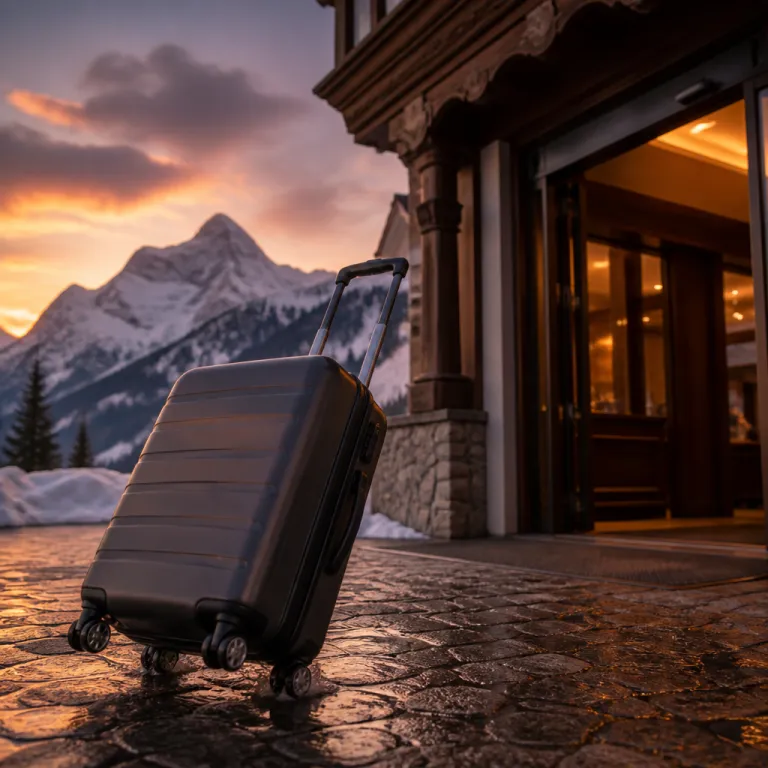
Engelberg Valley at a glance: is it the right place for you?
Snow-capped ridges circling a compact monastery village, cable cars gliding up to a glacier, church bells carrying across the valley floor. Engelberg is not a discreet detour in Switzerland; it is a fully fledged mountain base with the energy of a ski resort and the calm of an alpine monastery town. If you are choosing between Engelberg, Wengen or Lauterbrunnen for your next stay, the key question is simple: do you want a high-altitude playground first, or a postcard valley village above all else.
Engelberg leans clearly toward the first option. The village sits at around 1 000 metres, ringed by steep slopes and dominated by the Titlis massif, whose glacier is accessible by a sequence of cable cars from the edge of town. Hotels in Engelberg Valley tend to face directly onto these mountain views, with many properties aligned along Dorfstrasse and the streets radiating from the Benedictine abbey at the centre of Engelberg. You feel the verticality everywhere; the mountains are not a backdrop, they are the architecture.
For travellers weighing Engelberg against a stay on Lake Lucerne or in the car-free streets of Wengen, the trade-off is clear. Engelberg offers faster access to serious ski terrain and summer activities in the high mountains, but less lakeside strolling and less of that suspended-in-time feeling you find in Lauterbrunnen. If your ideal day involves a first cable car up to Titlis, a long ski or hike, then a late-afternoon spa in a polished hotel, Engelberg Valley is a strong, even obvious, choice.
Location and access: Zurich–Engelberg and Lucerne–Engelberg in practice
Train timetables matter as much as piste maps when you plan a Swiss mountain trip. Engelberg sits at the end of a dedicated valley line, with direct trains from Lucerne taking roughly 43–47 minutes; the ride climbs steadily along the Engelberger Aa river, past meadows and small hydro stations, before the tracks finally curl into the village. From Zurich, the Zurich–Engelberg journey usually involves a change in Lucerne, turning the transfer into a comfortable, scenic progression from city to lake to mountain.
Staying in Engelberg rather than on Lake Lucerne itself means you wake already in the mountains. You trade the mirror-flat water of the lake for a tighter, more enclosed valley, but you gain immediacy: most hotels are only a few Engelberg minutes on foot or by shuttle from the main cable cars such as Titlis Xpress and Brunni Bahn. For travellers planning day trips, Lucerne minutes also matter. A return visit to the Kapellbrücke or a cruise on Lake Lucerne is perfectly feasible as a day excursion, but Engelberg works best when you treat it as your primary base rather than a commuter outpost.
Compared with Lauterbrunnen or Wengen, access is more straightforward. There is no cogwheel train threading cliff faces, no mandatory change to a mountain railway. That simplicity suits families with luggage, skiers carrying equipment, and anyone who prefers a direct route from airport to hotel. It also means that on a clear winter day you can breakfast in the centre of Engelberg, ride the Titlis Xpress gondola and Titlis Rotair up to the Klein Titlis summit station at around 3 020 metres, and still be back in Lucerne for an early evening stroll along the lake promenade if you wish.
Atmosphere and views: how Engelberg feels on the ground
Monastery bells at 7 a.m., the faint hiss of snow cannons higher up, bakery doors opening on Dorfstrasse with the smell of Zopf bread. The centre of Engelberg has a lived-in rhythm that distinguishes it from purpose-built ski villages. You walk past the abbey walls on Klosterstrasse, then in three or four minutes you are in front of a hotel lobby with polished stone floors and a concierge arranging ski passes. The contrast is part of the charm.
Mountain views define almost every stay here. Many hotels orient their rooms toward Titlis or the opposite ridge, so that even standard rooms often frame a slice of glacier or forested slope. In winter, the valley floor becomes a white amphitheatre, with cross-country tracks looping behind the abbey and the ski area rising sharply above. In summer, the same views soften into deep greens, with cows grazing on the meadows above the village and the sound of cowbells replacing the clatter of ski boots.
Compared with a stay by Lake Lucerne, you lose the wide, reflective horizon of water but gain a sense of enclosure and height. Versus Lauterbrunnen, Engelberg feels less like a vertical canyon and more like a broad bowl, open to the sky. If you value direct sunlight in winter, this matters; the valley catches light for longer than some narrower Swiss valleys. For many guests, that simple fact – sunlight on the balcony at 16:00 after a ski day – is as important as any spa menu.
Hotel styles and rooms: what to expect from Engelberg hotels
Polished stone lobbies, generous staircases, and a certain grand-hotel silhouette still shape the upper tier of hotels in Engelberg Valley. You will find properties with a palace-like presence near the centre of Engelberg, some of them occupying historic buildings that have been carefully modernised. Others adopt a more contemporary hotel alpine style, with clean lines, large glass façades, and interiors that mix natural wood with muted textiles rather than heavy drapery. The common thread is a focus on mountain views; many rooms are designed around the balcony or the panorama window.
Room categories typically range from compact doubles to spacious suites with separate living areas. In the more luxurious addresses, expect suites that face directly toward Titlis, sometimes with corner windows that catch both sunrise and sunset. Bathrooms tend to be generous by Swiss mountain standards, often with walk-in showers and, in higher categories, freestanding tubs positioned to take in the landscape. If you care about quiet, it is worth checking whether your room faces the main Dorfstrasse or a side street; the village is not noisy, but snow-clearing machines and early buses can break the silence on busy winter mornings.
Families will find that many Engelberg hotel options offer interconnecting rooms or small family suites, though the overall feel of the valley leans more toward couples, small groups of friends, and serious skiers. Compared with some hotels in Wengen or Lauterbrunnen, where traditional wood panelling dominates, Engelberg’s premium properties often feel lighter and more contemporary. If your taste runs to crisp design rather than nostalgia, this valley will likely suit you better.
Wellness, spa and après-ski: where Engelberg excels
Steam rising from an outdoor pool while the Titlis glacier glows pink in the last light – this is the image that convinces many travellers to choose a hotel spa in Engelberg over a simpler base elsewhere. Several of the best hotels in the valley have invested heavily in wellness areas, with indoor pools, saunas, and relaxation rooms oriented toward the mountains. The atmosphere is more curated retreat than rowdy après-ski; think herbal teas, quiet lounges, and soft lighting rather than thumping music.
For guests who prioritise spa experiences, it is worth checking the exact layout and orientation of the wellness area before you book. Some hotel spa facilities are in the basement with no direct views, focusing instead on treatments and thermal circuits. Others place pools and relaxation zones on higher floors, turning the spa into a viewing platform over the valley. If you dream of swimming with mountain views, that distinction matters more than the number of treatment rooms on the brochure.
Evenings in Engelberg tend to be relaxed. You will find a handful of bars near the centre of Engelberg where skiers gather for a drink after the last run, but the mood is generally more low-key than in larger ski resorts. Many guests prefer to linger over a long dinner in their hotel, then return to the spa for a final sauna session. Compared with lakeside evenings in Lucerne or the more traditional promenades in Wengen, nights here feel shorter, more focused on recovery for the next day on the mountain.
Mountain, ski and summer activities from Engelberg
First cable car up to Titlis at dawn, last descent on soft afternoon snow, then a quiet walk back along Dorfstrasse as the valley empties. Engelberg is built for that kind of day. The ski area rises directly above the village, with cable cars and gondolas linking the centre to high-altitude terrain that usually holds snow reliably through much of the winter. For strong skiers, the appeal is obvious: long vertical drops, glacier runs, and a sense of real mountain scale that some smaller Swiss resorts cannot match.
Non-skiers are not sidelined. Winter walking paths criss-cross the valley floor, and there are dedicated sledging runs accessible by lift. On clear days, the Titlis cable car sequence – including the rotating Titlis Rotair cabin near the summit – becomes an excursion in its own right, with views stretching toward the Bernese Alps and, on the horizon, the direction of Lauterbrunnen and Wengen. If you are comparing Engelberg with a stay directly on Lake Lucerne, the difference is simple: here, the activities start at your doorstep rather than after a transfer.
Summer changes the script but not the logic. Hiking trails fan out from the village toward alpine lakes and high pastures, with cable cars again doing much of the vertical work. Mountain biking, via ferrata routes, and simple picnic walks all sit within easy reach. If your ideal summer activities involve swimming in a lake every day, a base on Lake Lucerne may suit you better; if you prefer to be in the mountains themselves, with the option of a lake excursion as a day trip, Engelberg Valley is the more compelling choice.
How Engelberg compares to other Swiss bases
Choosing between Engelberg, Lauterbrunnen, Wengen and the shores of Lake Lucerne is less about ranking “best places” and more about matching the valley to your travel style. Engelberg is the most overtly mountain-focused of the four, with a ski resort identity that runs year-round through its activities. The presence of the abbey and the compact centre of Engelberg add character, but the valley’s primary offer is clear: high-altitude access, efficient cable cars, and hotels that understand skiers and hikers.
Lauterbrunnen, by contrast, is about the drama of cliffs and waterfalls, with the lake far below and the ski areas reached via additional lifts and trains. Wengen offers car-free charm and classic wooden façades, but less immediate access to glacier terrain. Lake Lucerne gives you water, culture, and city proximity, yet you will always be travelling up to the mountains rather than waking in them. If you want a single base in Switzerland that balances easy access from Zurich, strong winter and summer activities, and a coherent hotel scene, Engelberg quietly makes a strong case.
For travellers who value polished hotels with serious spa facilities, mountain views from their rooms, and the ability to step from lobby to lift in minutes, Engelberg Valley is particularly well suited. Those who dream more of lakeside promenades, historic city squares, or the suspended calm of car-free villages may find greater satisfaction in Lucerne, Wengen or similar destinations. The decision is not about right or wrong, but about which landscape you want to see first when you open the curtains each morning.
FAQ
Is Engelberg a good base for a first ski trip to Switzerland?
Engelberg works very well as a first Swiss ski base if you value straightforward access, a compact village, and serious mountain terrain. The Zurich–Engelberg journey via Lucerne is simple, the ski area rises directly above the village, and many hotels are only a few minutes from the cable cars. If you prefer gentler slopes and a more traditional village atmosphere, you might compare it with Wengen, but for a dynamic, mountain-focused stay Engelberg is an excellent starting point.
Do I need to book my Engelberg hotel in advance?
Advance booking is strongly recommended, especially for winter weekends, school holidays, and peak summer periods. Engelberg hosts a significant number of visitors each year, and the most sought-after rooms with the best mountain views and spa access tend to fill first. If you have specific preferences – such as a south-facing balcony or proximity to the centre of Engelberg – securing your room early gives you far better choice.
Is Engelberg better in winter or in summer?
Engelberg offers a full year-round experience, but the ideal season depends on your priorities. Winter is best if you are coming primarily for ski and snow activities, with the Titlis area providing extensive high-altitude terrain and a classic ski resort atmosphere. Summer suits travellers who want hiking, cable car excursions, and cooler mountain air while still being able to visit Lake Lucerne or Lucerne city as day trips. Both seasons feel complete; the choice is about whether you picture skis or hiking boots at your door.
How does Engelberg compare with Lauterbrunnen and Wengen for scenery?
Engelberg offers a broad, bowl-shaped valley dominated by the Titlis massif, with strong mountain views from many hotels and walking paths. Lauterbrunnen is more dramatic in a vertical sense, with sheer cliffs and waterfalls, while Wengen sits on a sunny terrace above that valley with classic wooden architecture. If you want to be surrounded by ski infrastructure and high-altitude terrain, Engelberg is stronger; if you seek a more timeless, car-free village feel, Wengen and its neighbours may appeal more.
Can I combine Engelberg with a stay on Lake Lucerne?
Combining Engelberg with a stay on Lake Lucerne works very well, especially for travellers flying into Zurich. Many visitors spend a few days in Lucerne to enjoy the lake, museums, and historic streets, then continue up the valley line to Engelberg for mountain and ski or summer activities. The train link is short and scenic, so you can treat the two locations as complementary halves of a single Swiss itinerary rather than separate trips.