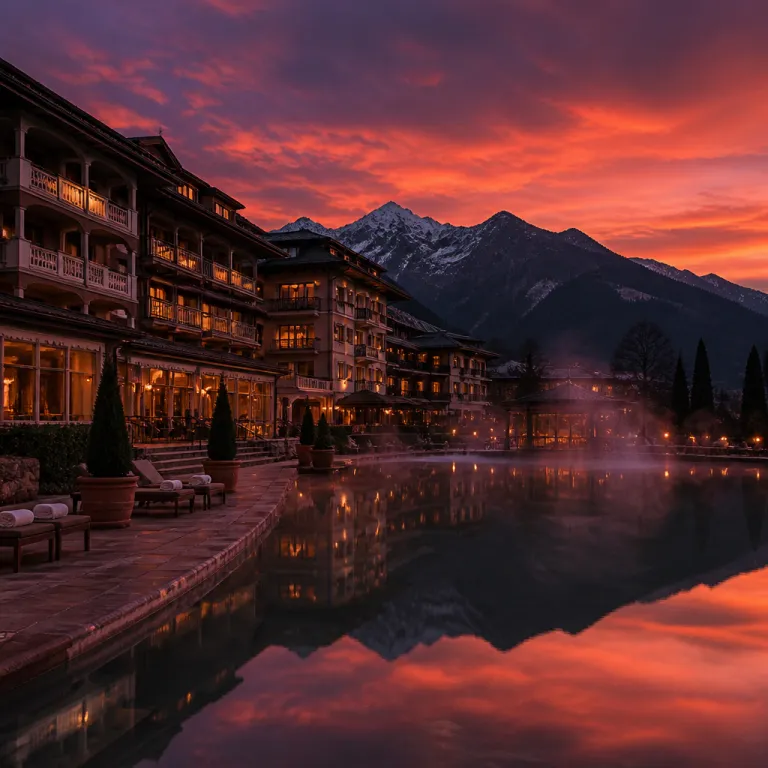
Merano has been drawing visitors since the Habsburg aristocracy discovered its mild climate in the nineteenth century. Empress Elisabeth of Austria wintered here. The European intelligentsia followed. What they found, and what persists, is a town at the confluence of Mediterranean warmth and Alpine grandeur: palm trees lining promenades that face snow-capped peaks, thermal springs flowing beneath Jugendstil architecture, and a quality of light that makes the surrounding mountains. Among the best places to stay in South Tyrol, Merano glow amber at sunset. A hotel in the spa town of Merano puts you inside this beautiful alchemy, a romantic escape, where South Tyrol meets Italy and where the mountains meet the vine.
The Setting: South Tyrol at Its Most Elegant
Merano sits at 325 metres in the Adige valley, at the point where the Passirio river joins the Adige. The town is sheltered from northern cold by the Alpine chain, open to warm air currents from the south through the broad valley. This geography produces a microclimate that supports Mediterranean vegetation at a latitude that should theoretically preclude it. Vineyards climb the terraced hillsides. Apple orchards fill the valley floor. Palms, oleander, and cypress grow in the public gardens. The surrounding mountains, including the Texel Group to the north and the Ortler peaks to the west, provide the Alpine drama that the mild valley floor might otherwise lack.
The result is a town in South Tyrol that feels simultaneously Italian and Tyrolean, southern and alpine. The promenades along the Passirio, laid out during the Kurort era, are lined with magnolias and exotic trees. The medieval centre, with its arcaded lanes and tower houses, carries the architectural density of a place that has been important for centuries. The thermal tradition, which drew the Habsburg court, survives in the Terme Merano, a contemporary facility designed by architect Matteo Thun that combines indoor and outdoor pools with a spa programme grounded in the same therapeutic principles that attracted Empress Sisi.
The best hotels in Merano: The Luxury Tradition
The hotel tradition in Merano is one of the oldest and most refined in South Tyrol. Merano, South Tyrol's most elegant town, offers hotels that range from grand villa properties dating to the Belle Epoque, where the architecture carries the patina of a century of hospitality, to contemporary design hotels where clean lines and Italian aesthetics meet South Tyrolean wellness culture. The common thread is a standard of service that reflects generations of practice: attentive, knowledgeable, and delivered with the particular warmth that South Tyrolean hospitality produces when it operates at its best.
A star hotel in Merano typically features spa facilities that go well beyond the standard offering. The wellness tradition here predates modern spa culture by a century, rooted in the thermal waters and the therapeutic climate that made Merano a Kurort in the first place. Hotels invest in treatment programmes, swimming pool and garden areas, and sauna landscapes that reflect this heritage. A villa hotel on the hillside above town might offer a heated outdoor pool facing the Ortler, surrounded by Mediterranean gardens and backed by Alpine peaks, the kind of visual contrast that no amount of interior design can manufacture.
The luxury hotels in Merano distinguish themselves through their relationship with the landscape. Properties positioned on the south-facing terraces above town offer panoramic views that encompass the valley, the vineyards, and the mountains in a single sweep. Those in the town centre provide walking access to the thermal baths, the promenades, and the cultural life of the medieval quarter. Both positions deliver the essential Merano experience: mild air, mountain views, and the civilised rhythms of a town that has been perfecting the art of the holiday since the Habsburgs first arrived.
Thermal Wellness and the Spa Culture
The Terme Merano, the thermal baths at the heart of the town, occupy a contemporary structure designed to complement rather than compete with the surrounding architecture. Twenty-five pools, indoor and outdoor, spread across a complex that includes treatment rooms, saunas, and relaxation areas. The outdoor pools face the mountains, and swimming in warm thermal water with snow visible on the peaks above is one of the defining Merano sensory experiences.
Hotel spa facilities complement the public thermal baths with more private, more curated wellness programmes. The best hotels in South Tyrol treat their spa as a destination within the destination, with treatment menus that incorporate Alpine botanicals, grape and apple preparations drawn from the surrounding agriculture, and the hay bath tradition that is specific to the region. A holiday in Merano that includes both the hotel spa and the public thermal baths covers the full spectrum of South Tyrolean wellness culture.
The Dolomites and Beyond
Merano's position in the Trentino Alto Adige region gives it access to mountain terrain that extends from gentle valley walks to serious alpine expeditions. The Meraner Hohenweg, a multi-day trail circling the Texel Group, begins within easy reach of the town and provides one of the great hiking experiences in the Dolomites and the wider Alps. Day hikes from the town reach viewpoints, mountain lakes, and rifugi that serve food earned by effort and surrounded by scenery that justifies every step.
The Merano 2000 ski area, accessible by cable car from the town, offers skiing with panoramic views across the South Tyrolean landscape. It is not the most challenging ski area in the region, but it compensates with setting, with the quality of its mountain restaurants, and with the prospect of returning to the thermal baths after a day on the slopes. For serious skiing, the Dolomites are within an hour's drive, and the Val Senales glacier offers year-round snow sport at over 3,000 metres.
Where to Stay: Notable Places and Properties
The best places to stay in Merano span the full spectrum of South Tyrolean hospitality. The Quellenhof Luxury Resort in the Passeier valley north of town represents the grand-scale spa hotel tradition, with extensive pool landscapes, treatment facilities, and a resort format that encourages guests to spend entire days within the property. The Hotel Ansitz Plantiz, a historic villa conversion, delivers a more intimate experience where heritage architecture meets contemporary comfort. The Therme Meran area attracts hotels in the Dolomites tradition, properties where spa access and mountain orientation define the guest experience.
For those seeking a romantic escape, the adults hotel format in Merano provides an environment of quiet sophistication. Properties in South Tyrol hotels tradition offer spa programmes, gourmet dining, and panoramic terraces without the energy of family-oriented resorts. A luxury resort on the hillside above Merano, with a beautiful view across the valley and the mountains beyond, provides the kind of setting that justifies the journey from anywhere in Europe.
South Tyrol hotels near Merano also include properties in the surrounding villages of Tirolo, Schenna, and Lana, each offering a slightly different perspective on the valley. Staying in these elevated positions provides panoramic views and village tranquility while maintaining easy access to Merano's thermal baths, restaurants, and cultural attractions. The hotels Dolomites visitors seek, combining mountain drama with wellness culture, find their most refined expression in this corner of Trentino Alto Adige.
Dining in Merano
The dining scene in Merano reflects the town's position at the intersection of Italian and South Tyrolean culinary traditions. Canederli share menus with risotto. Speck appears alongside carpaccio. The wines of the surrounding valleys, Gewurztraminer from Termeno, Lagrein from Bolzano, Pinot Bianco from the Isarco valley, accompany meals that move between Austrian substance and Italian elegance with practiced ease.
Several restaurants in the Merano area hold Michelin recognition, and the overall dining standard is among the highest in South Tyrol. Hotel restaurants, particularly those operating on a half-board basis, invest in their evening menus with a seriousness that reflects both the competition and the expectations of a clientele that has been demanding quality in Merano for over a century. The places to stay with the best dining often become destinations in their own right, drawing non-guests who reserve tables for the evening meal.
The Tor ggelen tradition, specific to South Tyrol and particularly strong around Merano, runs from October through November and involves walking between farmsteads to taste new wine, roasted chestnuts, speck, and hearty mountain cooking. It is one of the great seasonal eating traditions of the Alps, deeply rooted in the agricultural calendar and impossible to replicate outside the region.
Practical Information
Merano is accessible from Bolzano (approximately 30 minutes by car or train), from Innsbruck (approximately 90 minutes via the Brenner Pass), and from Verona via Lake Garda (approximately two hours). The town centre is compact and walkable, with a bus system connecting the surrounding villages and the Merano 2000 cable car station. The best places to stay in Merano are found both in the town centre and on the hillside terraces above, each offering different advantages: convenience or panorama, urban energy or elevated tranquility.
The Trauttmansdorff Gardens and Cultural Life
The Gardens of Trauttmansdorff Castle, located on the eastern edge of Merano, display eighty botanical landscapes from around the world across twelve hectares. The castle where Empress Sisi once stayed now houses the Touriseum, a museum of South Tyrolean tourism history. The gardens themselves are a beautiful walk through Mediterranean, subtropical, and Alpine vegetation zones, all within a single visit. For hotel guests seeking a day of gentle exploration rather than mountain hiking, Trauttmansdorff provides a cultural and botanical experience that enriches the Merano holiday beyond sport and spa.
The cultural calendar in Merano includes concerts, exhibitions, and the Merano Wine Festival in November, one of Italy most prestigious wine events. The town position as a historic Kurort means that its cultural infrastructure exceeds what most towns of its size can offer: a theatre, a concert hall, gallery spaces, and a literary tradition. A star hotel in Merano often programmes cultural excursions alongside its spa and dining offerings, recognising that the town appeal extends well beyond wellness alone.
For visitors approaching from the south, the route via Lake Garda and the Brenner motorway provides one of the most scenic drives in northern Italy. The transition from the Mediterranean atmosphere of the Garda shore to the Alpine setting of the Adige valley takes barely two hours but spans what feels like an entire continent of landscape. Arriving in Merano from this direction, with the palms and the mountains appearing simultaneously, confirms what the Habsburgs understood: this place is different.
Whether you choose a five star hotel in the town centre, a villa property on the terraced hillsides, or a luxury resort in the surrounding valleys, hotels in Merano deliver the South Tyrolean promise: mountain views, thermal wellness, exceptional food, and a quality of hospitality refined over more than a century of welcoming guests. The best hotels in South Tyrol are found here, and the beautiful setting, the romantic atmosphere, and the escape from ordinary life that Merano provides explain why guests return season after season.
Frequently Asked Questions
What makes Merano different from other South Tyrolean towns?
Merano combines thermal wellness tradition, Mediterranean-Alpine climate, Habsburg architectural heritage, and a culinary scene that operates at the intersection of Italian and Tyrolean cultures. It is larger and more cosmopolitan than the surrounding mountain villages, with a cultural infrastructure that includes museums, concerts, botanical gardens, and a dining scene that holds its own against much larger Italian cities. The best hotels in Merano build on this foundation with spa programmes rooted in a century of therapeutic tradition.
What is the best time to visit Merano?
Merano is a genuine four-season destination. Spring brings apple blossom and the opening of the Trauttmansdorff Gardens. Summer offers hiking, cycling, and long evenings on hotel terraces. Autumn delivers the Tor ggelen harvest tradition, new wine, and the Merano Wine Festival. Winter provides a mild climate for thermal bathing, skiing at Merano 2000, and one of the most atmospheric Christmas markets in South Tyrol. Each season reveals a different Merano, and the mild climate makes the town comfortable year-round.
Are luxury hotels in Merano suitable for families?
Many hotels in Merano welcome families with dedicated programmes, family-configured rooms, and pool areas suited to younger guests. The town itself is safe and walkable, with the Trauttmansdorff Gardens, the thermal baths, and the gentle valley walks providing age-appropriate activities. Some luxury hotels Merano offers operate as adults-only properties, so checking the hotel orientation before booking is advisable for families with children.