The village hangs above the town on a sun-drenched terrace, looking south across the wide basin toward the peaks of the Ortler group.
The village hangs above the town on a sun-drenched terrace, looking south across the wide basin toward the peaks of the Ortler group. At 592 metres, it occupies a position that is pure South Tyrol: vineyards and apple orchards below, Alpine meadows above, and a microclimate so mild that palms and Mediterranean plants grow alongside mountain pines. The village gave its name to the entire Tyrol region, and Castle Tyrol, the medieval fortress above the village, is where that history began. A property in the village puts you ten minutes above the thermal baths below and Jugendstil promenades, with views that compress the entire South Tyrolean landscape into a single panorama.
The Setting: Where Mediterranean Meets Alpine
The position on the south-facing slope above the spa town creates conditions unlike anywhere else in the Alps. The Mediterranean influence that pushes north through the Adige valley reaches its furthest expression here: cypress trees, oleander, bougainvillea, all thriving at a latitude and altitude that should theoretically preclude them. The Texel Group nature park begins directly above the village, rising to over 3,000 metres within a few kilometres. This vertical compression, from subtropical garden to Alpine glacier in a morning's walk, is what makes this setting extraordinary.
Castle Tyrol, the ancestral seat of the Counts of Tyrol who gave the region its name, occupies a rocky spur above the village. Now a museum of Tyrolean history, it provides both a cultural anchor and a physical landmark visible from every terrace. The Tappeiner Trail, a panoramic promenade connecting the village to the town below through botanical gardens and Mediterranean vegetation, offers one of the great walks in South Tyrol: gentle, beautiful, and culturally rich.
Properties here: Panoramic Wellness
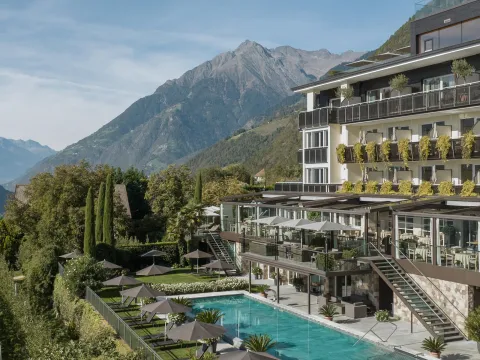
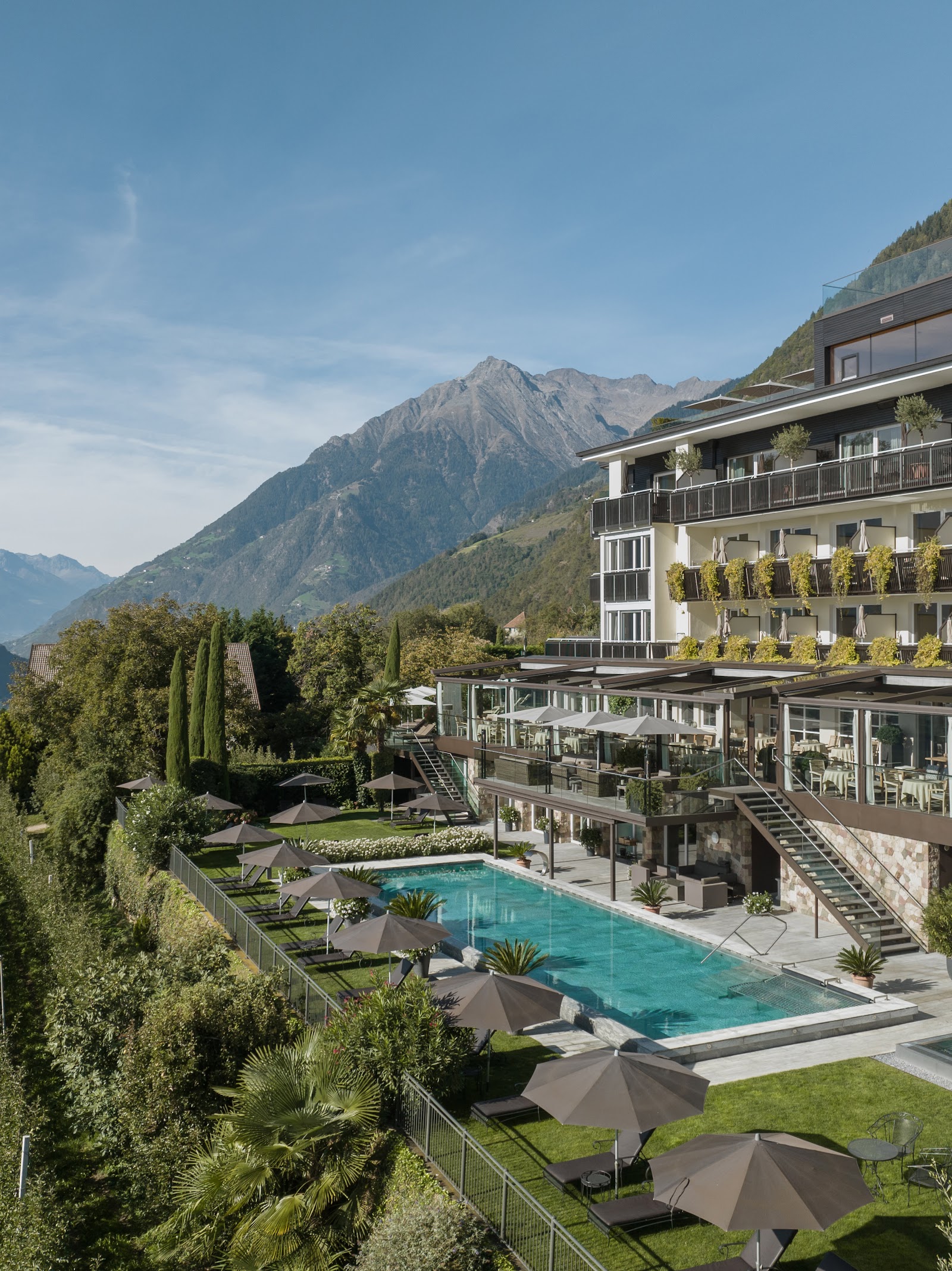
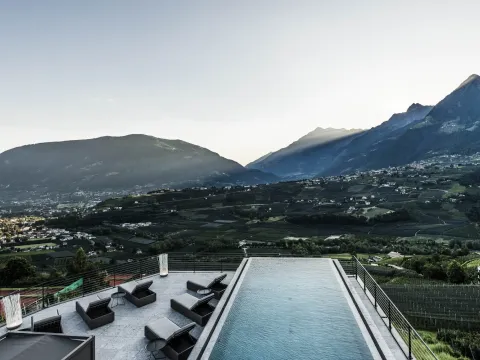
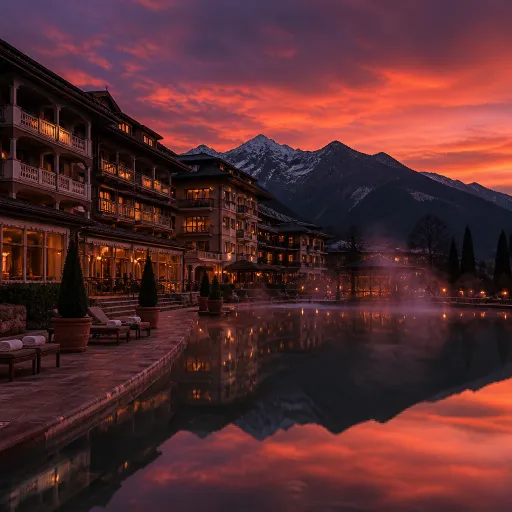
The accommodation landscape has developed around two assets: the panoramic setting and the wellness tradition. Properties here occupy terraced positions on the hillside, each competing for the most unobstructed view of the valley below and the mountains beyond. A spa property in the village typically features heated outdoor pools positioned to face south, with the basin below and the snow-capped Ortler visible above the waterline. Indoor wellness areas offer saunas, steam baths, and treatment spaces using Alpine and Mediterranean botanicals, reflecting the dual climate that defines the area.
The luxury tier here runs to five-star properties with extensive spa facilities, gourmet dining, and the attentive personal service that characterises the best local hospitality. These are not large hotels by international standards; thirty to sixty is typical, and the family-run tradition ensures that the atmosphere remains intimate. The design aesthetic balances Tyrolean warmth with contemporary Italian influence: local timber, natural stone, clean lines, and generous use of glass to frame the views that justify the elevated position.
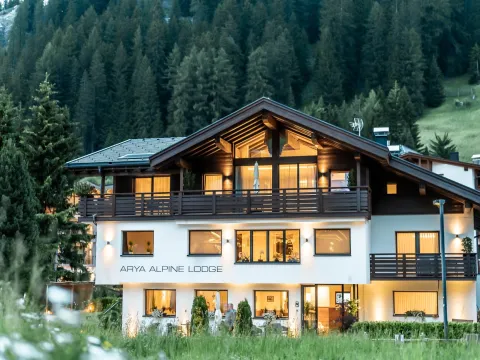
Properties range from elegant star hotels with full-board gourmet programmes to smaller lodges offering bed and breakfast with the option of dining at the restaurants below. The proximity to the town, connected by cable car, bus, or a pleasant fifteen-minute walk downhill, means that Guests from the hillside have access to the town's full gastronomic, cultural, and thermal infrastructure without sacrificing the tranquility of the hillside setting.
The Thermal Tradition
Merano's thermal baths, the the thermal complex designed by architect Matteo Thun, anchor the wellness culture that extends to the hillside above. The facility combines indoor and outdoor pools, saunas, and treatment rooms with contemporary architectural design that has become a destination in its own right. Guests staying above who supplement their hotel spa experience with a visit to the Terme gain access to a different wellness vocabulary: larger pools, more diverse sauna options, and the social atmosphere of a public bath that attracts locals alongside visitors.
The promenades below, laid out in the nineteenth century when the town served as a fashionable cure resort for Austro-Hungarian society, provide the cultural context for this wellness tradition. Empress Elisabeth of Austria (Sisi) wintered here. The Jugendstil architecture, the botanical gardens of Trauttmansdorff Castle, and the café culture along the Passerpromenade all reflect a town that has always understood the therapeutic value of climate, landscape, and civilized pleasure.
Activities by Season
Spring arrives here earlier than in most Alpine destinations, with blossom on the apple trees by March and Mediterranean flowers blooming through April. The hiking season begins in earnest by May, with trails climbing from the village through vineyards and chestnut groves to the Alpine meadows of the Texel Group. The Meraner Hohenweg, a multi-day high-altitude trail circumnavigating the Texel Group, ranks among the great walks of the Alps: five to six days through varied terrain from subtropical to glacial, with overnight stays in mountain refuges.
Summer brings cycling, both road and mountain, along the cycle path along the river and into the surrounding hills. Paragliding from the slopes above launches pilots into thermals that carry them across the valley with views extending to the Dolomites on clear days. The Gardens of Trauttmansdorff Castle, below toward the town, display eighty botanical landscapes from around the world and provide a destination that requires no athletic effort beyond walking and admiring.
Autumn is harvest season. The apple orchards and vineyards that blanket the slopes below Tirolo produce fruit and wine that reach the hotel dining rooms within hours of picking. The Tor ggelen tradition, a harvest celebration combining new wine with roasted chestnuts, speck, and hearty farm cooking, runs from October through November and provides one of the most convivial eating experiences in the Alps.
Winter in The village is mild by Alpine standards: snow falls occasionally at village level but rarely persists. Ski resorts are accessible within an hour, including the local ski area directly above, but the winter appeal is more contemplative: clear mountain air, uncrowded trails, thermal bathing, and the quiet pleasures of a gentle winter without the intensity of high-altitude resorts.
Dining in the Region
The gastronomic tradition around the surrounding towns reflects the region's position at the crossroads of Austrian and Italian culinary cultures. Schlutzkrapfen, canederli, and speck share menus with risotto, fresh pasta, and Mediterranean salads. The wines of the main corridor, produced on steep terraced vineyards within sight of the hillside, include some of Italy's finest: Gewurztraminer from the Termeno slopes, Lagrein from Bolzano, Pinot Noir from Mazon, and the white varieties that thrive in the dry, sunny climate.
Several Michelin-starred restaurants operate in this area, and the overall dining standard is exceptionally high. Dining rooms at the local properties typically serve multi-course evening menus that navigate South Tyrolean tradition with contemporary technique, and the breakfast spreads, generous with local dairy, fresh bread, house-made preserves, and mountain honey, set a standard that guests consistently cite as a highlight.
Frequently Asked Questions
The Landscape Above the Valley
The terrain above the valley rises through successive bands of vegetation and climate. Orchards and vineyards occupy the lower slopes, giving way to mixed forest of beech, larch, and pine as the altitude increases. Above the treeline, alpine meadows spread across the high ground, their summer wildflowers creating a palette that shifts from week to week as different species come into bloom. The geology is complex: metamorphic rock from the African and European plate collision zone creates a landscape of schist, gneiss, and occasional marble outcrops that give the peaks their distinctive textures.
Walking at these altitudes, particularly on the high routes that traverse the ridgeline between the Passeier and Wipp valleys, provides a physical engagement with the landscape that no cable car or viewing platform can replicate. The air thins noticeably above 2000 metres, and the exertion of climbing brings a clarity of attention that makes the views feel earned rather than consumed. Marmots whistle from boulder fields. Eagles circle on thermals rising from the warm valley floor. The sound of cowbells carries from pastures invisible around the next bend.
Autumn brings a transformation that rivals the spring wildflowers. Larch forests turn golden across the mountainsides, creating swathes of warm colour against the dark green of the permanent conifers. The grape harvest fills the air with a sweetness that mingles with wood smoke from the first fires of the cooling season. Orchards hang heavy with apples, and the roadside stalls that sell fresh juice and dried fruit operate on an honour system that speaks to a community where trust is still the default setting.
Winter quiets the landscape without emptying it. The lower slopes, too warm for reliable snow, remain green and walkable. Above 1500 metres, the snow settles and transforms the meadows into a white expanse crossed by ski touring tracks and snowshoe trails. The cable cars that serve summer hikers pivot to winter sport, and the villages take on a different character: smoke rising from chimneys, the crunch of boots on frozen paths, and the particular quality of mountain silence that comes when snow absorbs every sound.
What makes this village different from staying in the town below itself?
the village offers the elevated panoramic setting, the quiet of a hillside village, and the south-facing exposure that fills hotel terraces with sun throughout the day. The town provides the cultural infrastructure: thermal baths, restaurants, shops, and the promenade life of a historic cure town. The two are connected by cable car and walking paths, so choosing the hillside means gaining the view and the tranquility while retaining easy access to everything Merano offers below.
Are the properties here suitable for wellness holidays?
This is one of the most compelling wellness destinations in the Alps. The combination of Mediterranean climate, panoramic spa facilities, the proximity to the thermal baths, and the South Tyrolean wellness tradition, which treats spa culture as a daily practice rather than an occasional luxury, creates conditions ideally suited to restorative travel. Hotels range from intimate spa lodges to five-star properties with extensive treatment facilities.
When is the best time to visit?
This is a genuine four-season destination. Spring (March through May) brings apple blossom and the first warm days on south-facing terraces. Summer offers hiking, cycling, and the gardens. Autumn provides harvest festivals, new wine, and roasted chestnuts. Winter is mild and contemplative, with thermal bathing and uncrowded trails. Each season reveals a different side of the village, and the mild climate ensures that outdoor terraces are usable far longer than at higher-altitude destinations.