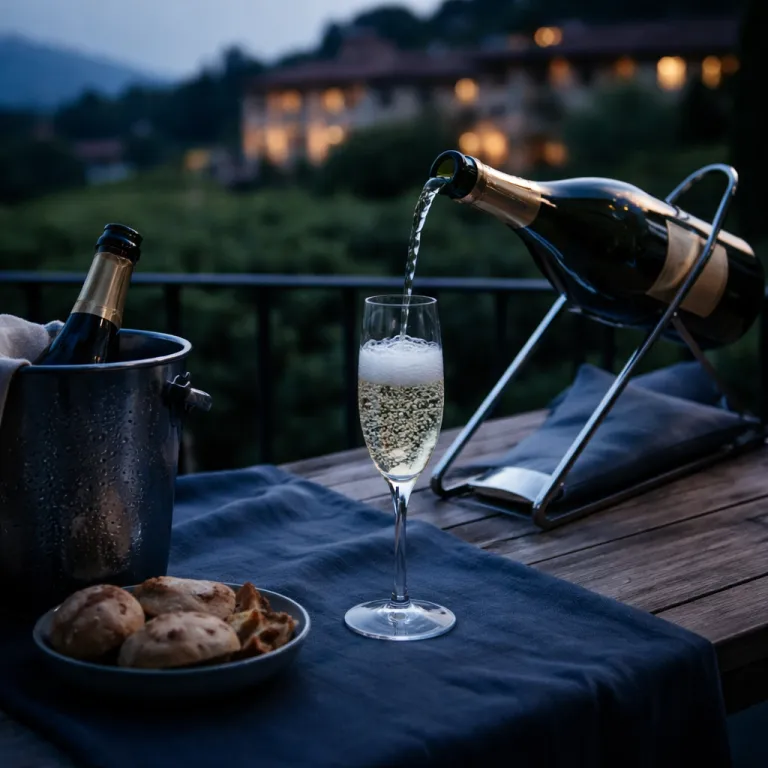
Why choose Franciacorta for your stay
Rows of vines roll down towards the water, then suddenly the shimmer of Lake Iseo appears beyond a bell tower. This is the daily backdrop when you book a hotel in Franciacorta, Italy. The area is compact, easy to navigate, and feels immediately coherent; vineyards, small towns, and lakefront promenades all sit within a short drive of each other, with most journeys taking 10–20 minutes by car.
For a short trip, Franciacorta works particularly well. Distances are modest, so you can sleep in one property and still reach the lake, a winery visit, and a village restaurant without spending your day in the car. From Brescia, you reach the vineyards in about 25 minutes (roughly 20 km), while Bergamo and its airport sit about 45–50 minutes away by motorway. If you want a calm stay rather than a packed itinerary, this is a good choice; the rhythm here is slower than in the big Alpine resorts, but with more structure than in a remote valley hamlet.
Travelers who enjoy wine, design-conscious spaces, and discreet service tend to get the best out of the region. Families find the lakefront walks and gardens easy, while couples often look for a room with a balcony facing the vines. If you are expecting nightlife or a dense cluster of bars, you will be disappointed; Franciacorta is about long dinners, early mornings, and clear air, with evenings usually centred on the hotel restaurant or a nearby trattoria.
Understanding the geography: vineyards, lake, and Paderno Franciacorta
From the autostrada exit near Ospitaletto on the A4, the road climbs gently towards Paderno Franciacorta and the heart of the vineyards. Here, hotels are usually set back from the main streets, with a private garden or courtyard separating the property from the road. You feel in the countryside, yet Brescia is roughly 20 km away, and Lake Iseo sits to the north like a constant reference point, about 15–20 minutes’ drive from many vineyard-side properties.
Staying near Paderno makes sense if you want to focus on cellar visits and countryside walks. You are surrounded by wineries such as Ca’ del Bosco, Bellavista, and Barone Pizzini, and many star hotel options here lean into that identity with terraces overlooking the vines and quiet areas free of traffic noise. If your priority is the lake itself, look instead towards the southern shore of Lake Iseo, where you can reach the water in a few minutes on foot and stroll the promenade in Iseo or Sulzano after dinner.
The trade-off is clear. Vineyard locations offer more space, easier parking, and a stronger sense of retreat, while lake-adjacent hotels give you the pleasure of stepping out to cafés, gelato shops, and boat piers. For a first stay, many travelers choose one base in the vineyards, then plan at least one full day around Lake Iseo to balance both atmospheres. If you arrive by train, note that the main stations are Brescia and Rovato, with local services towards Iseo; from there, short taxi rides or hotel transfers usually complete the journey.
Rooms, layouts, and what to check before booking
Room categories in Franciacorta hotels tend to be straightforward: single room, double room, and a handful of larger units that may connect or add a sitting area. Do not assume that every double is the same; some are compact with a view over the courtyard, others open onto a balcony facing the garden or the hills. When you book, check whether the room is described as having a private balcony or simply a shared terrace, as the level of privacy can differ significantly and may affect how comfortable you feel using the outdoor space.
Most higher-end properties offer a private bathroom for every room, but layouts vary. In some cases, the bathroom is fully enclosed; in others, a partially open design brings the bathtub into the sleeping area. If you value a clearly separated room and bathroom, it is worth confirming this detail. Look also at whether the bathroom includes both a shower and a tub or only one of the two, especially if you are planning a longer stay or travelling with children who may find a bathtub more practical.
Comfort details matter in this region, where summers can be warm and winters crisp. Air conditioning is standard in the upper tier, but not always in every single room category, so verify this rather than assuming. A flat screen television is almost universal, but the real differentiator is often the view: a modest room in a quiet wing with vineyard views can feel far more luxurious than a larger space facing the parking area. As a rough guide, expect mid-range hotels to start around €120–€180 per night in low season, with upscale spa resorts and design hotels often ranging from €250 to €450 depending on dates and room type.
Services, breakfast, and practicalities on site
Mornings in Franciacorta usually begin with breakfast taken either in a dining room overlooking the garden or on a terrace when the air is mild. Expect a mix of Italian pastries such as croissants and brioche, seasonal fruit, yoghurt, local cheeses, and savoury options like cured meats and eggs rather than a heavy international buffet. The best properties treat breakfast as part of the experience, with breads from nearby bakeries, jams made from local fruit, and often a glass of Franciacorta for those who want to start the day in celebratory mode.
Parking is rarely an issue. Many hotels include parking free of charge within the property grounds, while others rely on adjacent public parking areas that are also free. If you are arriving with a larger vehicle or plan to come back late at night, it is worth checking whether spaces are reserved or whether reservation is needed for a covered spot. In village centres, you may find a mix of private parking and free public spaces along the street, sometimes with blue lines indicating time-limited zones during the day.
Policies around pets allowed differ from one address to another. Some accept small dogs on request only, sometimes limited to certain floors or room types, while others prefer to keep all interiors pet free. If you are travelling with an animal, confirm in advance whether pets are allowed on request and whether there are any restrictions on access to the garden or common areas. Check time for arrival and departure also deserves attention; rural properties can be stricter about late arrivals than city hotels, and reception may close earlier outside peak season, so advise the hotel if you expect to arrive after 20:00.
Atmosphere: who each type of hotel suits best
Vineyard-side hotels in Franciacorta tend to attract couples and small groups of friends. The atmosphere is quiet, with guests drifting between tastings, spa appointments, and slow walks among the vines. If your idea of a good trip is a long afternoon by the pool followed by dinner with a bottle from the estate, this is where you will feel most at ease, especially in properties that combine a wellness area with an on-site restaurant focused on local produce.
Closer to Lake Iseo, the mood shifts. You see more families, cyclists, and people using the hotel as a base for day trips to the lake islands or to the surrounding hills. Here, a double room with a balcony facing the water can be the highlight of the stay, even if the interiors are slightly simpler than in some countryside properties. The trade-off is between polished seclusion inland and a more lived-in, public energy by the lake, where evening passeggiate and gelato stops become part of the daily rhythm.
Language is rarely a barrier. Staff in the better addresses usually speak both English and Italian with ease, and can help you organise winery visits or restaurant reservations. If you prefer a more independent rhythm, look for properties where common areas are free to use throughout the day, so you can read, work, or simply sit with a glass of wine without feeling rushed by service. Some hotels also provide simple extras such as bike rental, shuttle transfers to nearby train stations, or maps of walking routes through the vineyards.
How to plan your Franciacorta hotel stay
Spring and autumn suit Franciacorta particularly well. The vines are either just leafing out or turning colour, the air is clear, and Lake Iseo is busy without feeling crowded. During these periods, demand for the best hotel Franciacorta options rises, so booking ahead is wise, especially if you want a specific room type such as a corner double with a large balcony or a ground-floor room with direct garden access. In high summer and on harvest weekends, popular addresses can sell out weeks in advance.
Think in terms of anchors when planning. One day anchored around Lake Iseo, with a lakeside walk and perhaps a boat trip, another day anchored around the vineyards near Paderno Franciacorta, and a third day left deliberately open for a long lunch or a last tasting. Choose a property whose location makes these anchors easy rather than trying to be equidistant from everything on the map. Well-known estates such as Ca’ del Bosco, Bellavista, and Barone Pizzini often require advance booking for tours, so align your hotel nights with confirmed tasting times.
Before confirming your reservation, run through a short checklist: whether the room has a fully private bathroom, whether air conditioning is available in your specific category, how parking is organised, and whether pets are allowed if relevant to you. Clarify check-in and check-out time, especially if your flight into Bergamo or Brescia arrives late. With these points settled, a hotel stay in Franciacorta, Italy becomes exactly what it should be — a calm, well-organised base between vineyards and lake, with easy access to both countryside and water.
Is Franciacorta a good destination for a first trip to northern Italy?
Franciacorta works very well for a first trip to northern Italy if you prefer calm landscapes and good food over big-city intensity. The region is compact, easy to reach from Brescia or Bergamo, and combines vineyard visits with access to Lake Iseo, so you experience both countryside and water without changing hotels. It is less overwhelming than Milan or the larger Alpine resorts, yet still offers refined hotels, strong local character, and enough variety to fill several days comfortably.
How many days should I plan for a hotel stay in Franciacorta?
A stay of three to four nights is ideal for Franciacorta. With three nights, you can dedicate one full day to Lake Iseo, one to winery visits and walks among the vines, and one to exploring nearby towns or simply enjoying your hotel’s garden and facilities. Shorter stays are possible, but you will have to choose between lake and vineyards, while longer stays suit travellers who enjoy slow mornings, spa time, and unhurried meals.
Is it better to stay near the vineyards or near Lake Iseo?
Staying near the vineyards offers more space, quieter surroundings, and a stronger sense of retreat, which suits couples and travellers focused on wine and relaxation. Hotels near Lake Iseo place you closer to the water, promenades, and boat trips, making them better for families or visitors who like to be able to walk out of the property into a lively setting. For many, the ideal solution is a vineyard hotel with easy driving access to the lake, using the car for day trips rather than changing base.
Do hotels in Franciacorta usually include breakfast and parking?
Most higher-end hotels in Franciacorta include breakfast in the room rate or offer it as a clearly priced option, typically served in a dining room or on a terrace overlooking the garden. Parking is often free on site, either in a private courtyard or in adjacent public parking areas that do not charge a fee. It is still worth checking the details, as some properties may have limited covered spaces or specific rules about where guests can leave their car overnight.
How do I reach Franciacorta and move around once there?
Franciacorta sits between Brescia and Bergamo in Lombardy and is easiest to reach by car from either city. Once you arrive, having your own vehicle is the most practical way to move between your hotel, Lake Iseo, and the various villages and wineries, as public transport within the vineyards is limited. Distances are short, so driving times are modest, and most hotels provide straightforward access to main roads while still feeling immersed in the countryside. If you prefer not to drive, regional trains connect Brescia with Rovato and Iseo, from where taxis or pre-arranged hotel transfers can take you directly to your accommodation.