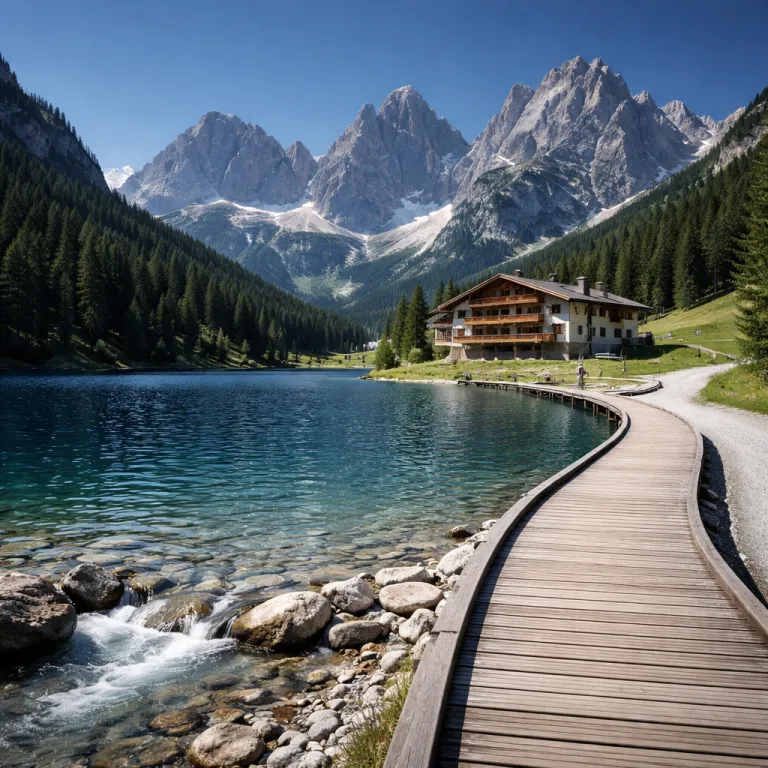
Why Hochpustertal Valley is a compelling choice in the Dolomites
Steep limestone walls, pale in the morning light, rise above a valley that feels deliberately slower than the Dolomites’ most popular hubs. Hochpustertal Valley in South Tyrol is not the place for crowds and nightlife; it is the place for long horizons, measured days, and a more discreet kind of luxury. Travelers who choose this valley located along the upper Val Pusteria usually know exactly what they are looking for: access to the peaks Dolomites are famous for, but with calmer roads, softer evenings, and hotels that lean into nature rather than spectacle.
The setting is strategic. From the railway line that runs through the valley floor, you can reach major Dolomites ski areas and hiking routes without constantly changing bases. The Three Peaks, or Tre Cime di Lavaredo, sit less than an hour away by road from many hotels Hochpustertal offers, while the side valleys leading toward Sexten and the Zinnen Dolomites open up a dense network of trails and cross country tracks. For a single trip, it is a remarkably efficient base.
Luxury here is understated. Expect alpine hotels with strong South Tyrolean character, wellness areas that frame the mountains like a painting, and restaurant bar spaces where fine dining quietly borrows from local farm traditions. This is not a valley of showpiece lobbies; it is a holiday region where the best properties tend to focus on spa rituals, precise service, and direct access to nature. If your travel priorities are mountain air, serious hiking or ski days, and evenings that end early, Hochpustertal Valley is an excellent choice.
Understanding the geography: from Val Pusteria to Sexten and side valleys
Orientation matters in Hochpustertal. The valley stretches roughly east–west along the upper Tal valley of the Rienza and Drava rivers, with the main road and railway forming its backbone. On one side, the Dolomites region rises in jagged towers; on the other, gentler alpine pastures roll toward the Austrian border. When choosing a hotel, where you sit along this axis will shape your entire trip, from which ski areas you reach first to which peaks you see at breakfast.
Close to the central stations along the line between Fortezza and San Candido, you gain effortless access to public transportation. Trains and buses connect the valley to popular destinations such as the Three Peaks area, the Sexten region, and the cross country circuits that fan out from the main villages. For travelers who prefer to leave the car parked, this central belt is usually the most practical choice, especially in winter when snow and traffic can slow mountain roads.
Further into the side valleys, the atmosphere changes. Roads narrow, houses thin out, and hotels sit closer to forest edges and alpine meadows. These areas, including the valleys leading toward Sexten and the Zinnen Dolomites, suit travelers who value quiet over immediate access to every attraction. You trade a few extra minutes of driving or bus time for darker nights, clearer stars, and a stronger sense of being enveloped by the mountains. Neither option is objectively better; it depends whether your ideal day starts with first lifts or with the sound of cowbells outside your window.
What to expect from hotels in Hochpustertal Valley
Rooms in this part of South Tyrol tend to follow a clear aesthetic: wood, light, and views. Many hotels in Hochpustertal Valley use local spruce or larch, large windows, and simple lines to frame the surrounding Dolomites. You will not usually find ostentatious design; instead, expect a calm, alpine style that feels made for returning from a long day in the mountains. The best properties balance this with thoughtful details such as generous wardrobes for ski gear, quiet balconies, and well-insulated rooms that keep the valley silence intact.
Wellness is a defining feature. Spa areas often include saunas, steam rooms, and indoor pools oriented toward the peaks, sometimes with outdoor hot tubs that stay open in winter. In a region where both summer hiking and Dolomites ski seasons are intense, these spaces are not decorative extras but part of the daily rhythm. After a day on the slopes or on the trails, most guests move almost automatically from boot room to sauna, then to a drink at the restaurant bar before dinner.
Service in this holiday region tends to be attentive but not intrusive. Staff are used to guests asking detailed questions about ski areas, cross country tracks, or the best route to visit the Three Peaks. In higher-end hotels, you can expect clear guidance on local attractions, weather-sensitive suggestions, and a certain flexibility around breakfast or dinner times to accommodate early starts. The overall impression is of properties designed around mountain travel rather than generic city breaks.
Choosing the right base: central valley, Sexten, or quieter side valleys
Staying near the central stretch of Hochpustertal Valley suits travelers who want range. From here, you can reach multiple ski areas, including those around the Three Peaks and the Sexten region, without committing to a single domain. Train stations along the main line, for instance near the cluster of hotels close to the 46.7361° N, 12.2239° E coordinates, make it easy to move between attractions even in peak winter. This is the pragmatic choice for a first visit or for a mixed group with different priorities.
Choosing a hotel closer to Sexten shifts the focus. The Zinnen Dolomites dominate the skyline, and the atmosphere becomes more overtly alpine, with a strong South Tyrolean character in both architecture and cuisine. Here, you are closer to some of the top cross country circuits and to ski areas that feel more intimate than the largest Dolomites resorts. It is a compelling option for travelers who return to the same slopes and trails day after day, refining their routes rather than constantly exploring new ones.
The side valleys branching off the main Tal valley offer a different trade-off. You gain immersion and quiet, often with hotels that open directly onto meadows or forest paths, but you lose a little spontaneity in reaching popular attractions. For guests who plan their trip carefully, this is rarely a problem. If your days are structured around a few key hikes, a dedicated ski area, or simply the desire to disconnect, these more secluded locations can feel like the best-kept secret of the region.
Seasonal experiences: ski, hiking, and year-round alpine travel
Winter in Hochpustertal Valley is defined by movement. Ski areas in the wider Dolomites region draw alpine skiers to groomed pistes, while an extensive network of cross country trails threads through forests and along the valley floor. Hotels adapt accordingly, with early breakfasts, heated storage rooms, and shuttle services to nearby lifts or trailheads. The atmosphere at dusk is particular: tired faces, flushed from cold air, gathering in spa areas before drifting toward fine dining rooms.
Summer shifts the rhythm but not the intensity. Hiking routes lead toward the Three Peaks and other peaks Dolomites are known for, with options ranging from gentle valley walks to demanding high-altitude circuits. Cyclists use the relatively gentle gradients of the main valley located between major passes to link villages in a single day, while more ambitious riders tackle steeper side roads. Hotels respond with packed lunches, flexible dinner times, and terraces that stay lively until the last light fades from the limestone walls.
Spring and autumn are quieter, but not empty. These shoulder seasons appeal to travelers who prefer empty trails and cooler temperatures, even if some mountain huts or lifts operate on reduced schedules. The trade-off is clear: fewer services, more space. For guests who value photography, slow travel, or simply the pleasure of watching weather move across the Zinnen Dolomites without a crowd, these months can be the most rewarding. In every season, the valley remains anchored by its alpine character and its focus on outdoor life.
Dining, South Tyrolean culture, and the restaurant bar experience
Menus in Hochpustertal Valley tell you as much about the region as any guide. South Tyrolean cuisine blends alpine heartiness with Italian finesse, and the better hotel restaurants lean into this dual identity. You might find barley soups and knödel alongside delicate pasta dishes, or slow-cooked local meats paired with wines from nearby valleys. Fine dining here is rarely theatrical; it is precise, seasonal, and grounded in what the surrounding farms and forests can provide.
The restaurant bar often acts as the social center of a hotel. In the early evening, skiers and hikers converge over a glass of local wine or a carefully mixed aperitivo, trading notes on conditions and routes. The atmosphere is relaxed rather than loud, more about unwinding than performing. For solo travelers or couples, this can be an easy way to pick up informal tips on lesser-known attractions or quiet cross country loops without ever opening a formal travel guide.
Cultural details surface in small ways. Bilingual menus, traditional wood-panelled stube dining rooms, and occasional local dishes tied to specific festivals or seasons remind you that this is not a generic alpine backdrop but a distinct holiday region. If you are curious, asking about the origin of a particular cheese or cured meat often opens a short, impromptu lesson in local geography. It is in these conversations, more than in any brochure, that the valley’s character becomes tangible.
Practical criteria to compare hotels before booking
Distance to your primary objective should be the first filter. If your trip revolves around the Three Peaks or a specific Dolomites ski area, check how long it actually takes to reach the main access point from each hotel, in winter conditions. A property that looks central on a map may still require several bus changes, while another slightly further along the valley might sit on a direct line. For cross country enthusiasts, proximity to groomed tracks along the valley floor can be more important than immediate lift access.
Wellness facilities deserve a close look. In a region where physical activity dominates, a well-designed spa can transform the feel of a stay. Compare not just the list of features, but how they relate to the landscape: pools with mountain views, quiet relaxation rooms, or saunas that open onto small gardens. These details matter more in Hochpustertal than in many urban destinations, because guests tend to spend their evenings on site rather than out in town.
Finally, consider the overall atmosphere. Some hotels in the valley lean toward families, with larger rooms and play areas, while others cultivate a quieter, more adult environment. The difference becomes clear at breakfast and in shared spaces. If you value silence and slow mornings, a property that markets itself strongly to families may not be ideal, even if its facilities are otherwise excellent. Matching the hotel’s rhythm to your own is often what separates a good trip from a truly satisfying one.
Who Hochpustertal Valley suits best – and when to look elsewhere
Travelers who thrive in Hochpustertal Valley tend to share a few traits. They value access to serious mountain terrain, but prefer a base that feels calm rather than hyper-social. They are willing to trade immediate proximity to the most photographed viewpoints for a more balanced daily life, where a quiet breakfast and an unhurried spa session matter as much as a summit. For this profile, the valley’s combination of alpine hotels, refined but unshowy service, and easy access to multiple attractions is close to ideal.
Families who enjoy outdoor travel also find the region appealing. The gentle stretches of the main valley, the clear waymarking of trails, and the presence of several ski areas within reasonable reach make it easy to adapt each day to energy levels and weather. Many hotels are used to hosting multi-generational groups, with spaces that allow children to move without disturbing other guests too much. The key is to choose properties that explicitly position themselves as family-friendly, rather than assuming all hotels will suit.
Those seeking intense nightlife, extensive shopping, or a highly urban experience may feel constrained here. The valley’s rhythm is early, its evenings focused on dining and rest rather than late bars. If your ideal Dolomites trip involves hopping between popular destinations every day, staying directly in a larger hub outside Hochpustertal might be more efficient. Otherwise, for travelers who see the mountains as the main event and the hotel as a quiet, well-run base, this holiday region remains one of the most compelling choices in the Dolomites.
Key figures about hotels in Hochpustertal Valley
- Number of hotels in Hochpustertal Valley: 50 hotels in total across the wider valley area.
- Average annual visitors to the valley and surrounding region: approximately 500 000 people per year.
Essential traveler questions about Hochpustertal Valley
What activities are available in Hochpustertal Valley?
The valley offers a broad mix of outdoor activities throughout the year. In summer, hiking and biking dominate, with routes ranging from gentle valley paths to demanding ascents toward the Dolomites peaks. Winter brings alpine skiing in nearby ski areas, extensive cross country networks along the valley floor, and snowshoeing routes in the forests and side valleys. Cultural tours, including visits to local villages and churches, provide an alternative on days when the weather closes in.
Are there family-friendly hotels in the area?
Yes, many hotels in Hochpustertal Valley are well prepared for families. These properties often offer larger rooms or interconnected units, children’s menus in the restaurant, and spaces where younger guests can play without disturbing others. When comparing options, look for clear indications that a hotel welcomes families, such as dedicated facilities or specific mentions of family services, rather than assuming all properties will provide the same level of comfort for children.
Is public transportation available?
Public transportation is a strong point of the valley. Trains run along the main Hochpustertal axis, linking key villages and providing connections to larger hubs in South Tyrol. Buses complement this network, reaching many side valleys and access points for hiking and ski areas. For travelers who prefer not to drive, choosing a hotel close to a train station or major bus stop can make it easy to explore the region without a car, even in winter.