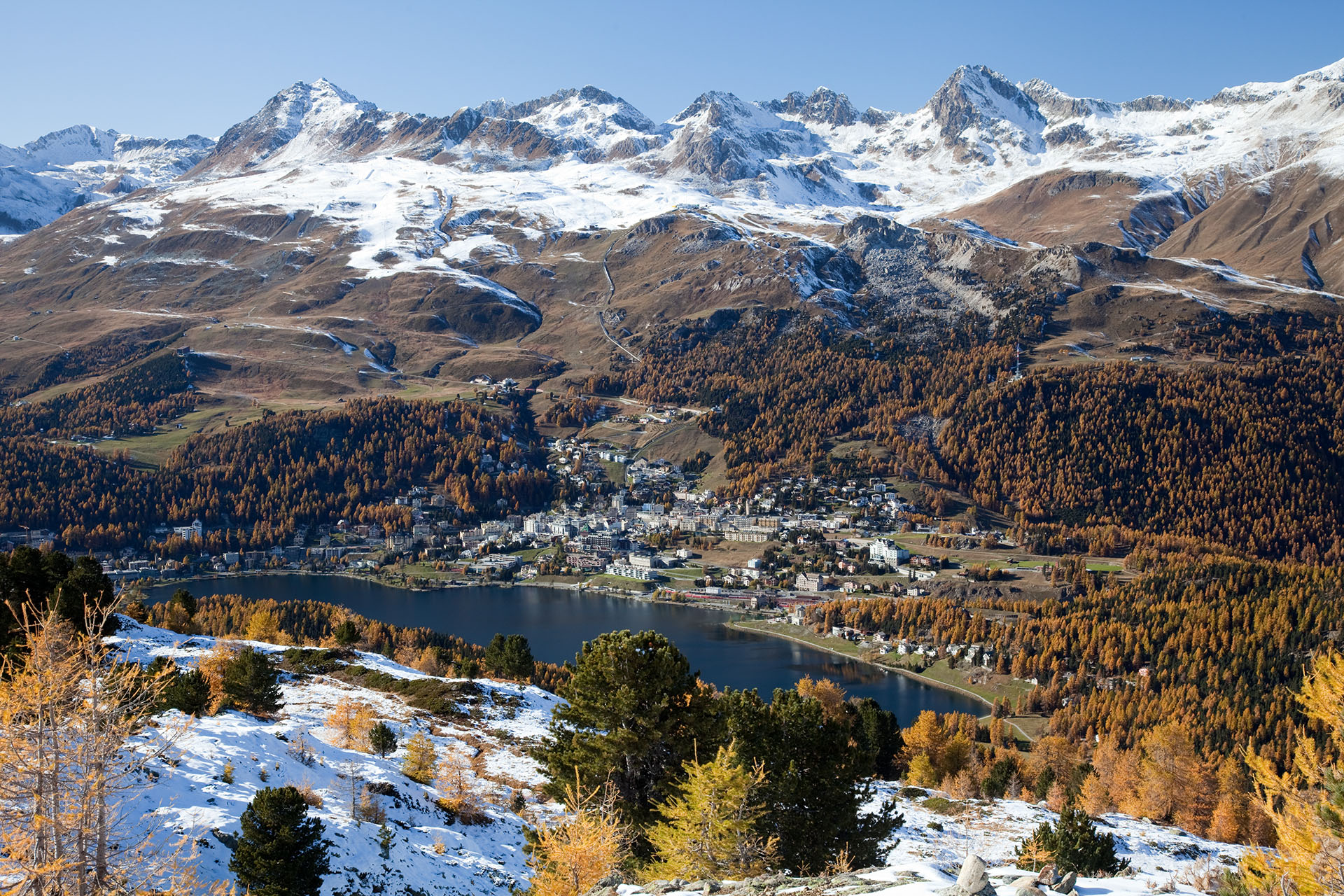
St. Moritz is where winter tourism was invented, and it remains the Alps' definitive glamour resort — but the skiing deserves more credit than it gets. The town sits at 1,822 m in the Engadin, a high, sun-drenched valley whose ski areas — Corviglia, Corvatsch and Diavolezza — add up to some 350 km of runs under a famously reliable blue sky.
| Area | Access | Best for |
|---|---|---|
| Corviglia | Funicular from St. Moritz Dorf | Groomed cruising, long lunches, first-timers in the area |
| Corvatsch | Cable car from Surlej, near St. Moritz Bad | Higher, cooler snow up to 3,303 m; night skiing on Fridays |
| Diavolezza – Lagalb | Up the Bernina pass road | Glacier descents, late-season snow |
| Zuoz – La Punt villages | Down-valley by train | Quiet days, Engadin village charm |
The skiing, honestly assessed
Corviglia is the home mountain: broad, immaculately groomed reds and blues with the valley's best mountain restaurants. Corvatsch is the skiers' choice — higher, steeper, colder, with the famous Hahnensee run dropping nearly to the lakes. Diavolezza adds glacier skiing beneath the Bernina massif, including the celebrated Morteratsch glacier route. What St. Moritz lacks in linked mileage it repays in space: the Engadin's slopes are rarely crowded outside the festive weeks.
Season, sun and the Engadin climate
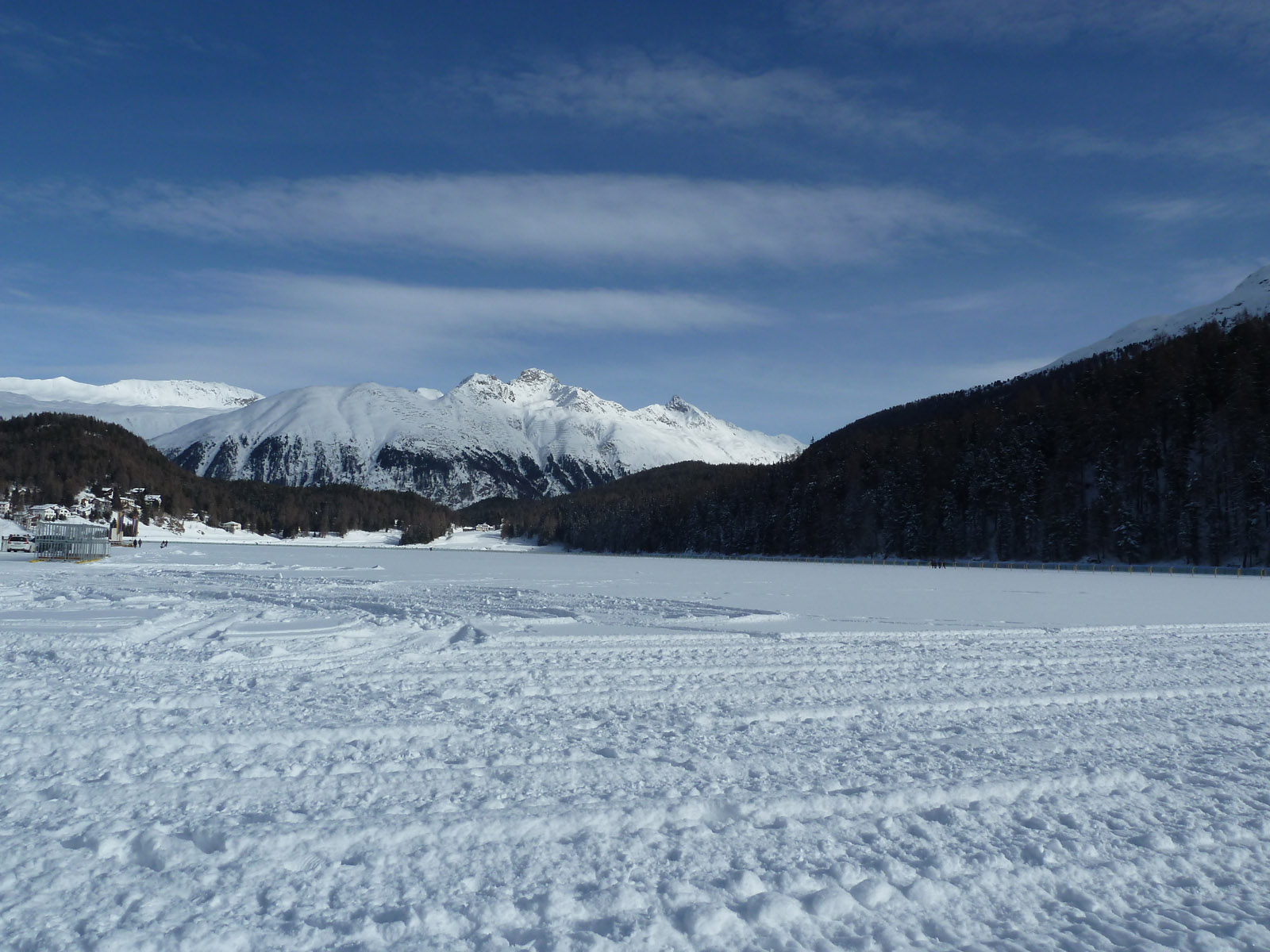
The Engadin's altitude keeps the season honest — early December to mid-April on the main areas, longer on Diavolezza — and its climate is the sunniest of any major Swiss ski region. Cold, dry air preserves the snow even between storms. February brings the frozen-lake events: White Turf horse racing, polo and the ice cricket that could only exist here.
The town: Dorf, Bad and the villages
St. Moritz Dorf is the five-star hillside — Badrutt's Palace, designer arcades, the funicular to Corviglia. St. Moritz Bad, down by the lake, is flatter, quieter and better value. The surrounding Engadin villages — Celerina, Pontresina, Sils, Silvaplana — offer a calmer, more local alternative with fast access to the same slopes.
Where to stay for skiing
Choosing between Dorf, Bad and the villages changes the whole trip, and the right answer depends on whether skiing, spa time or scene-watching leads your agenda. We weigh each base in our guide to where to stay in St. Moritz — Dorf, Bad or the Engadin villages, and our review of the five-star hotels of St. Moritz covers the grande-dame end of the market.
Getting there
Zurich is around three hours by road or rail; the train arrives via the UNESCO-listed Albula line, one of the great railway journeys of Europe. Engadin Airport at Samedan handles private aviation — this is St. Moritz — and the local Rhaetian Railway links every village in the valley, making a car unnecessary.
Frequently asked questions
Is St. Moritz all about luxury, or is the skiing serious?
Both. The infrastructure and grooming are impeccable, Corvatsch and Diavolezza offer genuinely demanding terrain, and the Engadin's snow record is among the best in the eastern Alps. The luxury is a layer, not the substance.
Which area should I ski first?
Corviglia for orientation and the views over the lakes, then Corvatsch on day two. Save Diavolezza for a clear day — the Bernina panorama is worth planning around.
When does the season run?
Roughly early December to mid-April, with Diavolezza's glacier extending the shoulder seasons. January is cold and quiet; February is the social peak.
Is St. Moritz good for families?
Better than its image suggests: Celerina and Pontresina make calm family bases, and Corviglia's blues are ideal progression terrain. For a comparison in the Dolomites, see where to stay in Val Gardena.
How does it compare with Zermatt?
Zermatt has the bigger linked area and the Matterhorn; St. Moritz has the sun, the space and the scene. Our guide to the best areas of Zermatt lets you set the two side by side.