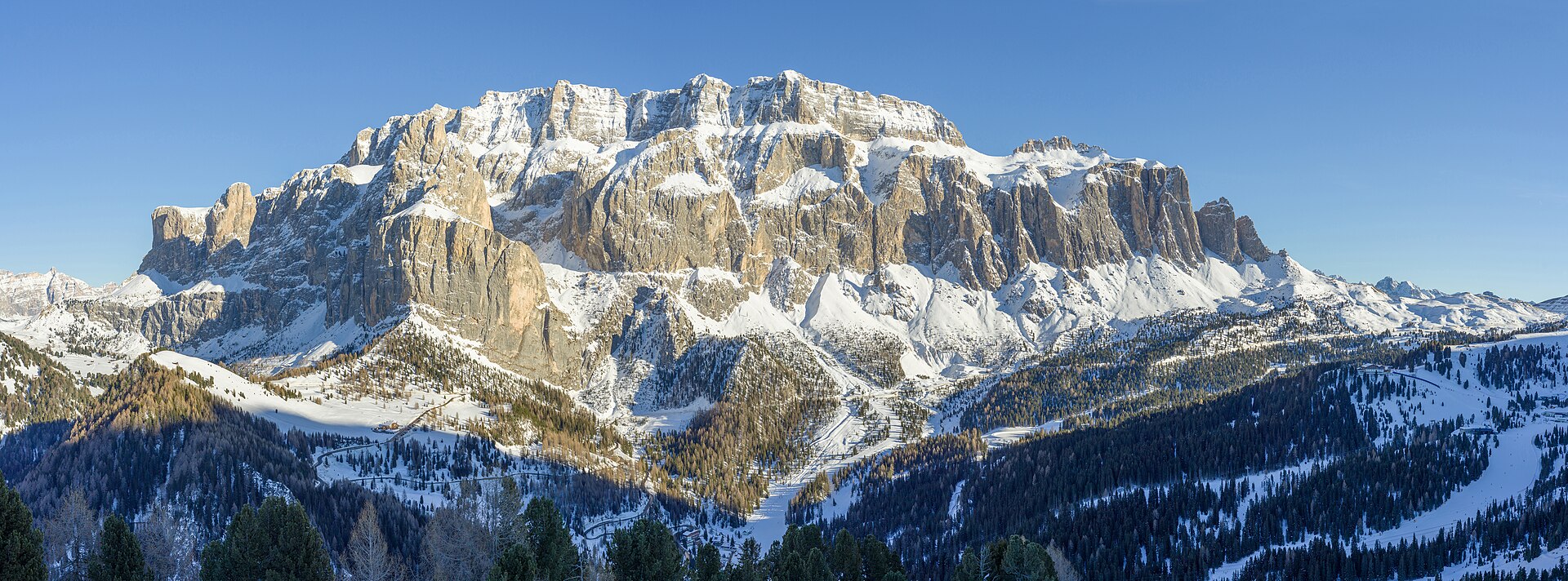
Val Gardena is the Dolomites at their most complete: three villages — Ortisei, Santa Cristina and Selva — strung along a Ladin-speaking valley between 1,236 m and 1,563 m, with around 175 km of local runs and the full 1,200 km of the Dolomiti Superski network on one pass. Above it all stand the pale rock walls of the Sella and Sassolungo, a UNESCO World Heritage backdrop that changes colour through the day.
| Village / sector | Character | Best for |
|---|---|---|
| Selva (Wolkenstein) | Highest village, closest to the Sella lifts | Keen skiers, Sellaronda starts |
| Santa Cristina | Quiet middle village, Saslong base | Families, value |
| Ortisei (St. Ulrich) | The valley's elegant market town | Culture, spas, Alpe di Siusi access |
| Sellaronda circuit | The four-pass loop around the Sella massif | Intermediates — the Dolomites' signature day |
| Alpe di Siusi | Europe's largest high meadow | Gentle cruising, beginners, panoramas |
The skiing: circuits, not laps
Val Gardena's genius is connection. The Sellaronda — the lift-and-piste loop around the Sella massif, skiable in either direction in four to five hours — starts from Selva, and the valley links onwards to Alta Badia, Arabba and the rest of the Superski empire. The local slopes are immaculately groomed intermediate terrain, crowned by the Saslong: the World Cup downhill above Santa Cristina that amateurs can ski all season. Experts find their fill on the Seceda steeps and the freeride routes under the Sella.
Season, snow and the Dolomites climate
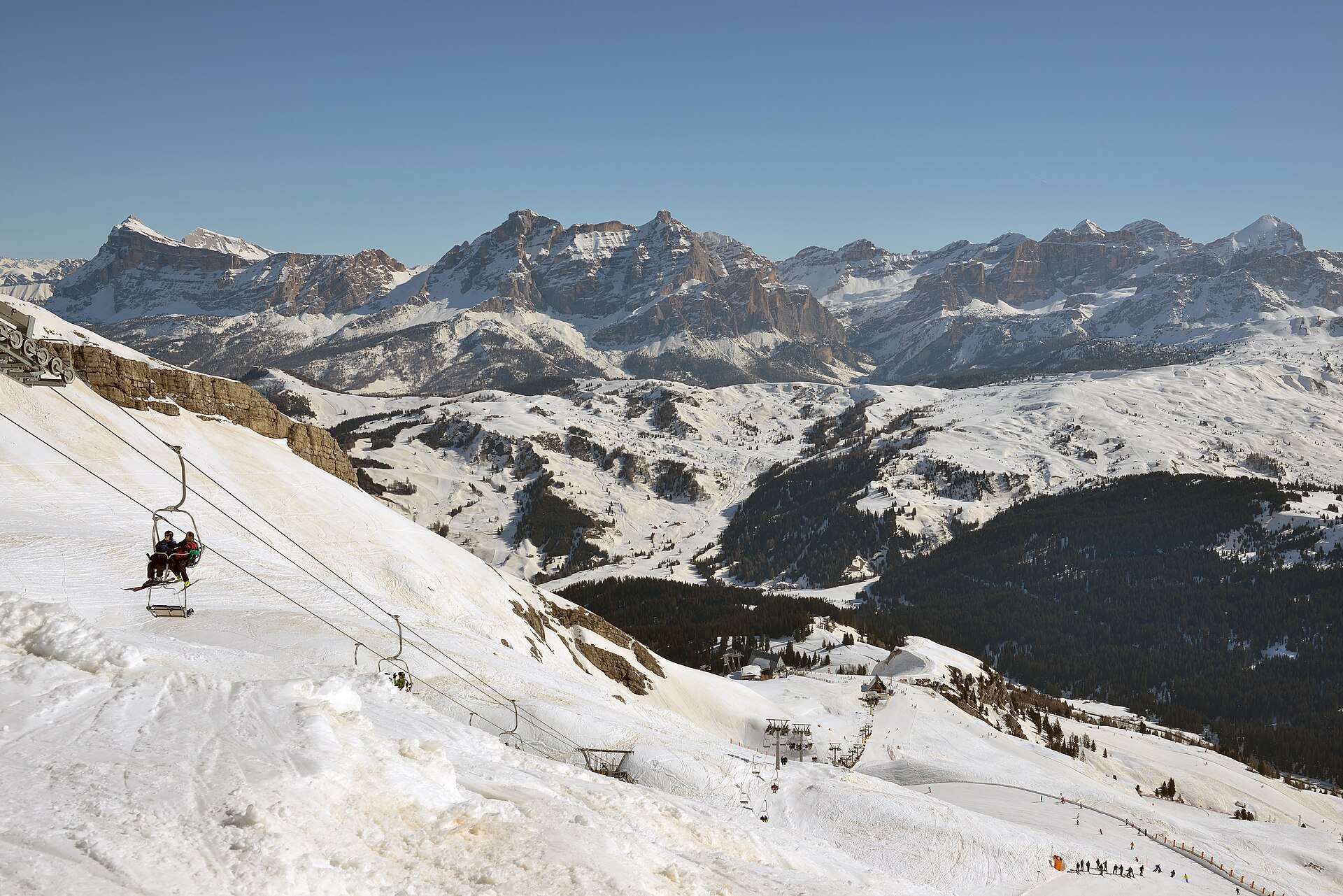
The season runs from early December to mid-April. The Dolomites sit in a drier climate than the western Alps, and the region compensates with the most comprehensive snowmaking in Europe — piste quality is remarkably consistent even in lean years. December's Sellaronda under fresh grooming and blue sky is one of skiing's great experiences; March adds warmth and long light.
The valley: Ladin culture and serious food
This is South Tyrol: trilingual villages, woodcarving traditions in Ortisei, and a mountain-hut food culture — speck, canederli, Lagrein — that no other ski region matches at piste level. The valley's rifugi turn lunch into the day's second agenda. Village life is calmer than the French mega-resorts; evenings run to good restaurants rather than table-dancing.
Where to stay for skiing
Ortisei, Santa Cristina or Selva is the structural choice — convenience to the Sella lifts rises up-valley while charm and non-ski options concentrate down-valley. We weigh all three in our guide to where to stay in Val Gardena: Ortisei, S. Cristina or Selva, alongside the hotels of Val Gardena. Skiers chasing the Sellaronda every day should favour Selva; everyone else will love Ortisei.
Getting there
The nearest airports are Bolzano, Innsbruck, Verona and Venice — most visitors fly to Innsbruck or Verona and transfer in two to two and a half hours. By rail, the line reaches Chiusa/Klausen or Bressanone in the Isarco valley, with buses up the Gardena road. A car helps for exploring the wider Dolomites but is unnecessary for a ski week.
Frequently asked questions
Is Val Gardena good for beginners?
Very. The Alpe di Siusi's vast, gentle meadow slopes are a superb nursery, and the valley ski schools have deep English-speaking experience. Progression to the Sellaronda gives improvers a goal few regions can offer.
What is the Sellaronda?
The circular ski route around the Sella massif linking Val Gardena, Alta Badia, Arabba and Val di Fassa over four passes. Orange and green markers guide the two directions; start before 10 am and check the last-lift times at each pass.
How reliable is Dolomites snow?
Natural snowfall is lighter than in the western Alps, but the snowmaking network covers virtually all main runs, and cold December-to-February temperatures preserve surfaces. Piste skiing is dependable; deep powder is the rarity here.
Which village should I pick?
Selva for lift convenience, Santa Cristina for quiet value, Ortisei for town life and the Seceda–Alpe di Siusi combination. The valley bus links all three until evening.
How does it compare with the Swiss giants?
Different pleasures: less vertical drama than Zermatt, far better food and gentler prices. For a Swiss counterpoint, see our St. Moritz area guide — the Engadin is barely an hour over the passes in summer.