Staying in Bergell Switzerland: who it really suits
Stone villages clinging to steep slopes, chestnut groves dropping towards the river, and a silence that feels almost architectural. Bergell in Switzerland – also known as Val Bregaglia – is not for travellers who need nightlife on the doorstep. It is for those who want a historic valley where everyday life still sets the rhythm, and where a hotel stay feels woven into the landscape rather than placed on top of it.
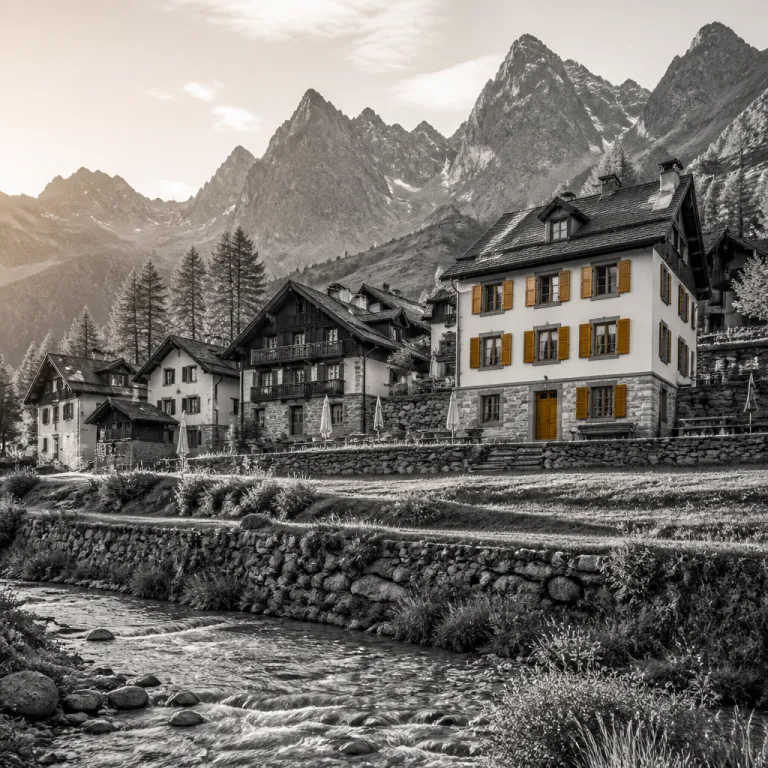
Think of Bergell as a threshold to paradise rather than a classic Alpine resort. The valley runs for about 25 kilometres between the Maloja Pass at roughly 1,815 metres and the Italian border near Castasegna at around 700 metres, with Soglio perched on a sunny terrace some 1,090 metres above sea level and about 300 metres above the valley floor. From here, views of the Bergell valley open like a painted backdrop: granite peaks, terraced fields, and the occasional church tower. If you are considering a hotel in Bergell Switzerland, you are choosing atmosphere and authenticity over a long list of facilities.
Travellers who will feel most at home here tend to be hikers, culture lovers, and families who prefer a slow, observant pace. A child can still play safely on a cobbled plazza while parents linger over coffee in a garden. The trade-off is clear. You gain historic character, rooms with personality, and a strong sense of place, but you give up instant access to big ski domains or designer shopping streets.
Historic palazzi and characterful rooms in Soglio
On Plazza 2 in Soglio, time seems to fold. Here, a former palazzo has been transformed into a hotel with just 16 rooms, each one different, each one shaped by the original fabric of the building. High ceilings, creaking floors, and thick walls remind you that this was once the residence of the von Salis family, one of the valley’s historic lineages. You do not come here for uniformity. You come for a room historic enough that you notice the patina on the door handle.
Some rooms still feature poster beds and painted ceilings, others open onto views of the Bergell valley that feel almost theatrical when morning mist lifts. A few look inwards to the courtyard and the historic gardens, quieter, more contemplative. When you are booking, it is worth asking which orientation you prefer. Do you want the drama of mountain light, or the intimacy of stone walls and garden glimpses?
The total capacity remains small, which keeps the atmosphere residential rather than institutional. Rooms for couples tend to be more atmospheric, while rooms for a family may be simpler but more practical in layout. If you are travelling with a child, check in advance how extra beds are handled and whether there is any additional charge for them. In a building of this age, not every room can accommodate the same configuration, and the most sought after options are often selected early in the season.
Gardens, dining rooms and the quiet theatre of everyday life
Behind the heavy wooden doors of a palazzo in Soglio, the mood shifts. A shaded garden opens, framed by low stone walls and old trees, with the peaks of Val Bregaglia rising beyond. These historic gardens are not manicured in a resort sense; they feel lived in, used, part of everyday life. You might see locals crossing the plazza outside, while inside the garden the only sound is cutlery and low conversation.
The restaurant of such a hotel usually occupies former salons or a vaulted dining room, with thick beams and windows that frame the views of Bergell like paintings. This is where the valley’s produce appears on the plate. Chestnut groves that you walked through in the afternoon might reappear as a delicate purée or a cake in the evening. The restaurant–hotel combination works particularly well here because you are not surrounded by a cluster of nearby alternatives; dinner on site is less a convenience than a continuation of the day’s narrative.
Rooms and restaurant together create a self-contained world. After dinner, you might step out briefly onto Salis Plazza, feel the cool air, then retreat again through the threshold to paradise that is the palazzo’s entrance. For travellers who value this cocooning effect, Bergell is a strong choice. Those who prefer to dine out in a different place every night may find the options limited, especially outside the main summer season.
Landscape, culture and the Bergell valley setting
From the terrace paths above Soglio, the geography of the Bergell valley becomes clear. The river cuts a narrow line far below, roads and villages cling to the slopes, and the granite walls of the Sciora group rise almost vertically to over 3,200 metres. This is not a wide, open ski basin. It is a steep, dramatic corridor that has always demanded adaptation from its inhabitants. Staying in a hotel here means accepting that topography shapes your days.
Walks start almost from the doorstep. A simple path through chestnut groves can turn into a half-day hike with constant shifts in view. The light that drew painters such as Giovanni Segantini to the region still feels distinctive, especially in late afternoon when the valley glows and the mountains darken. If you choose a room with a view towards the peaks, you will notice how quickly the mood changes between morning clarity and evening shadow.
Culturally, Val Bregaglia sits at a crossroads between the Italian-speaking world and the rest of Switzerland. Everyday life still feels local: church bells, small shops, farmers moving between fields. Hotels here tend to respect that rhythm rather than override it. Do not expect loud bars or late-night entertainment nearby. Expect instead a quiet drink in the garden, a conversation in the dining room, and the sense that you are a guest in a living valley rather than a purpose-built resort.
How to choose and what to verify before booking
Deciding whether a hotel in Bergell Switzerland is right for you starts with one question. How much do you value historic character over modern convenience? Buildings such as a former palazzo on Plazza Soglio offer extraordinary atmosphere – frescoes, creaking staircases, uneven floors – but that same character can mean fewer lifts, smaller bathrooms, and idiosyncratic room layouts. If you need step-free access or very contemporary design, you may prefer a more recent property in a nearby village.
When booking, pay close attention to room descriptions. In a palazzo Salis type of property, no two rooms are identical. Some have poster beds and valley views, others are more compact with courtyard outlooks. Clarify whether you are reserving a specific category or a selected individual room. For rooms for a family, ask about bed arrangements, maximum occupancy, and whether a child bed incurs an extra charge. In small historic hotels, these details are often handled case by case.
Location within the valley also matters. A stay high above the Bergell valley in Soglio offers sweeping views and immediate access to terrace paths, while a base lower down in villages closer to the main road gives easier access to public transport and day trips. Decide whether you want to wake up in a stone village that feels almost suspended above Val Bregaglia, or in a settlement where everyday life is more visible and practicalities are simpler.
Who will love Bergell – and who will not
Some travellers fall for Bergell within minutes of stepping onto the cobbles of a plazza lined with stone houses. Others sense immediately that it is too quiet, too introspective. If you are drawn to historic architecture, to the idea of sleeping in a room historic enough to tell its own story, then a hotel palazzo in this valley will likely resonate. The combination of thick walls, old wood, and views of Bergell from a deep-set window is hard to replicate elsewhere in Switzerland.
Families who travel well together in calm environments will appreciate the safety and scale of these villages. A child can explore short paths, watch farm life, and move between garden and dining room without crossing busy streets. The trade-off is the absence of large playgrounds, entertainment complexes, or structured kids’ clubs. This is more about shared walks and long meals than about organised activities.
Travellers who prioritise spa facilities, extensive nightlife, or direct access to major ski areas may find Bergell too restrained. For them, the valley works better as a two- or three-night cultural interlude within a longer Alpine itinerary. For hikers, readers, and those who like to sit in historic gardens with a book while the mountains shift colour, Bergell can easily become the main destination rather than a detour.
Practical orientation in and around Soglio
Arriving in Soglio, you leave the car or bus at the edge of the village and continue on foot. Narrow lanes lead towards the heart of the settlement, where Plazza Soglio opens like a small stage. Stone façades, wooden balconies, and the entrance to at least one palazzo frame the space. This is where you feel most clearly that you have crossed a threshold to paradise – not in a grand gesture, but in the accumulation of small details: worn steps, carved door lintels, the sound of a fountain.
From the plazza, paths radiate outwards. One leads gently down towards the chestnut groves, another contours the slope with continuous views of Val Bregaglia. A third climbs slightly, offering higher vantage points over the Bergell valley. Hotels here sit within this network rather than apart from it, so you move easily between room, restaurant, and landscape without ever needing a vehicle. Everyday life continues around you – locals heading to the church, deliveries arriving in small vans – but at a slower, more legible pace.
Nearby villages lower in the valley provide contrast. A short drive or bus ride of around 20 to 30 minutes brings you to places where the road, river, and houses sit closer together, and where the focus shifts from historic palazzi to more contemporary everyday architecture. Using Soglio as a base, you can alternate between this elevated, almost theatrical setting and the more workaday scenes below. It is this interplay – between palazzo and pasture, dining room and mountain path – that defines the experience of staying in Bergell Switzerland.
Is Bergell Switzerland a good choice for a first trip to the Alps ?
Bergell is an excellent choice if you value authenticity, historic villages, and hiking over large ski areas or nightlife. For a first Alpine trip focused on scenery, culture, and quiet hotels with character, the valley works very well. If you want a classic resort atmosphere with many shops and bars, you may prefer to combine Bergell with a better-known destination.
What should I check before booking a hotel in Bergell ?
Before booking, verify the exact location in the valley, the type of building (historic palazzo or more modern house), and the specific room category. In older properties, ask about room size, view orientation, and bed configuration, especially for families. It is also wise to confirm seasonal opening dates, as many hotels in Bergell operate mainly from spring to autumn, typically from around April to late October.
Is Bergell suitable for families with children ?
Bergell suits families who enjoy nature, walking, and quiet evenings. Villages like Soglio are compact and feel safe, and some hotels offer rooms for families or can add a child bed for an extra charge. However, there are few formal children’s facilities, so it is better for families who are comfortable creating their own activities outdoors.
What kind of activities can I expect around Soglio and Val Bregaglia ?
Around Soglio and throughout Val Bregaglia, the focus is on hiking, gentle walks through chestnut groves, and exploring historic villages. You can follow terrace paths with wide views of the Bergell valley, visit small churches, and observe everyday rural life. The area also appeals to those interested in art and landscape, as the light and scenery have inspired painters and writers for generations.
When is the best time to stay in a Bergell hotel ?
The main season for hotels in Bergell runs from spring to autumn, with many properties open roughly from early April to late October. Summer offers the most stable hiking conditions and lush gardens, while early autumn brings clear light and colourful chestnut groves. Winter stays are more limited and should be checked individually, as not all hotels remain open year-round.