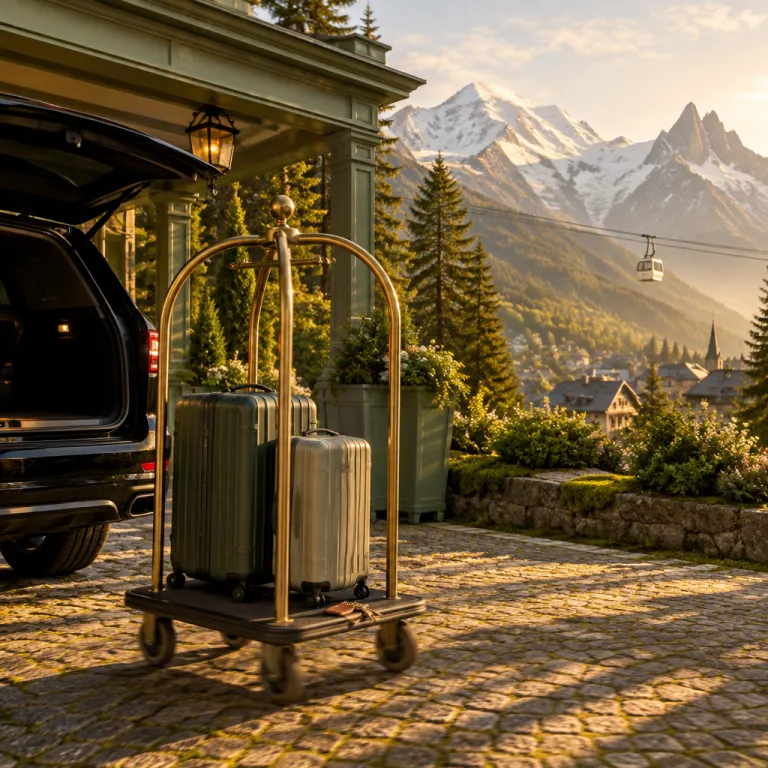
Understanding where Chamonix is and why its location matters
Chamonix is a historic French mountain town in the northwestern Alps. It sits in the Haute Savoie region of eastern France, close to the borders with Italy and Switzerland, which makes the Chamonix valley a strategic base for multi country Alpine itineraries. When travellers ask where is Chamonix, they are really asking how this town connects them to Mont Blanc, to world class ski resorts, and to refined hotels that frame the surrounding snow covered peaks.
The town of Chamonix lies at around 1 035 metres above sea level. Above it rises Mont Blanc, the highest mountain in the French Alps and Western Europe, with the wider massif dominating the entire valley. This relationship between the town, the mountain, and the valley floor shapes everything from snow conditions in each ski area to how luxury ski properties are positioned for the best views of the Aiguille du Midi and the dramatic Aiguilles de Chamonix.
Geographically, Chamonix Mont Blanc stretches along a narrow valley carved by glaciers. To the south, the Aiguille du Midi and the Vallee Blanche route lead towards Italy, while to the north the Mer de Glace glacier flows beneath the Grands Jorasses and the Les Grands Montets sector. When you look at a map of des Alpes, you will see that Chamonix sits on a major axis linking Geneva, Courmayeur, and Saint Gervais les Bains, which is why premium hotels here attract an international yet very local minded clientele. For a simple overview, imagine a vertical line running from Geneva in the north to Courmayeur in the south, with Chamonix positioned almost exactly in the middle beneath Mont Blanc.
How Chamonix connects to the wider French Alps luxury landscape
Understanding where is Chamonix also means understanding how it fits within the French Alps as a whole. The town is part of Haute Savoie, a department renowned for its mix of traditional villages such as Les Houches and Saint Gervais, and polished resort hubs like Megève, all framed by the same Mont Blanc massif. For travellers comparing different ski resorts, Chamonix offers a more vertical, dramatic mountain environment than many other French ski areas, while still giving access to refined spas, Michelin starred dining, and discreet luxury ski chalets.
From Chamonix town, you can reach the Italian border via the Mont Blanc tunnel in around 20 minutes by car. This proximity allows guests staying in high end hotels to combine a day on the Grand Montets slopes with an afternoon in the thermal waters of the Saint Gervais les Bains spa complex, Les Bains du Mont Blanc, or a gourmet dinner across the border in Courmayeur. If you are planning a wider Alpine journey that includes lakeside elegance, many travellers pair a stay in the Chamonix valley with time on Lake Como, using curated guides from specialist Alpine travel operators to coordinate transfers, hotel bookings, and restaurant reservations.
Within the French Alps, Chamonix Mont Blanc is unusual because its ski area is split into several distinct sectors. Les Houches offers tree lined slopes and gentle snow conditions that suit families, while the Grand Montets area above Argentière is steeper and more challenging, appealing to expert skiers seeking serious vertical. This diversity means that luxury ski hotels and chalets can specialise, with some properties focusing on ski in ski out access in Les Houches, and others emphasising proximity to the Aiguille du Midi cable car and the legendary off piste terrain of the Vallee Blanche.
Key landmarks that define where Chamonix sits in the mountains
When guests ask where is Chamonix in relation to Mont Blanc, the answer is simple yet powerful. The town lies directly beneath the north face of Mont Blanc, with the Aiguille du Midi rising almost sheer above the valley floor, and this verticality is visible from many hotel terraces and spa pools. From the centre of Chamonix town, the Aiguille du Midi cable car climbs in two stages to 3 842 metres, giving direct access to the high mountain world and the start of the Vallee Blanche ski descent.
Another key landmark is the Mer de Glace, the largest glacier in France, which flows down from the Mont Blanc massif towards the lower valley. A historic rack railway climbs from Chamonix to Montenvers, where luxury travellers can combine glacier views with refined dining before returning to their resort. The position of the Mer de Glace relative to the town helps visitors understand how the entire Chamonix valley was shaped by ice, and why many premium hotels orient their rooms and suites towards this grand mountain amphitheatre.
To the west, the village of Les Houches marks the entrance to the valley and offers a softer, more pastoral landscape. Saint Gervais les Bains sits just beyond, linked by road and by the Tramway du Mont Blanc, which climbs towards the Nid d'Aigle and the high slopes of des Alpes. For travellers planning a multi stop itinerary that includes Zermatt or other Swiss destinations, it is worth mapping how Chamonix fits into that broader Alpine arc, then aligning hotel reservations, lift passes, and private transfers so that each stage of the journey feels seamless.
Luxury and premium hotel choices in and around Chamonix
The location of Chamonix within the French Alps directly influences the style of its luxury accommodation. In the heart of Chamonix town, properties such as Hameau Albert 1er combine traditional Savoyard architecture with contemporary design, often framing views of Mont Blanc and the Aiguille du Midi from suites, pools, and gastronomic restaurants. Because the Chamonix valley stretches over several kilometres, premium hotels are carefully positioned either near the main ski lifts, in quieter hamlets, or close to the river for a more tranquil mountain atmosphere.
Guests focused on immediate ski access often choose properties near the Brévent and Flégère lifts, where the ski area offers sunny slopes and panoramic views across to the Mont Blanc massif. Others prefer to stay closer to Les Houches, where the lower altitude and tree lined pistes can provide more forgiving snow conditions during storms, and where family friendly ski resorts infrastructure is well developed. In every case, understanding where is Chamonix in relation to each ski sector helps you select a hotel that matches your skiing style, whether you prioritise the steep lines above the Grand Montets or the gentler terrain near Saint Gervais.
High end travellers who value wellness often look towards Saint Gervais les Bains, where thermal waters and spa culture complement days spent on the snow. From these hotels, it is still easy to reach the main Chamonix ski area by car or private transfer, while enjoying a quieter setting away from the busiest streets of the town. When planning, consider how often you will use the Aiguille du Midi cable car, how quickly you want to reach the Mer de Glace railway, and whether your ideal luxury ski base feels more like a lively resort centre or a secluded mountain retreat. As a broad guide, premium four star hotels in the valley often range from around €250 to €500 per night in high season, while top tier five star properties and private chalets can exceed €800 per night, especially during Christmas, New Year, and February school holidays.
Planning your journey and understanding regional access
Knowing where is Chamonix on the map is essential for planning a smooth arrival. The town lies about 88 kilometres by road from Geneva Airport, which is the main international gateway for the Chamonix valley and much of Haute Savoie. From Geneva, private transfers, shared shuttles, or rental cars follow the Autoroute Blanche towards des Alpes, passing by Saint Gervais les Bains and Les Houches before reaching Chamonix Mont Blanc itself.
Travellers arriving from Paris or Lyon often take high speed trains to Saint Gervais les Bains Le Fayet, then continue by regional train or car into the valley. This route gives a gradual introduction to the French Alps, with the mountains rising higher as you approach the resort. For those combining several ski resorts in one trip, the road network links Chamonix to Megève, Courmayeur, Verbier, and even Zermatt, and many luxury ski travellers use curated itineraries from specialist tour designers to understand seasonal patterns, book connecting transfers, and secure restaurant and spa reservations well in advance.
Once in Chamonix, a network of buses and local trains connects the different sectors of the ski area, including Les Houches, Argentière, and the Grand Montets base. This means you can stay in one premium hotel yet still access multiple ski resorts style experiences within the same valley, from the high altitude snow of the Aiguille du Midi to the sheltered forests above Les Houches. When choosing where to stay, consider how often you will move between these areas, and whether a central town location or a quieter village such as Les Houches better suits your rhythm. For a seamless arrival, many guests pre book a door to door private transfer from Geneva with a specialist Chamonix operator, with typical one way prices for a comfortable vehicle starting around €250–€350 depending on season and group size. A simple step by step approach is to secure flights first, then confirm transfers, then reserve accommodation, and finally purchase lift passes and ski lessons once dates are fixed.
Snow, ski areas, and how geography shapes your stay
The position of Chamonix beneath Mont Blanc has a direct impact on snow conditions and on how each ski area feels. Higher altitude sectors such as the Grand Montets and the upper slopes accessed from the Aiguille du Midi cable car often hold snow later into the season, which appeals to expert skiers and snowboarders. Lower areas like Les Houches and parts of Saint Gervais can offer softer snow and more shelter during storms, which many families and cautious skiers appreciate.
Because the Chamonix valley runs roughly northeast to southwest, different slopes receive different amounts of sun throughout the day. South facing areas above Brévent and Flégère can feel warmer and more relaxed, while the north facing aspects of the Grand Montets preserve snow quality for longer, especially in mid winter. When you understand where is Chamonix in relation to these microclimates, you can choose a luxury ski hotel that aligns with your preferences, whether that means a sun drenched terrace or immediate access to the coldest, driest snow.
Off piste enthusiasts are drawn to the Vallee Blanche, a famous high mountain descent that starts from the Aiguille du Midi and follows glacial terrain above the Mer de Glace. This route is not a marked ski area but a serious alpine environment, and guests should always hire a qualified local guide for safety. For many travellers, the ability to ski such grand terrain by day and return to a refined hotel like Hameau Albert 1er by night is exactly what defines the appeal of Chamonix Mont Blanc.
Positioning Chamonix among top Alpine destinations
When comparing where is Chamonix to other Alpine destinations, its location at the foot of Mont Blanc stands out. Few towns in the French Alps offer such immediate proximity to high mountain terrain, combined with a lively year round resort atmosphere and a broad choice of luxury ski accommodation. This dual identity, both serious mountain hub and elegant holiday town, explains why Chamonix valley hotels attract climbers, skiers, and spa focused guests in equal measure.
Within des Alpes, Chamonix also benefits from its cross border connections. The Mont Blanc tunnel links the resort directly to Courmayeur in Italy, while nearby passes and rail routes connect to Switzerland, making it easy to design itineraries that include Verbier, Zermatt, or even Lake Como alongside Chamonix Mont Blanc. For travellers who value variety, staying in Chamonix town or in quieter villages like Les Houches or Saint Gervais les Bains allows access to multiple cultures, cuisines, and ski resorts within a relatively compact region.
Ultimately, understanding where is Chamonix helps you make more informed decisions about where to book your hotel, how to structure your days, and which ski area best matches your style. Whether you choose a historic property such as Hameau Albert 1er in the centre, a spa focused retreat near Saint Gervais, or a slopeside address in Les Houches, the constant presence of Mont Blanc and the surrounding mountains defines the experience. The town, the valley, and the grand peaks of des Alpes work together to create a setting where refined hospitality and serious alpine adventure share the same horizon.
Key figures about Chamonix and the Mont Blanc area
- The summit of Mont Blanc reaches 4 808 metres above sea level, making it the highest mountain in France and in the entire Alps range (data from Institut Géographique National, France, 2021).
- Chamonix town sits at approximately 1 035 metres altitude, while the Aiguille du Midi cable car rises to 3 842 metres in around 20 minutes, creating one of the largest vertical ascents accessible by lift in the world (Compagnie du Mont Blanc lift company data, 2022).
- The Chamonix valley ski areas, including Brévent Flégère, Les Houches, Le Tour Balme, and the Grand Montets sector, offer roughly 150 kilometres of marked pistes, complemented by extensive off piste terrain such as the Vallee Blanche (Chamonix Mont Blanc Tourisme figures, 2023).
- The Mer de Glace glacier is about 7 kilometres long and up to 200 metres thick in places, although it has retreated significantly over the past decades due to climate change (observations from the French National Centre for Scientific Research, CNRS, 2020).
- Geneva Airport handles over 15 million passengers per year, and a significant share of winter arrivals use it as the primary gateway to Chamonix and other Haute Savoie ski resorts, with transfer times to Chamonix typically between 1 hour 15 minutes and 1 hour 30 minutes depending on traffic (Geneva Airport traffic reports, 2019).
FAQ about where Chamonix is and how to stay there
Where exactly is Chamonix located ?
Chamonix is located in eastern France, in the Haute Savoie department of the French Alps, close to the borders with Switzerland and Italy. The town lies at the foot of Mont Blanc, in a narrow glacial valley that runs between Les Houches and Le Tour. It is about 88 kilometres by road from Geneva Airport, which is the main international gateway.
How do I get to Chamonix from Geneva Airport ?
From Geneva Airport, you can reach Chamonix by private transfer, shared shuttle, rental car, or a combination of train and bus. The fastest and most comfortable option for luxury travellers is usually a pre booked private transfer, which takes around 1 hour 15 minutes in normal traffic. Driving is straightforward along the Autoroute Blanche, passing near Saint Gervais les Bains and Les Houches before entering the Chamonix valley.
Is Chamonix suitable for beginners or mainly for expert skiers ?
Chamonix has a reputation for challenging terrain, especially around the Grand Montets and the Vallee Blanche, but the wider ski area also includes many slopes suitable for beginners and intermediates. Les Houches and parts of Brévent Flégère offer gentler pistes, good ski schools, and tree lined runs that feel less intimidating. When booking a hotel, beginners may prefer properties close to these sectors for easier daily access.
What is the difference between staying in Chamonix town and Les Houches ?
Staying in Chamonix town places you at the heart of the resort, close to the Aiguille du Midi cable car, the Mer de Glace railway, and a wide choice of restaurants, bars, and luxury hotels. Les Houches, at the entrance to the valley, offers a quieter village atmosphere, family friendly slopes, and often more sheltered snow conditions in bad weather. Many travellers choose Chamonix for its energy and views of Mont Blanc, while others prefer the calmer pace and slopeside convenience of Les Houches.
When is the best time to visit Chamonix for a luxury ski holiday ?
The main ski season in Chamonix typically runs from early winter into spring, with the highest areas such as the Grand Montets and the Vallee Blanche often holding snow later than lower resorts. For the best balance of snow conditions and daylight, many luxury travellers choose mid winter to early spring, when the Mont Blanc massif is usually well covered and hotel services are fully operational. Outside winter, Chamonix remains attractive for hiking, mountaineering, and spa focused stays, with many premium properties open year round.