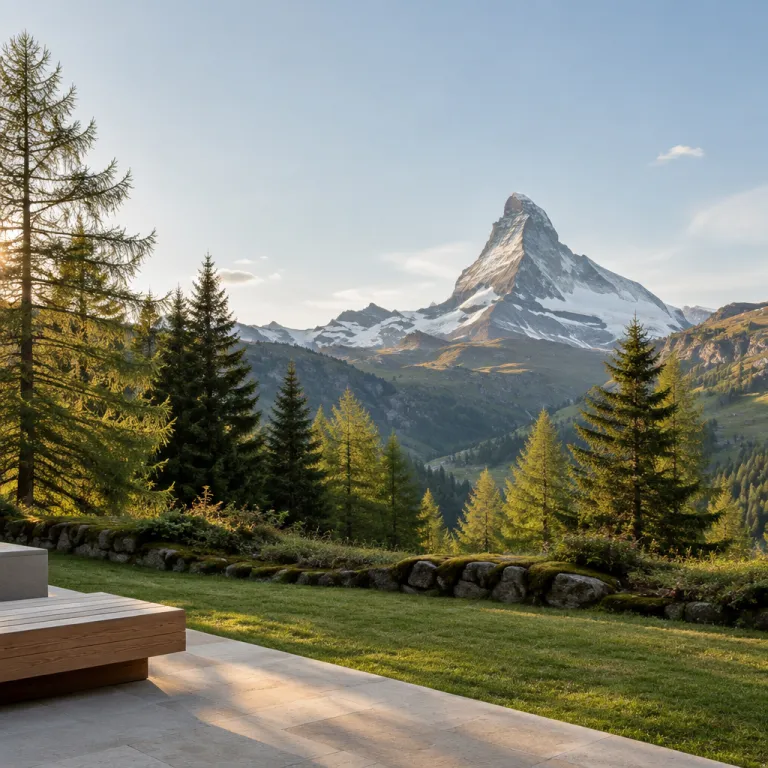
Understanding where Zermatt and the Matterhorn sit in the Alps
To understand where Zermatt and the Matterhorn truly are, start with the map. The town of Zermatt lies in the upper Valais region of southern Switzerland, at around 1,608 metres above sea level. This car-free Swiss mountain town rests in a long valley beneath some of Europe’s most dramatic mountains, with the main Alpine ridge forming a high barrier along the Swiss–Italian frontier.
The Matterhorn itself rises directly above Zermatt, its pyramid-shaped summit reaching 4,478 metres above sea level. When travellers ask where Zermatt sits in relation to the Matterhorn, they are really asking how the town and the mountain relate to each other in this tight alpine amphitheatre. From almost every street in the town you can enjoy a clear view of the Matterhorn, especially at sunrise and sunset, when the summit glows orange and the shadow line drops slowly towards the valley floor.
On a wider scale, Zermatt sits close to the Italian border, with the Matterhorn straddling both the Swiss and Italian sides of the main Alpine ridge. The mountain forms part of the Pennine Alps, together with Monte Rosa and other four-thousand-metre peaks that frame this high-altitude region. For luxury travellers, learning this geography helps you choose hotels with the best orientation toward the summit and the surrounding mountains. A simple printed map or digital topographic view from swisstopo makes it easier to visualise how the ridges, glaciers, and passes wrap around the village.
How the ridges, routes, and glaciers shape your stay
Understanding the classic ridges of the Matterhorn helps you choose the right viewpoint for your hotel. The Hörnli ridge on the Swiss side is the most famous ascent route, while the Lion ridge on the Italian side offers a wilder line to the summit. Many premium rooms in Zermatt are deliberately angled so that guests can watch the first climbers begin their ascent of the Matterhorn along the Hörnli ridge at dawn, often visible as a string of tiny headlamps moving slowly upwards.
Luxury travellers often want to learn how the historic ascent routes influence today’s experiences. The line first climbed by Edward Whymper and his guide Jean Antoine Carrel still defines the modern Hörnli route, and many hotels display vintage photographs of Whymper, Francis Douglas, and their tragic first team. One long-standing concierge recalls a guest who recognised the broken-ice slope from a black-and-white photograph, then later spotted the same feature through the hotel telescope. When you learn Zermatt history through these images and stories, the mountain feels less like a postcard and more like a living theatre of alpine adventure.
The Matterhorn Glacier and the wider high-mountain environment also shape hotel choices. Properties facing the Gornergrat side offer sweeping views over the glacier fields that flow from Monte Rosa and the Matterhorn Glacier towards the valley. Others look towards the Findel Glacier basin and the long ridge lines that lead towards Italy. If you are also considering other high-altitude regions such as the Dolomites, a detailed guide on which valley is right for you can help you compare scenery, access, and style before you commit. When browsing hotel galleries, look for image captions and alt text that clearly describe the view, such as “sunrise over the Matterhorn from a south-facing suite” or “panorama of Monte Rosa and Gorner Glacier from the spa terrace”.
From town to summit: cable cars, passes, and glacier paradise
Reaching the high viewpoints above Zermatt and the Matterhorn is remarkably straightforward for guests staying in luxury properties. From the town centre, a network of lifts and each cable car line carries you quickly towards the ridges and glacier plateaus. In a short time you can move from cobbled streets at 1,608 metres above sea level to panoramic terraces above 3,000 metres, without needing mountaineering skills.
Many travellers want to learn the difference between the Gornergrat railway and the lifts that lead to Matterhorn Glacier Paradise. The Gornergrat cog railway climbs a separate ridge to about 3,100 metres, offering a wide view of the Matterhorn and the Monte Rosa massif. By contrast, the cable car to Matterhorn Glacier Paradise rises to 3,883 metres, the highest cable car station in Europe according to Zermatt Bergbahnen, where you stand almost level with the great mountain’s upper slopes and can step into an ice cave carved into the glacier.
Luxury hotels often coordinate timings so guests can reach summit viewpoints at the calmest time of day. Concierges will advise which pass to use, how much time to allow for each route, and how to plan a gentle ascent that respects altitude. One long-time concierge describes the ideal rhythm as “one day to arrive, one day to look up, and only then a day to go high”, a simple rule that helps guests enjoy the views without feeling rushed. Another recommends an early Gornergrat departure followed by a slow lunch on a terrace, using the return train as a moving viewpoint rather than simply a transfer.
Historic ascents and how they influence modern luxury travel
The story of where Zermatt and the Matterhorn meet is inseparable from the drama of the first ascent. In the mid-nineteenth century, Edward Whymper finally managed to reach the summit along the Hörnli ridge after several attempts, only for tragedy to strike during the descent. Francis Douglas and three other members of the team fell to their deaths, a moment that still shapes how the mountain is perceived today and how modern guiding ethics have evolved.
On the Italian side, Jean Antoine Carrel and his companions had been attempting the Lion ridge, a more complex route rising from the Breuil-Cervinia valley. The rivalry between Whymper and Carrel, and between the Hörnli ridge and Lion ridge, created a mythology that continues to fascinate guests staying in Zermatt’s grand hotels. Many properties curate small libraries where you can learn in depth about each ascent route, the role of local guides, and the evolution of safety standards. Swiss Alpine Club guidebooks and historical accounts are often placed alongside contemporary photo essays of the same ridges.
The Matterhorn Museum in Zermatt town centre presents original equipment from Whymper, Carrel, and other pioneers, including the broken rope from the first ascent. Luxury concierges often arrange private guided visits so guests can learn Zermatt history before heading up by cable car to see the real ridges and glacier faces. When you step onto a terrace with a clear view of the Matterhorn after such a visit, the mountain’s sharp summit and surrounding peaks feel both more human and more awe-inspiring. Photographs and paintings displayed in hotel lounges frequently echo the same skyline, turning your stay into a continuous conversation with the landscape.
Choosing the right luxury hotel zones in Zermatt
For travellers focused on how close Zermatt is to the Matterhorn in relation to their room, the choice of neighbourhood matters. Properties in the central town zone offer fast access to the Gornergrat railway, the Matterhorn Museum, and the main shopping streets. From here you can reach summit viewpoints by train or cable car within a short time, then return easily for spa treatments and fine dining, often without needing more than a short walk or an electric taxi ride.
Those who prioritise an uninterrupted view of the Matterhorn often choose hotels in the slightly elevated districts on the south-facing slopes. These areas sit a little higher above sea level than the main town, which can add a few minutes of walking time but rewards you with a direct line of sight to the Hörnli ridge and the Lion ridge. Many suites here feature large terraces where you can watch the light move across the mountain and the glacier fields from sunrise to late evening. When browsing options, look for room descriptions and alt text that specify “Matterhorn-facing balcony” or “panoramic view towards the Hörnli ridge” rather than generic mountain-view labels.
Some luxury travellers combine Zermatt with other alpine or lakeside destinations to balance their itinerary. A detailed guide on choosing the right shore and town on Lake Como can help you compare the calm of the water with the drama of the mountains. When you understand how Zermatt’s altitude in metres above sea level, its ridges, and its glacier systems differ from lowland resorts, you can plan a journey that feels both varied and coherent. A simple annotated map that marks Zermatt, Monte Rosa, the main passes, and onward rail routes can make multi-stop planning much easier.
Practical planning: altitude, time, and premium experiences
Altitude is central to any stay focused on Zermatt, the Matterhorn, and how you will experience them. The town’s base level at around 1,608 metres above sea level is generally comfortable for most guests, but excursions to Matterhorn Glacier Paradise at 3,883 metres require more care. Luxury hotels are used to advising guests on how much time to spend at each height and how to pace their ascent, often providing printed tips in welcome folders alongside weather forecasts and lift-status information.
When you plan activities, learn which routes suit your fitness and interests. Gentle walkers might choose balcony paths that traverse the mountain slopes with a constant view of the Matterhorn, while more ambitious hikers follow trails that approach the base of the Hörnli ridge or the Lion ridge. For those considering a guided ascent of the Matterhorn itself, local high-mountain guides will explain the technical demands of each route, the role of the Hörnli hut, and the importance of acclimatisation days. Swiss Alpine Club route descriptions and local guide offices provide detailed grading, typical timings, and recommended preparation.
Budgeting also matters, even at the premium end of the market. Many services, from private guiding to helicopter flights around the Monte Rosa and Matterhorn alpine region, are priced in Swiss francs (CHF); ask your hotel to help you learn approximate costs so you can plan your budget in advance. By aligning your time, altitude profile, and spending with clear priorities, you ensure that every ascent, every cable car ride, and every evening on the terrace feels intentional rather than rushed. One concierge summarises it as “spend on the moments you will remember from the balcony, not just on the transfers between viewpoints”.
Extending your Alpine journey beyond Zermatt
Once you understand where Zermatt and the Matterhorn sit in the broader Alpine arc, it becomes easier to design a multi-stop luxury itinerary. Zermatt lies near the Swiss–Italian frontier, with the main ridge of the Alps forming a natural pass line between the two countries. From here, travellers often continue either deeper into Valais or across to Italian-side resorts such as Breuil-Cervinia and the Aosta Valley, using panoramic trains and mountain passes to link each stage.
Some guests pair Zermatt with other high-altitude hubs like Saas-Fee or with spa-focused retreats in Austria and Germany. Others prefer to contrast the sharp summit profile of the Matterhorn with the softer limestone mountains of the Dolomites, using expert guides to choose the right valley and hotel style. By learning how each region’s altitude in metres, glacier coverage, and access routes differ, you can match destinations to the pace and atmosphere you want. A simple overview map that marks key rail junctions, airports, and high passes can help you see how these regions connect.
Wherever you go next, the mental map you build around Zermatt town, the Matterhorn’s ridges, and the surrounding mountains will inform your choices. You will know how long a cable car ascent should take, what it means to reach summit viewpoints safely, and how to read the landscape of ridges, glacier basins, and passes. That knowledge turns a simple stay into a richer journey, where every view of the Matterhorn and every glimpse of Monte Rosa connects back to a deeper understanding of the Alps and the way altitude, history, and hospitality intersect.
Key figures about Zermatt and the Matterhorn
- The summit of the Matterhorn stands at 4,478 metres above sea level, making it one of the highest peaks in the Alps but still lower than nearby Monte Rosa at 4,634 metres (Swiss Federal Office of Topography, swisstopo, official height data).
- Zermatt town sits at approximately 1,608 metres above sea level, which means visitors gain nearly 2,900 metres of elevation when travelling from the village to the Matterhorn’s summit (swisstopo topographic data and standard ascent figures).
- The cable car system to Matterhorn Glacier Paradise reaches 3,883 metres, currently recognised as the highest cable car station in Europe and reducing ascent time from the village to under 45 minutes (Zermatt Bergbahnen operational information).
- The Hörnli ridge route, used by most climbers attempting to reach the summit on the Matterhorn, typically involves 1,200 metres of vertical ascent from the Hörnli hut and takes 8 to 10 hours round trip for well-acclimatised alpinists (Swiss Alpine Club route descriptions and local guide estimates).
- Tourism statistics for Zermatt show over two million overnight stays per year in recent reporting, with a significant share in four- and five-star properties, underlining the town’s strong positioning in the luxury and premium segment (Valais tourism reports and Zermatt destination data).
FAQ about Zermatt, the Matterhorn, and luxury stays
Where exactly are Zermatt and the Matterhorn located
Zermatt is a Swiss mountain town in the canton of Valais, close to the border with Italy. The Matterhorn rises directly above the town on the main Alpine ridge, with its summit sitting on both the Swiss and Italian sides. This tight geographic relationship explains why many hotels offer direct, unobstructed views of the mountain and why so many room descriptions highlight Matterhorn-facing balconies.
How do I reach Zermatt if cars are not allowed
Zermatt is car-free, so private vehicles must be left in Täsch, about 5 km down the valley. From Täsch, frequent shuttle trains and some authorised taxis connect to Zermatt town in around 12 minutes. Luxury hotels often arrange seamless transfers, including luggage handling from the station to your room, and may provide electric hotel shuttles to bring you directly to the lobby.
What is the best season for a luxury stay with Matterhorn views
For clear views and hiking, late June to early October usually offers the most stable conditions. Winter brings excellent skiing and dramatic views of the snow-covered summit, with many premium hotels offering ski-in, ski-out access. Shoulder seasons can be quieter and more intimate, though some lifts and restaurants may operate on reduced schedules, so it is worth checking opening dates before you book.
Can non-climbers experience the high alpine environment safely
Yes, the lift and cable car network around Zermatt allows non-climbers to reach high viewpoints such as Gornergrat and Matterhorn Glacier Paradise without technical skills. From these stations, well-marked paths and viewing platforms provide safe access to glacier and ridge panoramas. Hotels can also arrange guided walks tailored to your fitness and comfort with altitude, and many guides specialise in introductory glacier experiences that avoid steep or exposed terrain.
How should I plan for altitude during my stay
Most visitors adapt well to Zermatt’s base altitude around 1,608 metres, but rapid ascents above 3,000 metres can cause discomfort. Plan at least one easier day in town or on mid-level trails before visiting Matterhorn Glacier Paradise or similar heights. Drink plenty of water, avoid heavy exertion on the first high day, and consult your hotel or a doctor if you have specific health concerns. If you are unsure, ask your concierge to suggest a gradual sequence of excursions that step up in altitude over several days.
Essentials at a glance
- Zermatt is a car-free Swiss resort at 1,608 metres, directly below the Matterhorn on the Swiss–Italian border and surrounded by the Pennine Alps.
- The Matterhorn rises to 4,478 metres, with classic ridges such as the Hörnli and Lion shaping both climbing history and hotel views across the valley.
- Fast lifts and the Gornergrat railway make it easy to reach viewpoints above 3,000 metres, including Matterhorn Glacier Paradise at 3,883 metres, the highest cable car station in Europe.
- Luxury stays centre on three pillars: choosing the right neighbourhood for views, pacing altitude carefully with well-planned excursions, and planning a realistic budget in CHF for premium experiences such as private guides, spa rituals, and scenic flights.