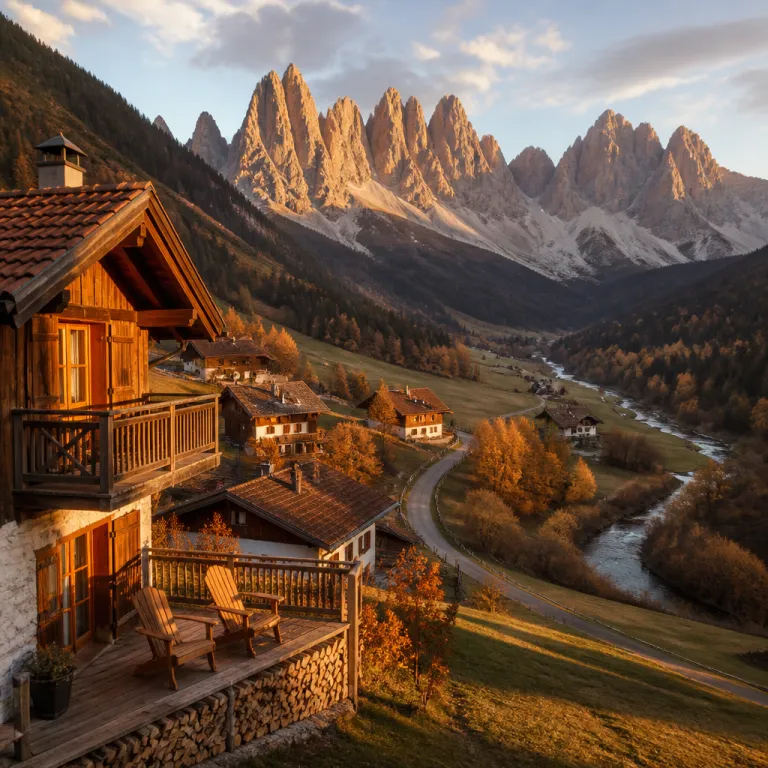
Reading the Dolomites in autumn: how to choose your base
Where to stay in the Dolomites this autumn depends on how you like to move. The same pale limestone towers feel different when your stay focuses on quiet forest paths, long lunches, or ambitious hiking routes that trace the high ridges. Think of each val as a separate character, with its own rhythm, access, and style of hotel hospitality.
Autumn in the Dolomites brings larch trees turning copper, cooler air, and thinner crowds. Many travelers planning where to stay Dolomites autumn are surprised that some cable car systems and mountain huts close between the main hiking season and the first snow. Choosing the right valley means your trip keeps its energy, rather than arriving to shuttered terraces and a half asleep mountain village.
The northern Dolomites sit inside South Tyrol, where German and Italian cultures meet in a precise, quietly luxurious way. South Tyrol is where spa resort culture is strongest, with design led properties that treat the mountain as a wellness backdrop rather than a theme park. If you plan to visit Dolomites for both hiking and slow time in a five star hotel, this region gives you the best balance of access, comfort, and service.
Autumn also changes how you use a car in the Dolomites. In summer, traffic can clog the passes, but by October the drives between val Gardena, Alta Badia, and Cortina d'Ampezzo feel calmer and more scenic. You still need to think about where to stay in relation to the passes, because an early snowfall can briefly complicate access between valleys.
For couples, the question is rarely just where to stay Dolomites autumn, but where to stay that matches how you travel together. Some will want a spa resort with a heated outdoor pool facing the mountain, others a discreet family run star hotel with a strong cellar and a chef who understands local game. This guide moves valley by valley, so you can align your stay Dolomites plans with the landscape, the dining scene, and the seasonal calendar.
Val Gardena and Alpe di Siusi: walking first, views all day
Val Gardena is the classic answer when someone asks where to stay Dolomites autumn for a first serious visit. The valley strings together Ortisei, Santa Cristina, and Selva, each with its own mix of star hotel options, cable car access, and evening atmosphere. In autumn, Ortisei feels particularly well suited to a romantic stay, with its pedestrian center, art galleries, and direct links to both the Seceda ridge and the Alpe di Siusi plateau.
From Ortisei, a short cable car ride takes you up towards Seceda, where the hiking is spectacular even after the main summer crowds have gone. Trails along the ridge give you those archetypal Dolomites views, with jagged peaks dropping into soft meadows and forested val slopes. Many couples plan their trip around one clear day up here, then use quieter afternoons for spa time back at their hotel.
Alpe di Siusi, also known by its German name Seiser Alm, is the largest high alpine meadow in Europe. In autumn, the plateau turns a deep gold, and the walking is gentle but immersive, ideal if you prefer long strolls over technical hiking. Staying directly on Alpe di Siusi or Seiser Alm usually means a higher budget, but you wake up above the clouds, with the mountain light changing minute by minute.
If you choose to stay Dolomites side in val Gardena rather than on the plateau, you still reach Alpe di Siusi easily. A cable car from Ortisei or Siusi allo Sciliar brings you up in minutes, and many hotels offer shuttle services to the valley stations for better access. This arrangement works well in autumn, when some lifts run on reduced schedules and you do not want to rely on a single connection for your hiking plans.
Val Gardena also suits travelers who like a balance between activity and comfort. You can hike in the morning, visit a small museum or artisan woodcarver in the afternoon, then return to a spa resort with a strong sauna circuit and a serious wine list. For more snow focused context on this valley and its neighbor, the detailed Cortina snow report and luxury stay insights on stay in Alps help frame how these areas shift once winter arrives.
Alta Badia and Val Gardena passes: dining, design and Dolomite passes
Alta Badia sits just over the passes from val Gardena, and it answers a different version of the where to stay Dolomites autumn question. Here, the focus tilts towards gastronomy, design forward spa resort properties, and a quieter, more Ladin accented rhythm. Villages like Corvara, La Villa, and San Cassiano feel composed, with a cluster of star hotel addresses that punch far above their size in terms of culinary ambition.
Autumn is when Alta Badia’s kitchens lean into game, mushrooms, and South Tyrol wines, making it one of the best places for couples who travel with their palate first. You can hike gentle routes from village to village, then settle into a dining room where the chef treats local ingredients with a light, contemporary touch. The valley’s star hotel restaurants often hold Michelin recognition, and they pair that with relaxed service rather than stiff formality.
From a practical perspective, Alta Badia offers strong access to the surrounding Dolomites passes. With a car, you can drive the Gardena, Campolongo, and Valparola passes in a single day, turning your trip into a moving gallery of limestone walls and larch forests. In autumn, traffic is lighter than in peak summer, but you still need to check pass conditions if an early storm brushes the mountain.
Hiking options remain varied here even as some high lifts close. Lower routes between villages, forest paths above La Villa, and meadows near Pralongià keep the hiking season alive into late October in many years. If your priority is to stay Dolomites side where you can mix shorter walks with long lunches, Alta Badia is a compelling answer to where to stay.
Alta Badia also connects conceptually with other refined Alpine bases, such as the Bernese Oberland in summer, where to stay when Grindelwald sets the pace for Swiss valley hopping. Both regions reward travelers who appreciate subtle luxury, precise service, and a sense that the mountain, not the marketing, sets the agenda. For couples comparing valleys, Alta Badia is where stay choices lean towards understated elegance rather than showy opulence.
Cortina d'Ampezzo and Alta Pusteria: wide horizons and iconic lakes
Cortina d'Ampezzo sits slightly apart from South Tyrol, in the Veneto region, and it feels different from the Ladin valleys. When you ask where to stay Dolomites autumn and imagine a broad basin ringed by cliffs, Cortina is usually the mental picture. The town has a long history as a mountain resort, with grand façades, a social passeggiata, and a mix of classic and contemporary hotel options.
Autumn in Cortina d'Ampezzo brings clearer light and a calmer pace after the intense summer and winter seasons. Some lifts and high mountain restaurants close earlier here, so you need to check which cable car lines still operate for hiking access. That said, the valley remains a strong base for drives and day hikes towards Tre Cime di Lavaredo, Lago Sorapis, and the Ampezzo Dolomites Natural Park.
Alta Pusteria, further north, is the valley that frames many of the Dolomites’ most photographed scenes. Towns like San Candido and Dobbiaco offer a quieter, more residential feel, with easy car access to Tre Cime, Lago di Braies, and the high plateau trails above. For couples who want to visit Dolomites icons without staying in the thick of a resort town, Alta Pusteria can be one of the best places to base a trip.
Lago di Braies and Lago Sorapis both look particularly striking in autumn, when the surrounding larch trees shift from green to amber. The hike to Lago Sorapis remains moderately demanding, with some exposed sections, so you should plan it for a stable weather day and carry proper layers. Lago di Braies, by contrast, sits right by the road, which makes it easy to visit but also means you should arrive early in the morning for a quieter experience.
When you stay Dolomites side in Alta Pusteria or Cortina, you trade some of the spa resort density of South Tyrol for wider horizons and more direct access to these lakes. Couples who value iconic views and road trip style days will find this combination compelling. If you are used to comparing Alpine bases, think of Cortina and Alta Pusteria as the Dolomites equivalent of choosing between Davos Platz, Davos Dorf, or Klosters for a Swiss valley stay, a choice explored in depth on stay in Alps.
Val Funes, Val d'Ega and quieter corners: slow autumn, strong scenery
Not every answer to where to stay Dolomites autumn needs to involve a major resort valley. Val Funes and Val d'Ega sit slightly off the main circuit, offering a slower, more contemplative version of the mountain. These valleys suit couples who prefer to hike from the hotel door, linger over long breakfasts, and watch the light move across a single mountain group rather than chase every highlight.
Val Funes is famous for its postcard view of the Odle peaks rising behind small churches and meadows. In autumn, the larch and pasture colours intensify, and the hiking remains accessible, with well marked trails that climb gently towards the Geisleralm area. Staying here means fewer star hotel options, but the properties that do exist often combine strong kitchens with intimate spa areas, giving you a compact spa resort feeling without the scale of a larger town.
Val d'Ega, sometimes written as Val Ega, lies between Bolzano and the high plateau of the Latemar and Catinaccio groups. This val offers a mix of forested slopes, high pastures, and dramatic rock walls, with hiking routes that stay rewarding well into autumn. If you are asking where to stay and want a base with good car access to both the Dolomites and the broader South Tyrol region, Val d'Ega makes logistical sense.
These quieter valleys also highlight the importance of timing in autumn. Many smaller properties close for a few weeks between the main hiking season and the build up to winter, so you should confirm opening dates directly with your chosen hotel. When you align your trip with local calendars, you gain the reward of near empty trails, attentive service, and a sense that the mountain has exhaled after summer.
For couples who have already experienced val Gardena or Alta Badia, Val Funes and Val d'Ega offer a different kind of stay Dolomites experience. You trade a dense network of cable car lines for more direct hiking from the valley floor, and you rely more on your car for access to other areas. In return, you gain a feeling of privacy and immersion that can be hard to find in the best known best places during peak periods.
How autumn changes logistics: car, lifts and spa time
Planning where to stay Dolomites autumn is as much about logistics as landscape. The shoulder season brings lower rates at many star hotel properties, but it also brings a patchwork of lift closures and reduced services. Couples who understand this rhythm can shape a trip that feels intentional rather than improvised.
First, think about how you will use a car. In summer, some passes introduce traffic controls or shuttle systems, while in autumn the roads usually feel freer, yet early snow can briefly affect access between val Gardena, Alta Badia, and Cortina d'Ampezzo. If you plan to visit Dolomites highlights like Tre Cime, Lago di Braies, or Lago Sorapis, check both parking regulations and seasonal road rules before you set out.
Second, map your hiking ambitions against lift schedules. High altitude cable car lines often close earlier than lower ones, which can change how you reach places like Seceda, Alpe di Siusi, or the plateaus above Alta Pusteria. A good strategy is to choose a hotel with strong spa resort facilities, so that if a planned hike falls through due to weather or lift closure, you still have a satisfying day built around saunas, pools, and treatments.
Third, accept that some mountain huts and restaurants will be closed between the main hiking and ski seasons. This is not a sign that you chose the wrong valley, but rather that the Dolomites follow their own seasonal logic. When you stay Dolomites side in autumn, you often eat more dinners in house, which makes the quality of your hotel kitchen and wine list more important than in high summer.
Finally, remember that autumn light and temperature patterns change how you pace your days. Mornings can be crisp, afternoons warm in the sun, and evenings cool enough to justify a long sauna session or a glass of South Tyrol red by the fire. If you choose where to stay with this in mind, the rhythm of your trip will feel aligned with the mountain rather than imposed on it.
Matching valleys to travel styles: which base suits you
By now, the where to stay Dolomites autumn question becomes more personal than geographical. Val Gardena and Alpe di Siusi suit couples who want walking first, with strong cable car access and a lively but not overwhelming evening scene. Alta Badia appeals to those who travel for food and design, where a star hotel dining room and a refined spa resort matter as much as the hiking routes.
Cortina d'Ampezzo and Alta Pusteria work best for wide horizon seekers. If your ideal trip involves driving to Tre Cime at dawn, visiting Lago di Braies in soft light, and tackling the hike to Lago Sorapis on a clear day, these valleys give you the best access. You will rely more on your car and less on lifts, but you gain flexibility and a sense of covering ground across the Dolomites.
Val Funes and Val d'Ega, by contrast, are for travelers who prefer depth over breadth. Here, you might stay in a single hotel for a week, hiking variations of the same mountain group, watching how the light and colours shift each day. The stay Dolomites experience becomes less about ticking off best places and more about settling into a specific corner of South Tyrol.
When comparing options, think in simple terms. Val Gardena is better for first timers who want a classic Dolomites feel, while Alta Badia excels at combining hiking with serious dining and spa culture. Cortina and Alta Pusteria are stronger for iconic lakes and road trip style days, whereas Val Funes and Val d'Ega shine for quiet, contemplative stays.
Whichever valley you choose, the key is to align your where stay decision with your shared travel rhythm. If you like to move early, chase light, and return to a pool with a view, prioritize access and spa resort quality. If you prefer slow mornings, long lunches, and short afternoon walks, focus on kitchen reputation, wine lists, and how the hotel frames the mountain from its terraces and rooms.
Key figures for planning an autumn stay in the Dolomites
- Average daytime temperatures in the Dolomites in October range between 8 and 15 °C at valley level, according to the Italian meteorological service, which makes it comfortable for hiking with layered clothing.
- Hotel rates in South Tyrol and the Dolomites typically drop by 20 to 40 percent between peak August dates and mid autumn shoulder weeks, based on regional tourism board data, offering better value for spa resort and star hotel stays.
- Major lift systems around val Gardena, Alpe di Siusi, and Alta Badia operate roughly 90 to 120 days in the main summer season, with many closing by late September or early October, so autumn visitors should always verify specific cable car schedules.
- Visitor numbers in the Dolomites UNESCO area decrease by roughly one third from August to October, according to local park authorities, which significantly reduces trail crowding around Tre Cime, Lago di Braies, and other best known hiking routes.
- South Tyrol reports that more than 40 percent of overnight stays in some valleys now occur in accommodation with dedicated wellness areas, underlining how central spa resort facilities have become to the stay Dolomites experience.
FAQ about where to stay in the Dolomites this autumn
Which Dolomites valley is best for a first autumn visit ?
For a first autumn trip, val Gardena is often the most balanced choice. It combines strong cable car access for hiking, a good range of hotel categories including several star hotel properties, and easy day trips to Alpe di Siusi and nearby passes. Ortisei, in particular, works well for couples who want both walking and a pleasant village atmosphere.
Do I need a car to enjoy an autumn stay in the Dolomites ?
A car is not strictly necessary, but it increases flexibility in autumn. Public transport links between major valleys exist, yet reduced seasonal schedules and fewer cable car operations can make connections slower. With a car, you can more easily visit Dolomites highlights like Tre Cime, Lago di Braies, and Lago Sorapis from a single base.
Are spa resorts open in the Dolomites during the autumn shoulder season ?
Many spa resort and wellness focused hotels in South Tyrol and the Dolomites remain open through much of autumn, though some close briefly between the main hiking and ski seasons. Larger properties in val Gardena, Alta Badia, and Cortina d'Ampezzo are more likely to operate continuously. Always check specific dates, as smaller hotels in quieter valleys like Val Funes or Val d'Ega may take seasonal breaks.
Which valley is best for iconic lakes like Lago di Braies and Lago Sorapis ?
Alta Pusteria is the most convenient base for Lago di Braies and Tre Cime, with San Candido and Dobbiaco offering quick car access. For Lago Sorapis, Cortina d'Ampezzo is closer, with trailheads reachable in a short drive. Couples who prioritize these lakes often split their stay between Cortina and Alta Pusteria to reduce daily driving.
How late in autumn can I still plan serious hiking in the Dolomites ?
Serious hiking in the Dolomites usually remains feasible into October at valley and mid mountain levels, depending on weather. Higher routes and via ferrata can be affected earlier by snow or ice, and many cable car lines close by late September or early October. Planning flexible itineraries and choosing a base with good lower level trails, such as val Gardena or Alta Badia, helps keep options open.